
YOUR TRAVEL DOCENT
Travel deeper into Agra, through its human stories.
At each place,
- Drama and backstory
- History & ideas behind them
- Insight that’s only yours
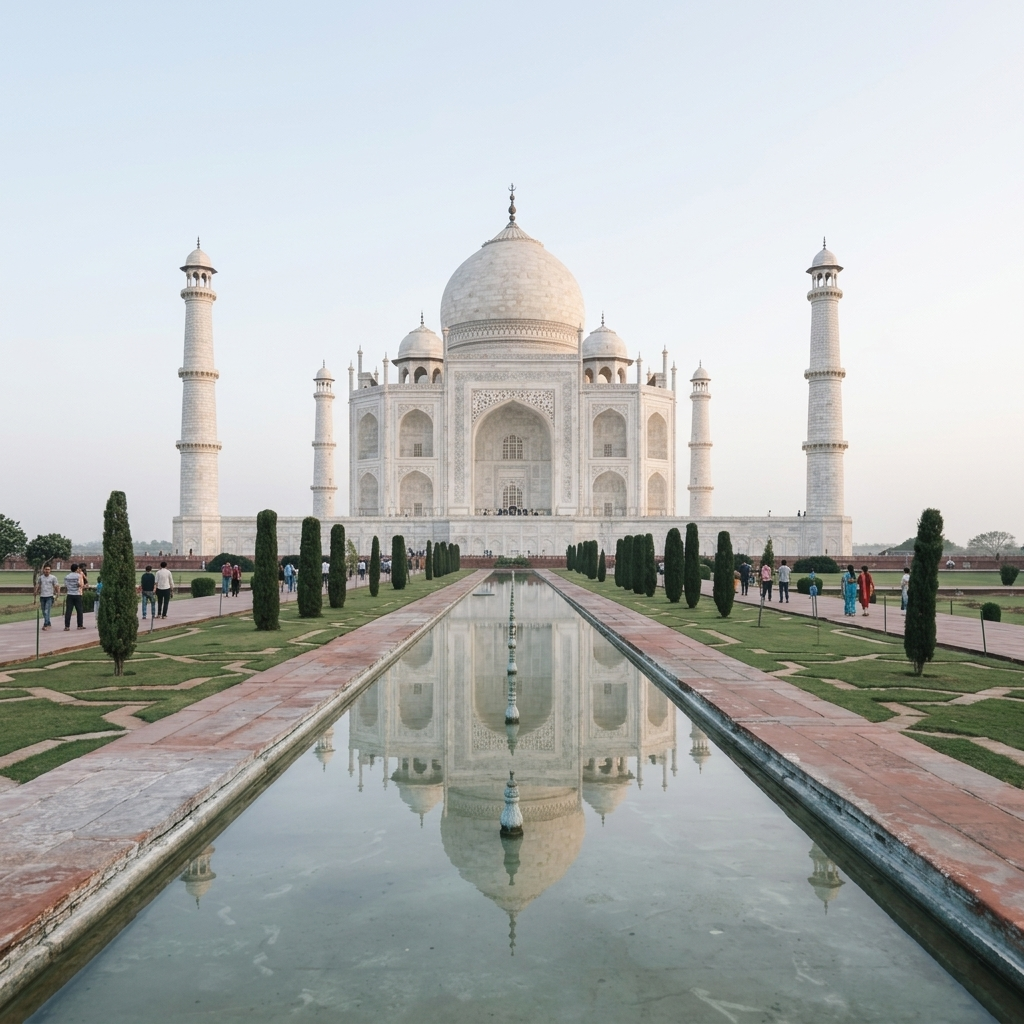
Taj Mahal
- An empress dies on campaign
In this story, you’ll discover
Chapter 1
The Empress Who Followed the Army
She was born Arjumand Banu, into one of the most powerful families at the Mughal court. As a teenager she was engaged to Prince Khurram, a son of the emperor at the time. But the court astrologers made the couple wait years for a lucky wedding date. Long after the wedding, Khurram took the throne himself, as Shah Jahan. He gave her a new name, Mumtaz Mahal, the Chosen One of the Palace, and trusted her with the royal seal used to stamp his orders. She did not stay behind in the palace. Her husband was often at war, and she travelled with him on his campaigns, even through her many pregnancies. In nineteen years of marriage she gave birth to fourteen children. Only seven lived to grow up. In 1631, Shah Jahan was fighting in the Deccan, the high plateau of southern India, and she was with him at his camp in Burhanpur, far from Agra. There she gave birth to their last child, a daughter. Soon afterwards, she bled to death. She was thirty-eight.

A reflection for you
The flowers around Mumtaz's tomb were made never to fade. Shah Jahan could give her a garden that would outlast him, but he couldn't sit in it with her. The thing we call forever can be smaller than an afternoon together. What ordinary moment with someone would you most want back?

 1×1×
BEHIND EVERY PLACE
The people the plaques leave out.
A plaque gives you a date and a name. Here, you get the person, and the ideas that shaped Agra come with the story.
Taj Mahal
- An empress dies on campaign
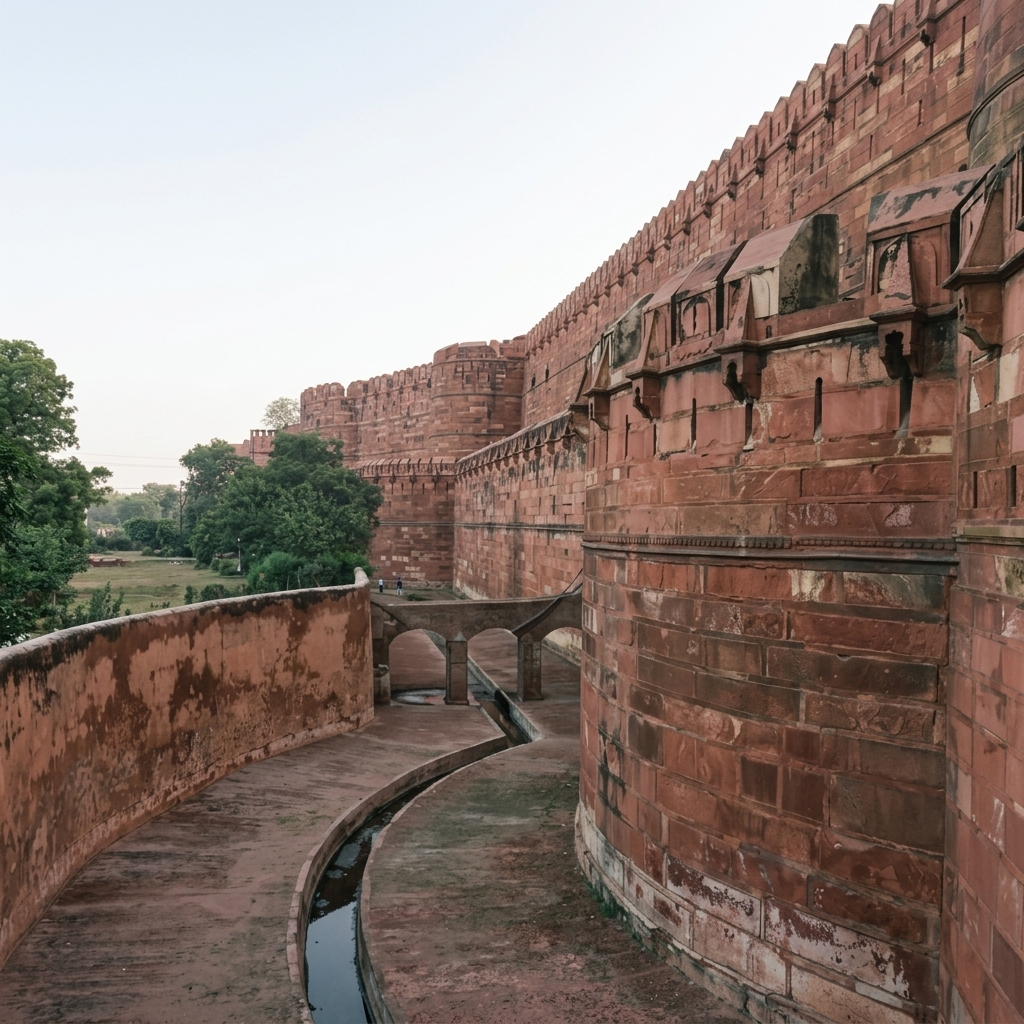
Agra Fort
- A diamond for mercy
- War over the emperor's mother's ship
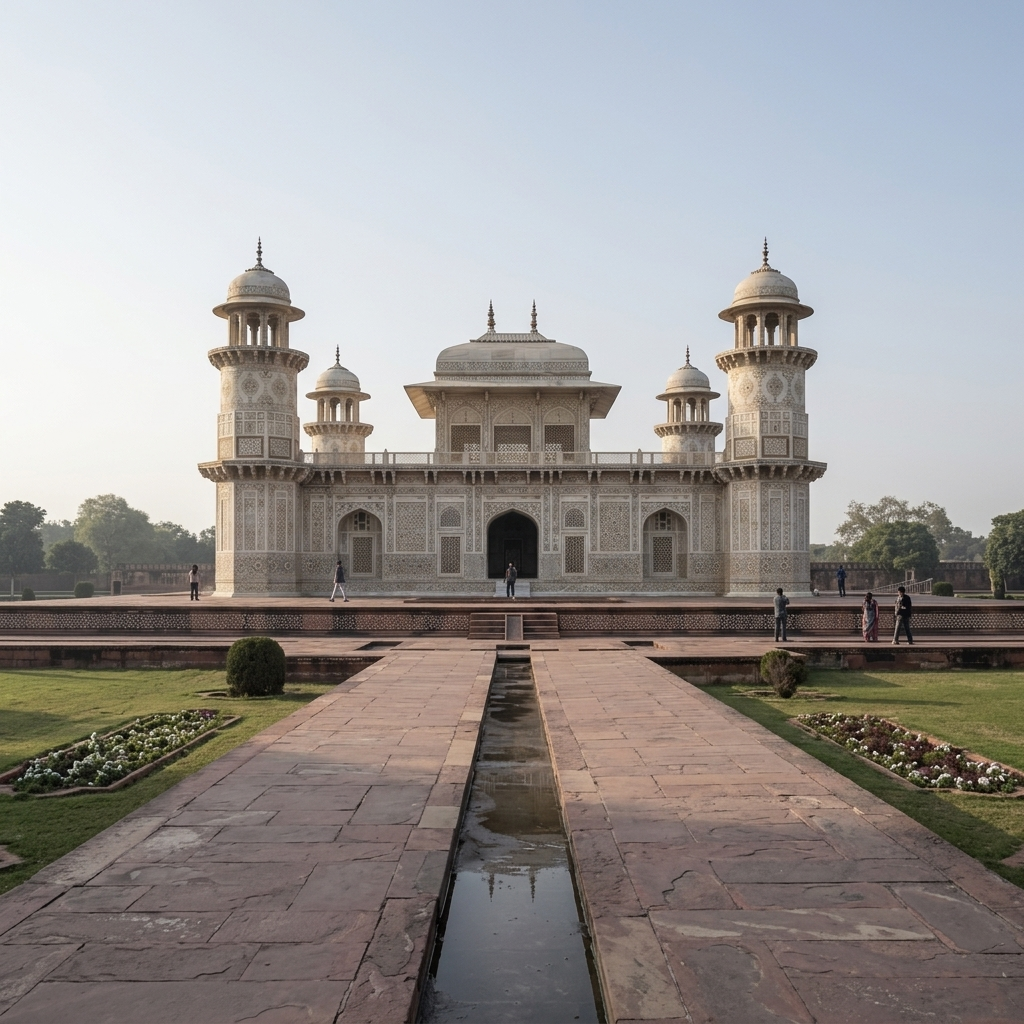
Itimad-ud-Daulah (Baby Taj)
- A robbed family rises
- Wasting away without his wife
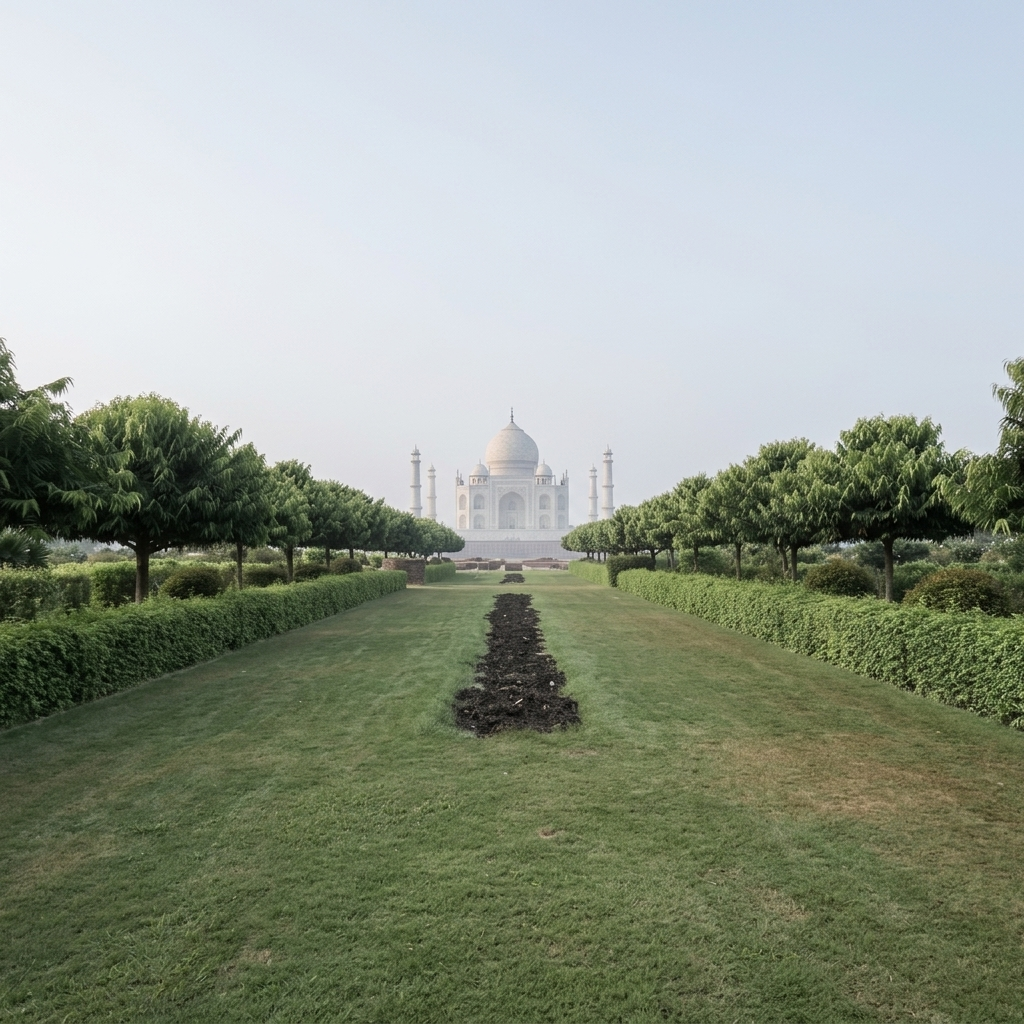
Mehtab Bagh
- Shah Jahan's black Taj legend
- The bank Babur loathed
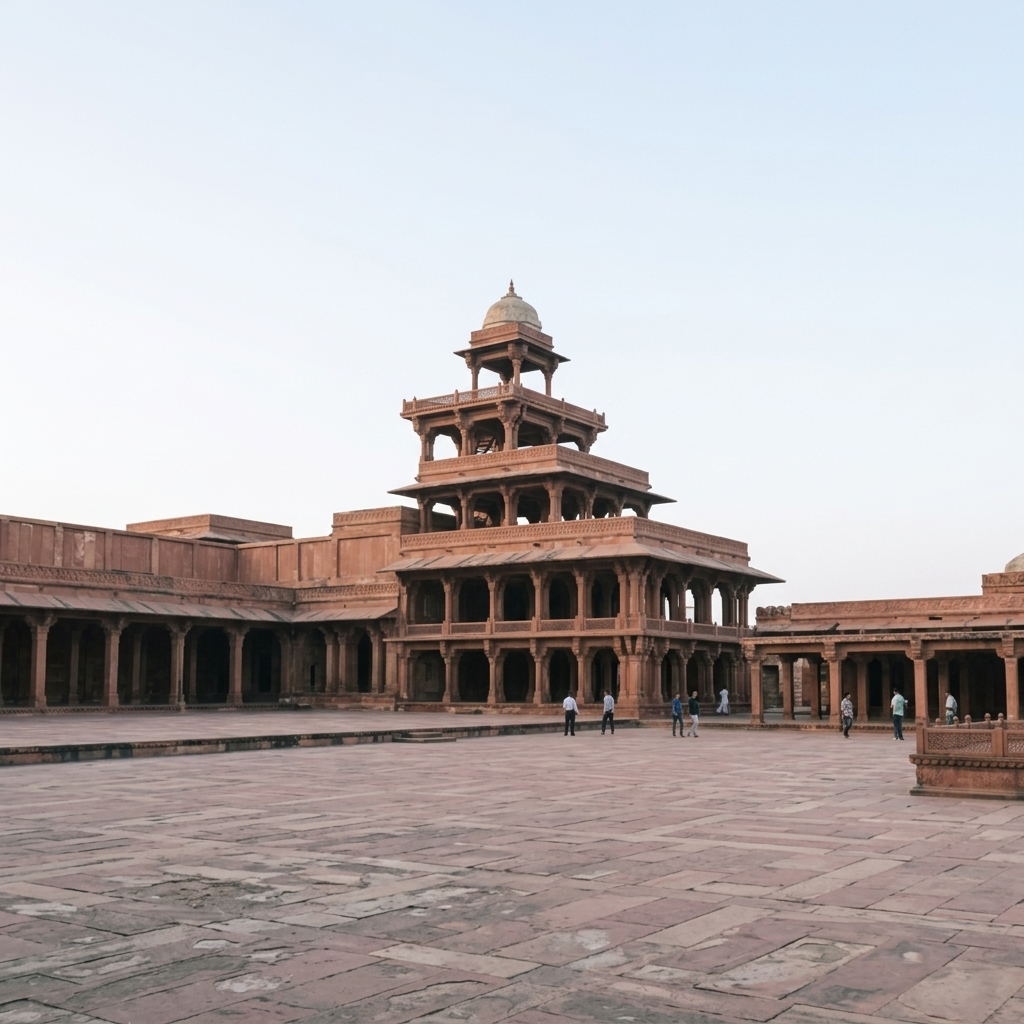
Fatehpur Sikri
- An emperor's interfaith debates
- The queen who didn't convert
8 more places in Agra
Sikandra (Akbar's Tomb) · Jama Masjid · Gurudwara Guru Ka Taal · Kinari Bazaar · Agra Fort · Musamman Burj · Agra Fort · Diwan-i-Am · Agra Fort · Amar Singh Gate · Fatehpur Sikri · Tomb of Salim Chishti
HOW IT WORKS
Walk near a place.
The story finds you.
Get a notification when you’re near a story place. Tap to listen.
Taj Mahal
nowJust steps away.
Tap to hear the drama.

INSIDE EACH PLACE
From drama,
to idea,
to insight.
For example: the Taj Mahal.
1. Hear the drama behind the place.
Taj Mahal
- An empress dies on campaign
In this story, you’ll discover
Chapter 1
The Empress Who Followed the Army
She was born Arjumand Banu, into one of the most powerful families at the Mughal court. As a teenager she was engaged to Prince Khurram, a son of the emperor at the time. But the court astrologers made the couple wait years for a lucky wedding date. Long after the wedding, Khurram took the throne himself, as Shah Jahan. He gave her a new name, Mumtaz Mahal, the Chosen One of the Palace, and trusted her with the royal seal used to stamp his orders. She did not stay behind in the palace. Her husband was often at war, and she travelled with him on his campaigns, even through her many pregnancies. In nineteen years of marriage she gave birth to fourteen children. Only seven lived to grow up. In 1631, Shah Jahan was fighting in the Deccan, the high plateau of southern India, and she was with him at his camp in Burhanpur, far from Agra. There she gave birth to their last child, a daughter. Soon afterwards, she bled to death. She was thirty-eight.
A reflection for you
The flowers around Mumtaz's tomb were made never to fade. Shah Jahan could give her a garden that would outlast him, but he couldn't sit in it with her. The thing we call forever can be smaller than an afternoon together. What ordinary moment with someone would you most want back?
1×2. Learn the ideas inside the story.
Taj Mahal
- An empress dies on campaign
In this story, you’ll discover
Chapter 1
The Empress Who Followed the Army
She was born Arjumand Banu, into one of the most powerful families at the Mughal court. As a teenager she was engaged to Prince Khurram, a son of the emperor at the time. But the court astrologers made the couple wait years for a lucky wedding date. Long after the wedding, Khurram took the throne himself, as Shah Jahan. He gave her a new name, Mumtaz Mahal, the Chosen One of the Palace, and trusted her with the royal seal used to stamp his orders. She did not stay behind in the palace. Her husband was often at war, and she travelled with him on his campaigns, even through her many pregnancies. In nineteen years of marriage she gave birth to fourteen children. Only seven lived to grow up. In 1631, Shah Jahan was fighting in the Deccan, the high plateau of southern India, and she was with him at his camp in Burhanpur, far from Agra. There she gave birth to their last child, a daughter. Soon afterwards, she bled to death. She was thirty-eight.
A reflection for you
The flowers around Mumtaz's tomb were made never to fade. Shah Jahan could give her a garden that would outlast him, but he couldn't sit in it with her. The thing we call forever can be smaller than an afternoon together. What ordinary moment with someone would you most want back?
1×3. Keep an insight that’s only yours.
Taj Mahal
- An empress dies on campaign
In this story, you’ll discover
Chapter 1
The Empress Who Followed the Army
She was born Arjumand Banu, into one of the most powerful families at the Mughal court. As a teenager she was engaged to Prince Khurram, a son of the emperor at the time. But the court astrologers made the couple wait years for a lucky wedding date. Long after the wedding, Khurram took the throne himself, as Shah Jahan. He gave her a new name, Mumtaz Mahal, the Chosen One of the Palace, and trusted her with the royal seal used to stamp his orders. She did not stay behind in the palace. Her husband was often at war, and she travelled with him on his campaigns, even through her many pregnancies. In nineteen years of marriage she gave birth to fourteen children. Only seven lived to grow up. In 1631, Shah Jahan was fighting in the Deccan, the high plateau of southern India, and she was with him at his camp in Burhanpur, far from Agra. There she gave birth to their last child, a daughter. Soon afterwards, she bled to death. She was thirty-eight.
A reflection for you
The flowers around Mumtaz's tomb were made never to fade. Shah Jahan could give her a garden that would outlast him, but he couldn't sit in it with her. The thing we call forever can be smaller than an afternoon together. What ordinary moment with someone would you most want back?
1×BEFORE YOU GO
FAQ
An audio guide gives you the facts: dates, names, what it was built for. Odys‑say tells you the drama: the people behind the place, what they wanted, and what it cost them. The ideas behind the city come with the story, and it ends with an insight that’s only yours.
The story first: who was here, what they were up against, and what they chose. Then, inside that story, one or two ideas that help you understand the city more deeply, from history and politics to art, religion, and philosophy.
Explore the city as you normally would. When you’re near one of Odys‑say’s story places, your phone can let you know. Tap the notification, and the story is ready to hear right where you are.
The drama stays the same. What changes is what comes at the end. Based on what you chose to reflect on, Odys‑say connects something from the story to a question or insight that feels relevant to you.
Your first story is included. If you want to keep exploring, you can unlock the whole city for $9.99. It’s a one-time purchase, not a subscription.
A deeper way
to travel
Agra
Human stories at every place,
and what they leave with you.
No subscription.
One-time city purchase.