
YOUR TRAVEL DOCENT
Travel deeper into Amritsar, through its human stories.
At each place,
- Drama and backstory
- History & ideas behind them
- Insight that’s only yours
Golden Temple
- Priests refuse untouchables' offering
- Eating together across caste
In this story, you’ll discover
Chapter 1
A Temple Built Lower Than the City
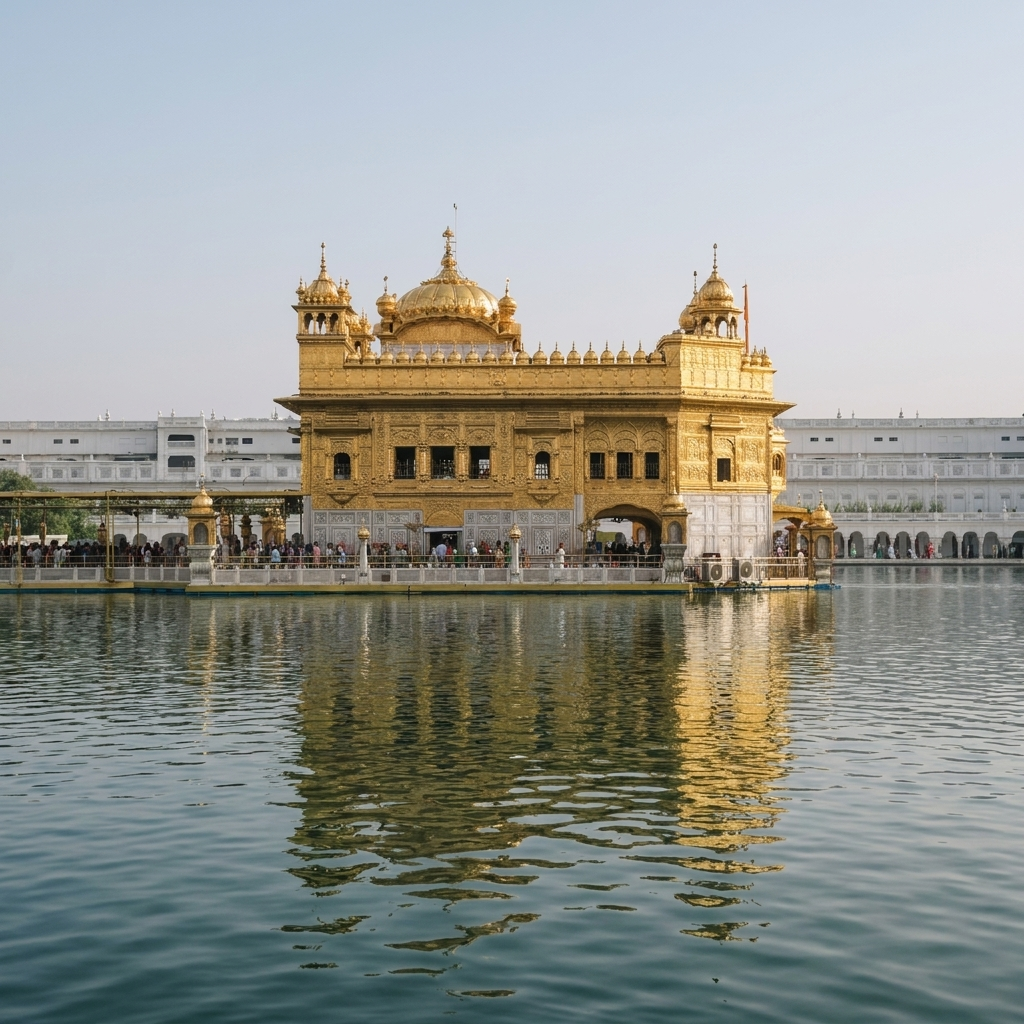
The Sikh faith began in the Punjab region about five hundred years ago with Guru Nanak, a teacher who said that God is one and that caste and ritual purity bring no one closer to God. Nine more Gurus, or teachers, followed him. The fourth Guru had a pool dug on this spot in the 1570s, and the town that grew up around it took its name from the water: Amritsar, the pool of nectar. His son, Guru Arjan, raised the temple in the middle of the pool. He built it lower than the ground around it, so that every visitor has to walk down to reach it. He also gave it four doors, one on each side, as a sign that people of every caste and faith could come in from any direction. In 1604 he placed inside it the scripture he had gathered. The gold came much later. In the eighteenth century, Mughal forces and then invading Afghan armies attacked the temple again and again. One Afghan army packed it with gunpowder and blew it up, and the Sikhs rebuilt it. Then in the early nineteenth century, Ranjit Singh, the Sikh ruler of Punjab, paid to cover its upper storeys in gold, and the name Golden Temple stuck.

A reflection for you
Golden Temple priests refused an offering because of its bearers' low caste, then accepted and shared it after reading their scripture as a call to welcome the group. Both standards could exist there, but could not govern this decision together. If you acted on what you truly believe, which familiar parts of your life would be unsettled?

 1×1×
BEHIND EVERY PLACE
The people the plaques leave out.
A plaque gives you a date and a name. Here, you get the person, and the ideas that shaped Amritsar come with the story.
Golden Temple
- Priests refuse untouchables' offering
- Eating together across caste
Jallianwala Bagh
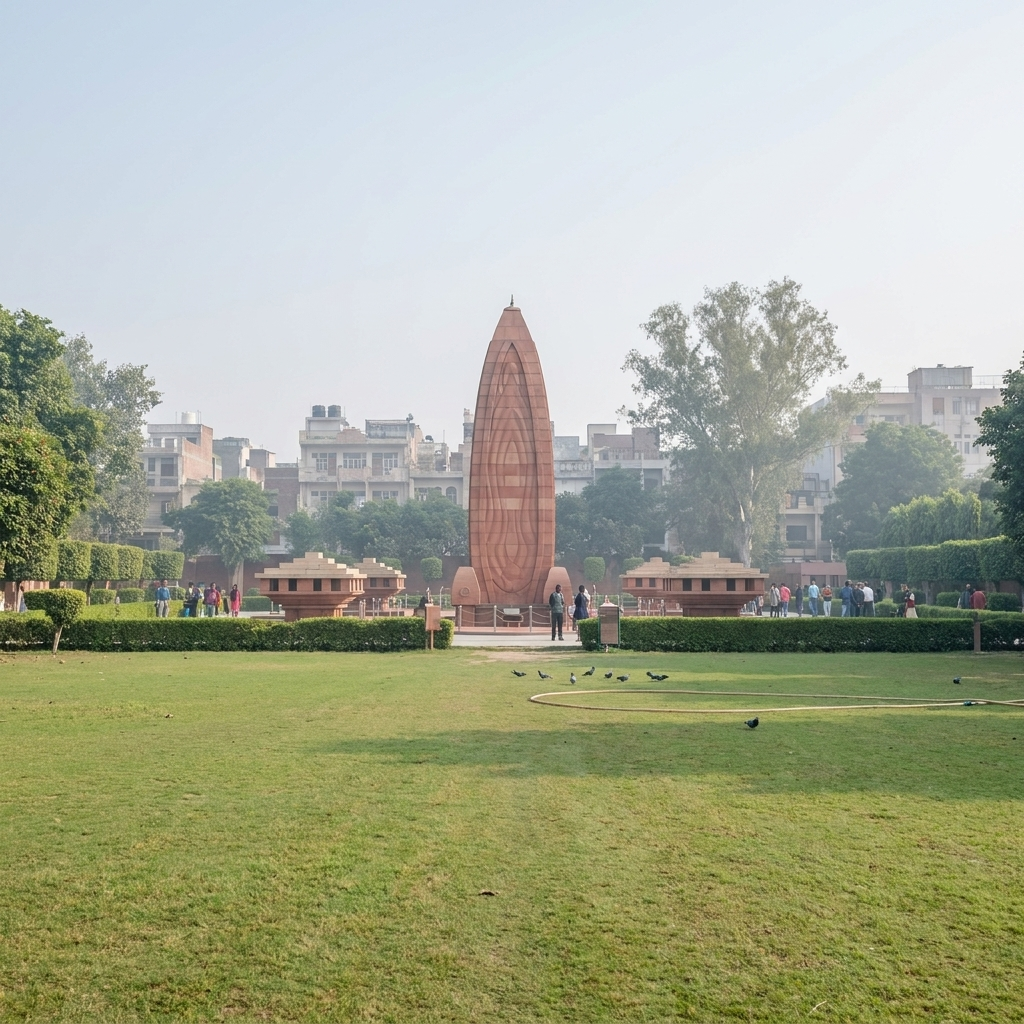
- Soldiers fire on festival-goers
- A widow's curfew vigil
Attari–Wagah Border (Flag-Lowering Ceremony)
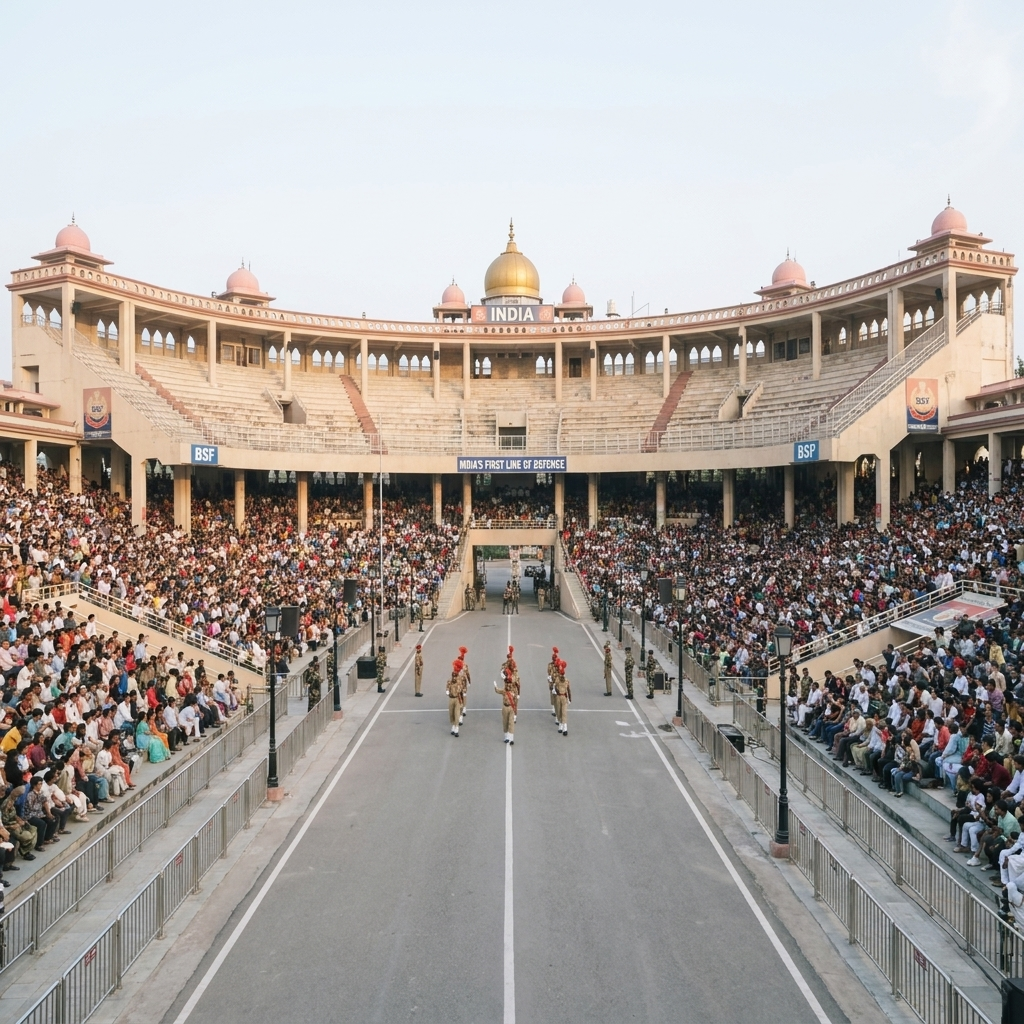
- Comrades mark the border
- A rivalry staged together
Partition Museum
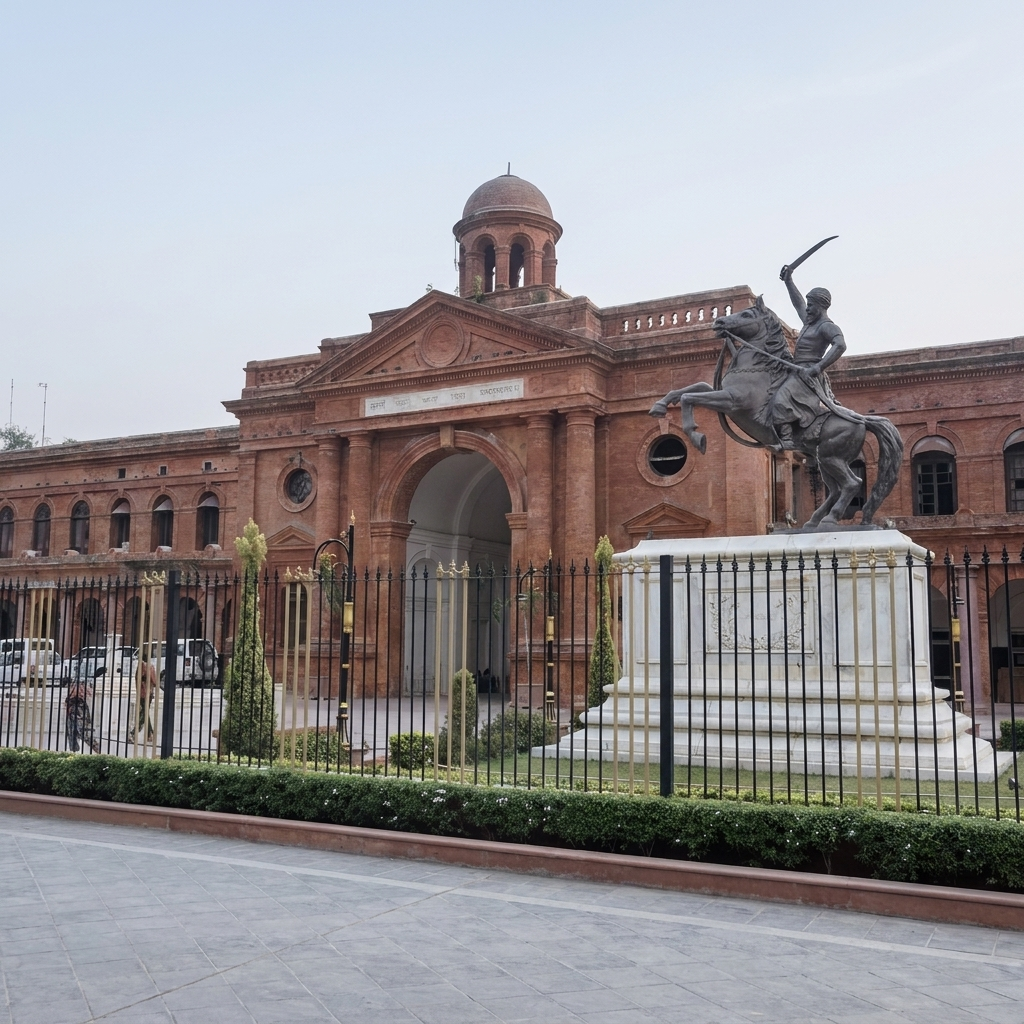
- Reunited in a ration queue
- A refugee girl's doll bed
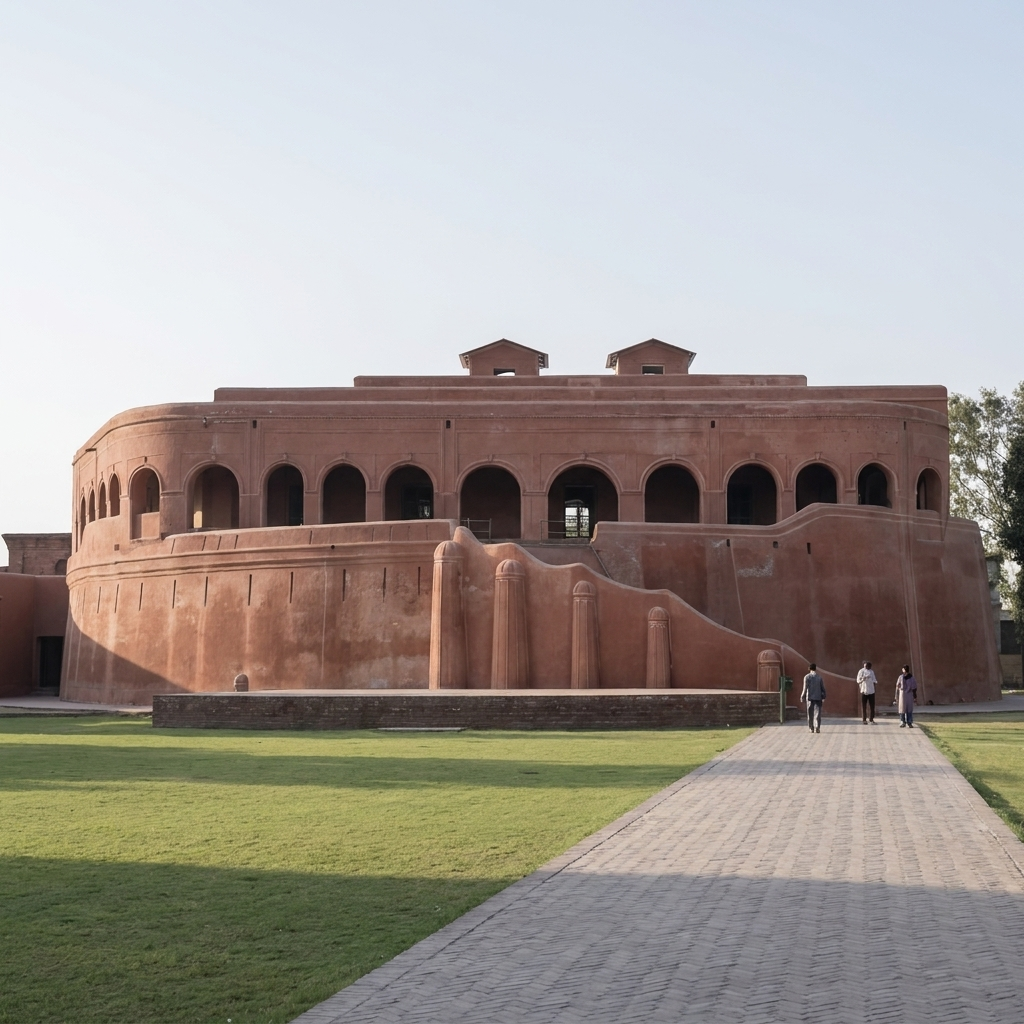
Gobindgarh Fort
- A widow defies a conqueror
- A Muslim keeps the treasury
7 more places in Amritsar
Durgiana Temple · Ram Bagh (Maharaja Ranjit Singh Museum) · Gurudwara Baba Atal · Ram Tirath Temple · Mata Lal Devi Temple · Khalsa College · Golden Temple · Akal Takht
HOW IT WORKS
Walk near a place.
The story finds you.
Get a notification when you’re near a story place. Tap to listen.
Golden Temple
nowJust steps away.
Tap to hear the drama.

INSIDE EACH PLACE
From drama,
to idea,
to insight.
For example: the Golden Temple.
1. Hear the drama behind the place.
Golden Temple
- Priests refuse untouchables' offering
- Eating together across caste
In this story, you’ll discover
Chapter 1
A Temple Built Lower Than the City
The Sikh faith began in the Punjab region about five hundred years ago with Guru Nanak, a teacher who said that God is one and that caste and ritual purity bring no one closer to God. Nine more Gurus, or teachers, followed him. The fourth Guru had a pool dug on this spot in the 1570s, and the town that grew up around it took its name from the water: Amritsar, the pool of nectar. His son, Guru Arjan, raised the temple in the middle of the pool. He built it lower than the ground around it, so that every visitor has to walk down to reach it. He also gave it four doors, one on each side, as a sign that people of every caste and faith could come in from any direction. In 1604 he placed inside it the scripture he had gathered. The gold came much later. In the eighteenth century, Mughal forces and then invading Afghan armies attacked the temple again and again. One Afghan army packed it with gunpowder and blew it up, and the Sikhs rebuilt it. Then in the early nineteenth century, Ranjit Singh, the Sikh ruler of Punjab, paid to cover its upper storeys in gold, and the name Golden Temple stuck.
A reflection for you
Golden Temple priests refused an offering because of its bearers' low caste, then accepted and shared it after reading their scripture as a call to welcome the group. Both standards could exist there, but could not govern this decision together. If you acted on what you truly believe, which familiar parts of your life would be unsettled?
1×2. Learn the ideas inside the story.
Golden Temple
- Priests refuse untouchables' offering
- Eating together across caste
In this story, you’ll discover
Chapter 1
A Temple Built Lower Than the City
The Sikh faith began in the Punjab region about five hundred years ago with Guru Nanak, a teacher who said that God is one and that caste and ritual purity bring no one closer to God. Nine more Gurus, or teachers, followed him. The fourth Guru had a pool dug on this spot in the 1570s, and the town that grew up around it took its name from the water: Amritsar, the pool of nectar. His son, Guru Arjan, raised the temple in the middle of the pool. He built it lower than the ground around it, so that every visitor has to walk down to reach it. He also gave it four doors, one on each side, as a sign that people of every caste and faith could come in from any direction. In 1604 he placed inside it the scripture he had gathered. The gold came much later. In the eighteenth century, Mughal forces and then invading Afghan armies attacked the temple again and again. One Afghan army packed it with gunpowder and blew it up, and the Sikhs rebuilt it. Then in the early nineteenth century, Ranjit Singh, the Sikh ruler of Punjab, paid to cover its upper storeys in gold, and the name Golden Temple stuck.
A reflection for you
Golden Temple priests refused an offering because of its bearers' low caste, then accepted and shared it after reading their scripture as a call to welcome the group. Both standards could exist there, but could not govern this decision together. If you acted on what you truly believe, which familiar parts of your life would be unsettled?
1×3. Keep an insight that’s only yours.
Golden Temple
- Priests refuse untouchables' offering
- Eating together across caste
In this story, you’ll discover
Chapter 1
A Temple Built Lower Than the City
The Sikh faith began in the Punjab region about five hundred years ago with Guru Nanak, a teacher who said that God is one and that caste and ritual purity bring no one closer to God. Nine more Gurus, or teachers, followed him. The fourth Guru had a pool dug on this spot in the 1570s, and the town that grew up around it took its name from the water: Amritsar, the pool of nectar. His son, Guru Arjan, raised the temple in the middle of the pool. He built it lower than the ground around it, so that every visitor has to walk down to reach it. He also gave it four doors, one on each side, as a sign that people of every caste and faith could come in from any direction. In 1604 he placed inside it the scripture he had gathered. The gold came much later. In the eighteenth century, Mughal forces and then invading Afghan armies attacked the temple again and again. One Afghan army packed it with gunpowder and blew it up, and the Sikhs rebuilt it. Then in the early nineteenth century, Ranjit Singh, the Sikh ruler of Punjab, paid to cover its upper storeys in gold, and the name Golden Temple stuck.
A reflection for you
Golden Temple priests refused an offering because of its bearers' low caste, then accepted and shared it after reading their scripture as a call to welcome the group. Both standards could exist there, but could not govern this decision together. If you acted on what you truly believe, which familiar parts of your life would be unsettled?
1×BEFORE YOU GO
FAQ
An audio guide gives you the facts: dates, names, what it was built for. Odys‑say tells you the drama: the people behind the place, what they wanted, and what it cost them. The ideas behind the city come with the story, and it ends with an insight that’s only yours.
The story first: who was here, what they were up against, and what they chose. Then, inside that story, one or two ideas that help you understand the city more deeply, from history and politics to art, religion, and philosophy.
Explore the city as you normally would. When you’re near one of Odys‑say’s story places, your phone can let you know. Tap the notification, and the story is ready to hear right where you are.
The drama stays the same. What changes is what comes at the end. Based on what you chose to reflect on, Odys‑say connects something from the story to a question or insight that feels relevant to you.
Your first story is included. If you want to keep exploring, you can unlock the whole city for $9.99. It’s a one-time purchase, not a subscription.
A deeper way
to travel
Amritsar
Human stories at every place,
and what they leave with you.
No subscription.
One-time city purchase.