
YOUR TRAVEL DOCENT
Travel deeper into Barcelona, through its human stories.
At each place,
- Drama and backstory
- History & ideas behind them
- Insight that’s only yours
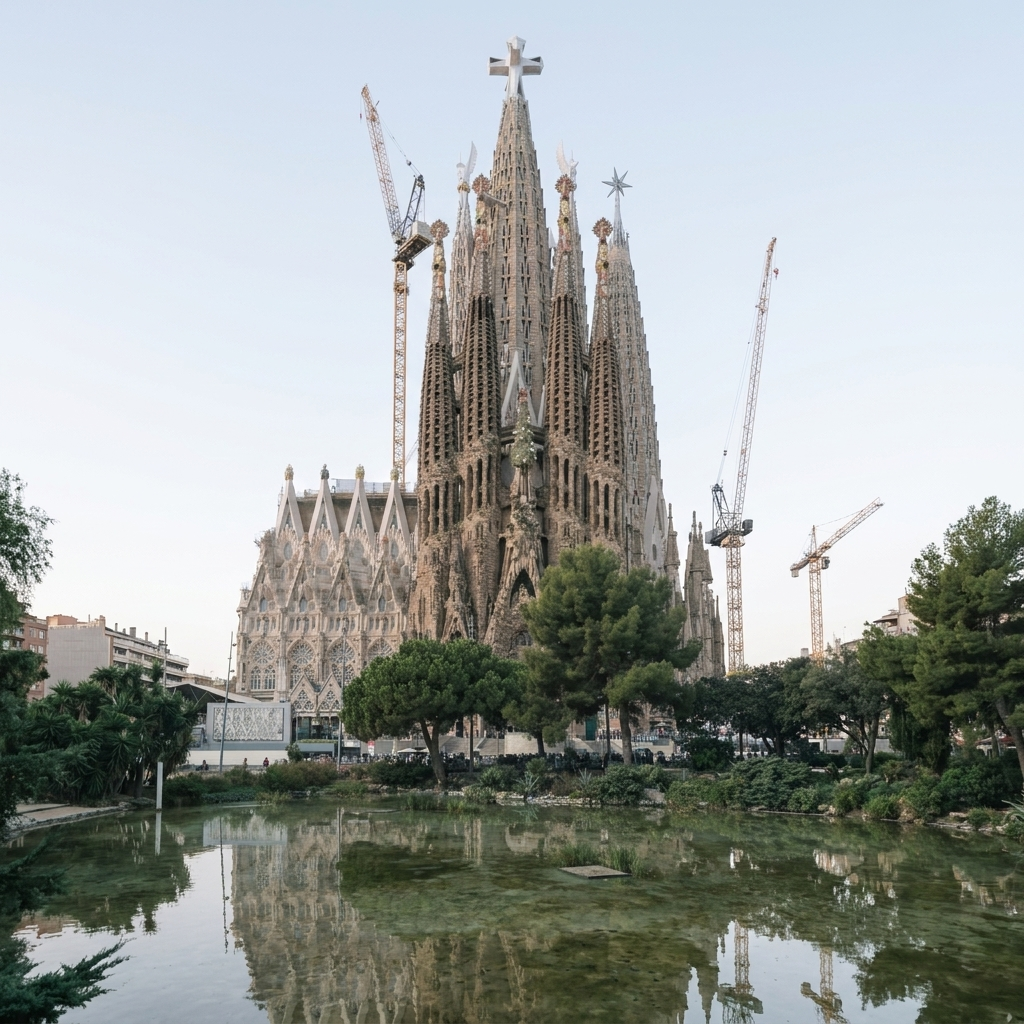
Sagrada Família
- Built on alms alone
- The architect taken for a beggar
In this story, you’ll discover
Chapter 1
A Church Paid for by Alms
The idea didn't begin with Gaudí. It began with a bookseller named Josep Maria Bocabella, a devout Catholic who founded an association of devotees of Saint Joseph. In time it had hundreds of thousands of members. Together they set out to build a church to the Holy Family: Jesus, Mary and Joseph. It was to be an expiatory temple, and its full name is still the Expiatory Temple of the Holy Family. To expiate means to make amends for wrongdoing. This church would be paid for only with the gifts of ordinary believers, not by any king or state, so that building it would itself be an act of atonement for humanity's sins. The association bought land in what was then a separate town outside the city, and work began on a neo-Gothic design by the diocese's architect. Within a year he had fallen out with the association over the cost of materials and left. The job went to a young architect just past thirty, Antoni Gaudí. He kept the crypt that had been started, then redesigned almost everything above it. Gifts set the pace. When donations came in, the work moved; when they dried up, it slowed. Asked when the church would be finished, Gaudí is said to have answered, "My client is not in a hurry." The client he meant was God.

A reflection for you
Gaudí spent more than forty years designing the Sagrada Família, yet less than a quarter was built when he died. Knowing he would never see it finished, he completed parts of it as models for the architects who would follow. Is there something you would want to give your time to now, even if you never got to see it finished?

 1×1×
BEHIND EVERY PLACE
The people the plaques leave out.
A plaque gives you a date and a name. Here, you get the person, and the ideas that shaped Barcelona come with the story.
Sagrada Família
- Built on alms alone
- The architect taken for a beggar
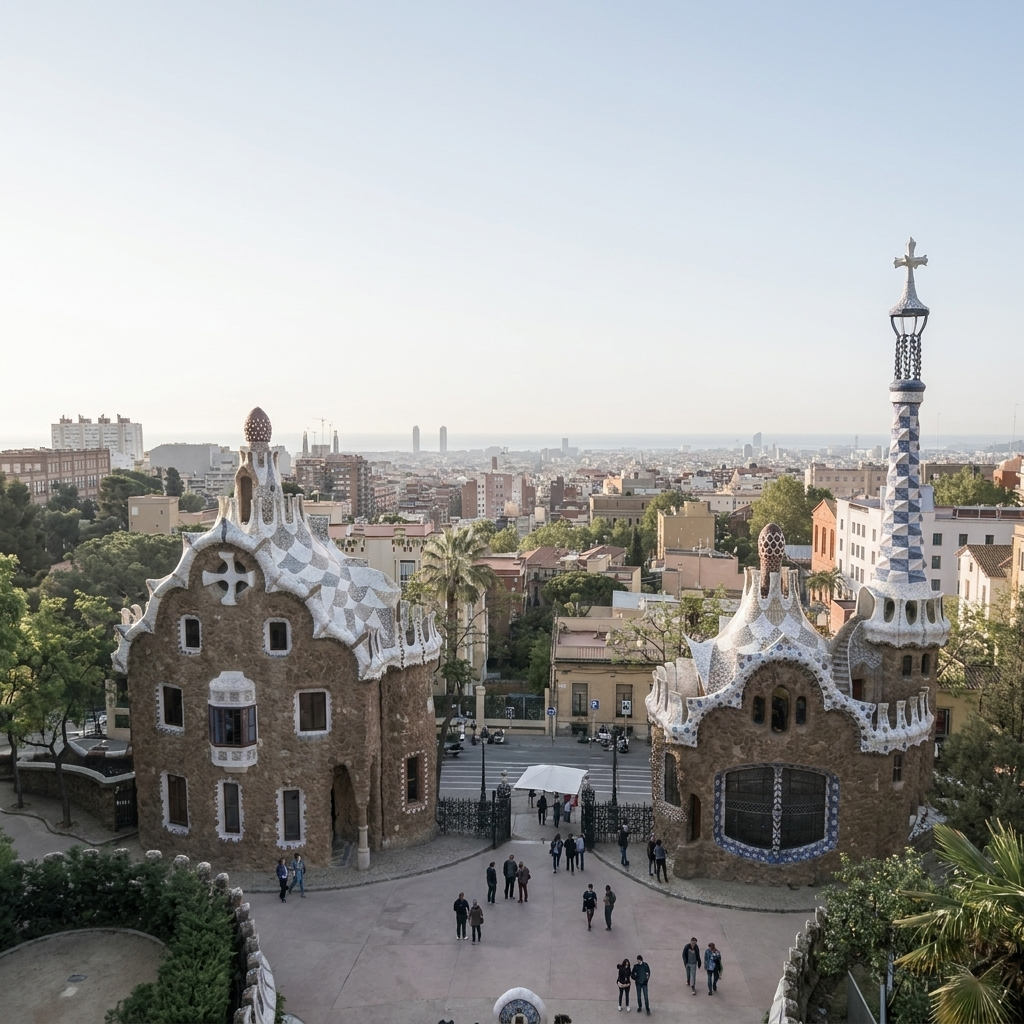
Park Güell
- An estate the rich passed up
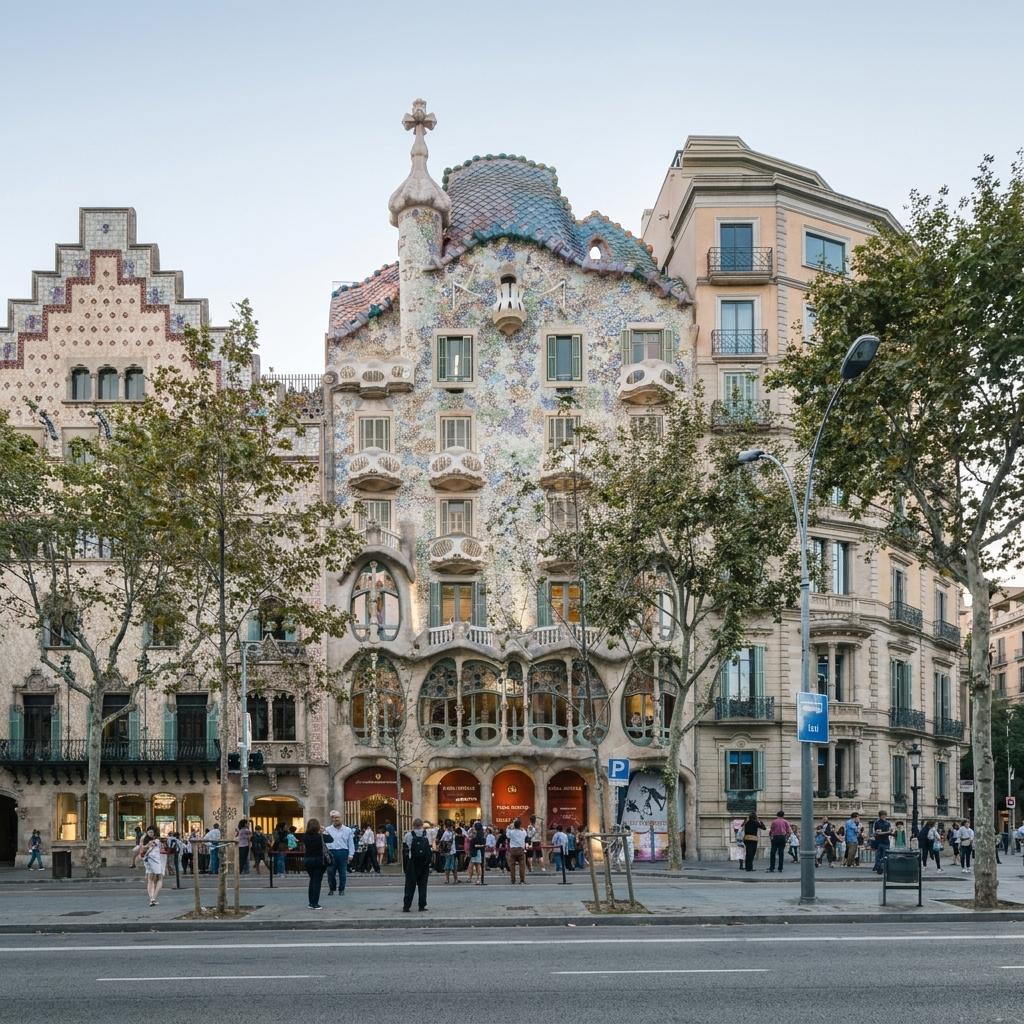
Casa Batlló
- Talked out of demolition
- Building on despite stop orders
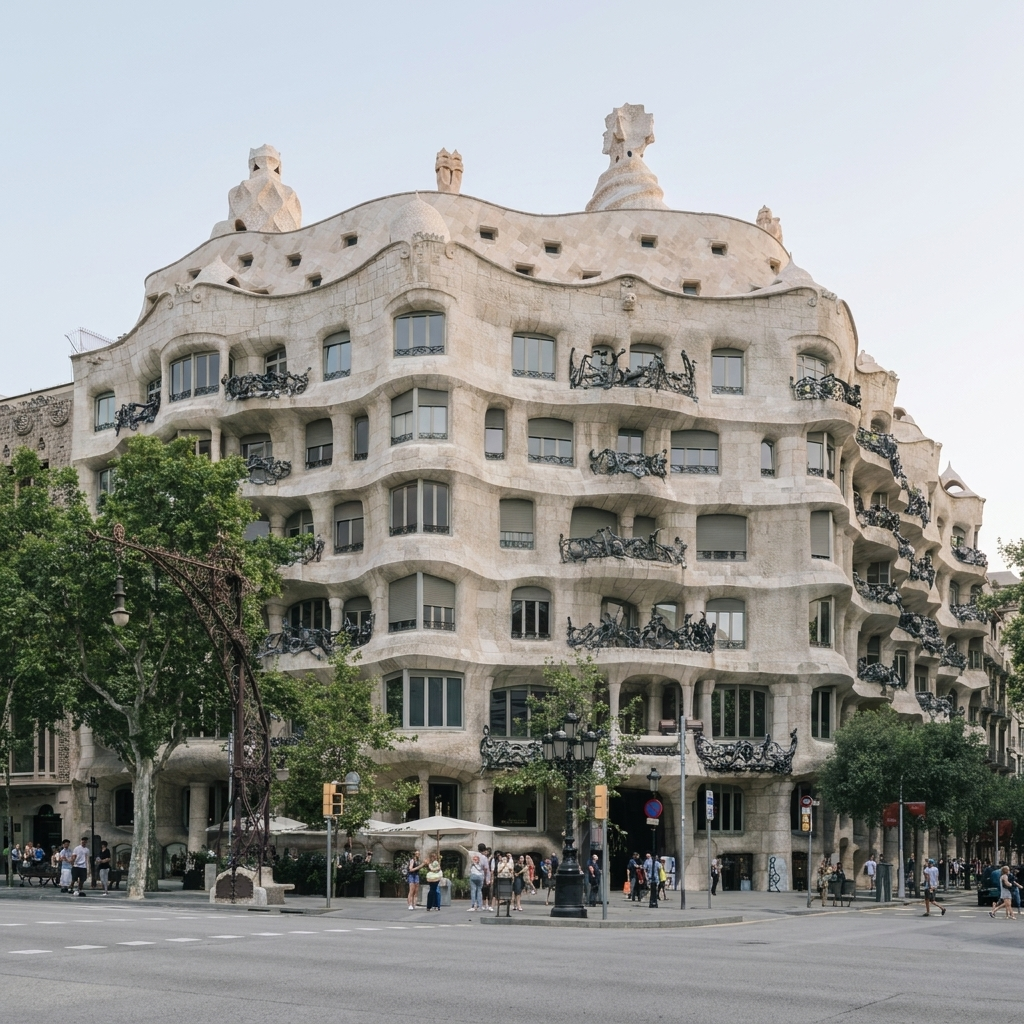
La Pedrera (Casa Milà)
- Owners sued by their architect
- The Virgin scrapped after riots
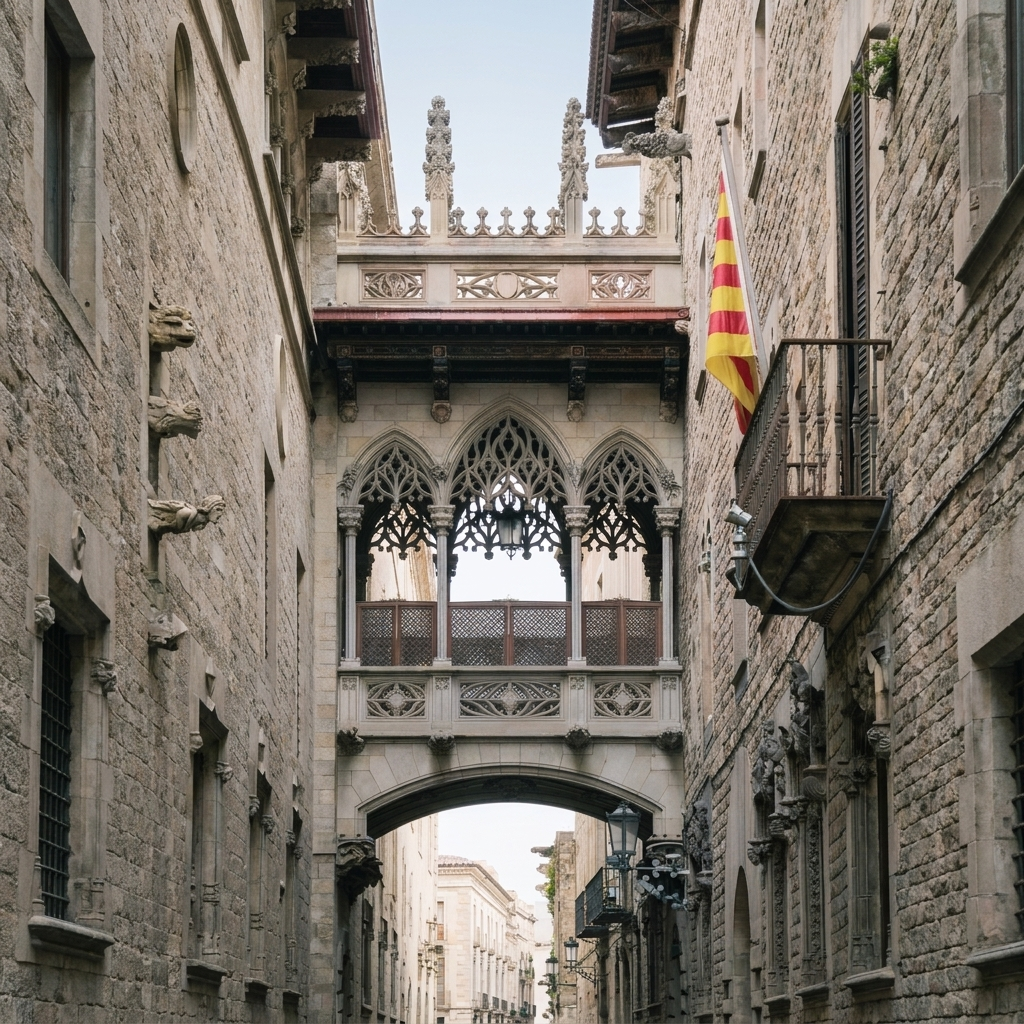
Gothic Quarter
- Staging a medieval past
- A massacre empties the Jewish quarter
24 more places in Barcelona
La Rambla · Barcelona Cathedral · La Boqueria · Museu Picasso · Palau de la Música Catalana · Santa Maria del Mar · Magic Fountain of Montjuïc · Camp Nou · Montserrat · Casa Vicens · Palau Güell · Recinte Modernista de Sant Pau · Plaça Reial · Plaça de Sant Jaume · Plaça del Rei · Plaça de Sant Felip Neri · El Born Centre de Cultura i Memòria · Ciutadella Park · Barceloneta · Plaça de Catalunya · Montjuïc Castle · Museu Nacional d'Art de Catalunya · Plaça d'Espanya · Bunkers del Carmel
HOW IT WORKS
Walk near a place.
The story finds you.
Get a notification when you’re near a story place. Tap to listen.
Sagrada Família
nowJust steps away.
Tap to hear the drama.

INSIDE EACH PLACE
From drama,
to idea,
to insight.
For example: the Sagrada Família.
1. Hear the drama behind the place.
Sagrada Família
- Built on alms alone
- The architect taken for a beggar
In this story, you’ll discover
Chapter 1
A Church Paid for by Alms
The idea didn't begin with Gaudí. It began with a bookseller named Josep Maria Bocabella, a devout Catholic who founded an association of devotees of Saint Joseph. In time it had hundreds of thousands of members. Together they set out to build a church to the Holy Family: Jesus, Mary and Joseph. It was to be an expiatory temple, and its full name is still the Expiatory Temple of the Holy Family. To expiate means to make amends for wrongdoing. This church would be paid for only with the gifts of ordinary believers, not by any king or state, so that building it would itself be an act of atonement for humanity's sins. The association bought land in what was then a separate town outside the city, and work began on a neo-Gothic design by the diocese's architect. Within a year he had fallen out with the association over the cost of materials and left. The job went to a young architect just past thirty, Antoni Gaudí. He kept the crypt that had been started, then redesigned almost everything above it. Gifts set the pace. When donations came in, the work moved; when they dried up, it slowed. Asked when the church would be finished, Gaudí is said to have answered, "My client is not in a hurry." The client he meant was God.
A reflection for you
Gaudí spent more than forty years designing the Sagrada Família, yet less than a quarter was built when he died. Knowing he would never see it finished, he completed parts of it as models for the architects who would follow. Is there something you would want to give your time to now, even if you never got to see it finished?
1×2. Learn the ideas inside the story.
Sagrada Família
- Built on alms alone
- The architect taken for a beggar
In this story, you’ll discover
Chapter 1
A Church Paid for by Alms
The idea didn't begin with Gaudí. It began with a bookseller named Josep Maria Bocabella, a devout Catholic who founded an association of devotees of Saint Joseph. In time it had hundreds of thousands of members. Together they set out to build a church to the Holy Family: Jesus, Mary and Joseph. It was to be an expiatory temple, and its full name is still the Expiatory Temple of the Holy Family. To expiate means to make amends for wrongdoing. This church would be paid for only with the gifts of ordinary believers, not by any king or state, so that building it would itself be an act of atonement for humanity's sins. The association bought land in what was then a separate town outside the city, and work began on a neo-Gothic design by the diocese's architect. Within a year he had fallen out with the association over the cost of materials and left. The job went to a young architect just past thirty, Antoni Gaudí. He kept the crypt that had been started, then redesigned almost everything above it. Gifts set the pace. When donations came in, the work moved; when they dried up, it slowed. Asked when the church would be finished, Gaudí is said to have answered, "My client is not in a hurry." The client he meant was God.
A reflection for you
Gaudí spent more than forty years designing the Sagrada Família, yet less than a quarter was built when he died. Knowing he would never see it finished, he completed parts of it as models for the architects who would follow. Is there something you would want to give your time to now, even if you never got to see it finished?
1×3. Keep an insight that’s only yours.
Sagrada Família
- Built on alms alone
- The architect taken for a beggar
In this story, you’ll discover
Chapter 1
A Church Paid for by Alms
The idea didn't begin with Gaudí. It began with a bookseller named Josep Maria Bocabella, a devout Catholic who founded an association of devotees of Saint Joseph. In time it had hundreds of thousands of members. Together they set out to build a church to the Holy Family: Jesus, Mary and Joseph. It was to be an expiatory temple, and its full name is still the Expiatory Temple of the Holy Family. To expiate means to make amends for wrongdoing. This church would be paid for only with the gifts of ordinary believers, not by any king or state, so that building it would itself be an act of atonement for humanity's sins. The association bought land in what was then a separate town outside the city, and work began on a neo-Gothic design by the diocese's architect. Within a year he had fallen out with the association over the cost of materials and left. The job went to a young architect just past thirty, Antoni Gaudí. He kept the crypt that had been started, then redesigned almost everything above it. Gifts set the pace. When donations came in, the work moved; when they dried up, it slowed. Asked when the church would be finished, Gaudí is said to have answered, "My client is not in a hurry." The client he meant was God.
A reflection for you
Gaudí spent more than forty years designing the Sagrada Família, yet less than a quarter was built when he died. Knowing he would never see it finished, he completed parts of it as models for the architects who would follow. Is there something you would want to give your time to now, even if you never got to see it finished?
1×BEFORE YOU GO
FAQ
An audio guide gives you the facts: dates, names, what it was built for. Odys‑say tells you the drama: the people behind the place, what they wanted, and what it cost them. The ideas behind the city come with the story, and it ends with an insight that’s only yours.
The story first: who was here, what they were up against, and what they chose. Then, inside that story, one or two ideas that help you understand the city more deeply, from history and politics to art, religion, and philosophy.
Explore the city as you normally would. When you’re near one of Odys‑say’s story places, your phone can let you know. Tap the notification, and the story is ready to hear right where you are.
The drama stays the same. What changes is what comes at the end. Based on what you chose to reflect on, Odys‑say connects something from the story to a question or insight that feels relevant to you.
Your first story is included. If you want to keep exploring, you can unlock the whole city for $9.99. It’s a one-time purchase, not a subscription.
A deeper way
to travel
Barcelona
Human stories at every place,
and what they leave with you.
No subscription.
One-time city purchase.