
YOUR TRAVEL DOCENT
Travel deeper into Delhi, through its human stories.
At each place,
- Drama and backstory
- History & ideas behind them
- Insight that’s only yours
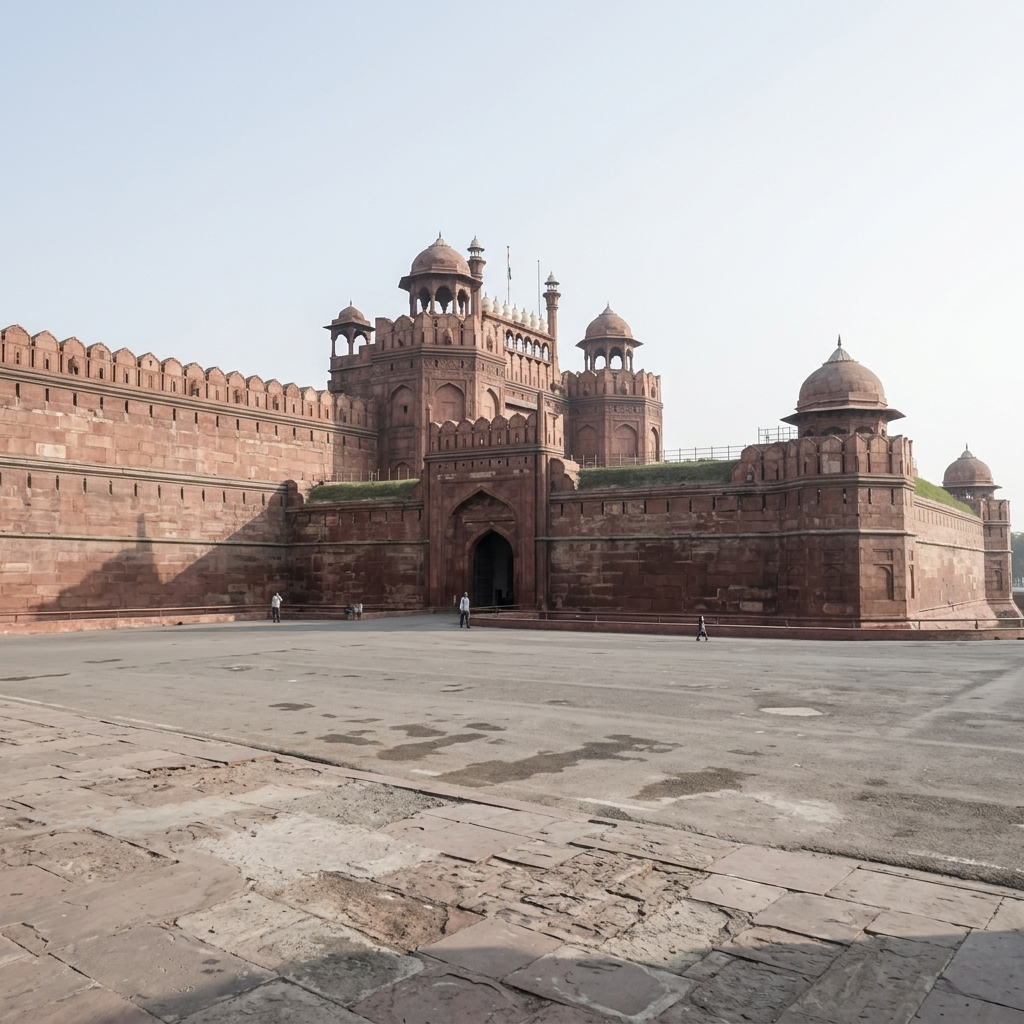
Red Fort
- An emperor pressed into revolt
- Accused officers become heroes
In this story, you’ll discover
Chapter 1
The Emperor's Morning Window
The Mughals were a Muslim dynasty with roots in Central Asia, and from the early 1500s they ruled much of India. In their palace, being seen was part of the job of ruling. Every morning, shortly after sunrise, the emperor stepped up to a window in the tower on the river side of the fort, a window called a jharokha. In those days the Yamuna River ran close below that wall; it has since shifted away. Crowds gathered on the riverbank to see his face, and some people would not eat until they had seen him. It wasn't just a show of splendour. The emperor's face at that window was proof, every single day, that the man at the top was alive and in charge. That's why it mattered so much when he didn't appear. In 1657, Shah Jahan fell seriously ill and missed his morning appearance. Shops in the bazaars closed, and rumours spread that the emperor was already dead and his death was being kept secret. Within months, his sons were at war over the throne. The son who won, Aurangzeb, kept his father locked up in another fort, at Agra, until the old man died.

A reflection for you
The last Mughal emperor told the rebels he couldn't feed or pay them. They insisted they couldn't win without him, and he agreed to lead. When someone says, 'We need you,' what draws you in: the thing they're asking you to do, or the feeling of being someone they can't do without?

 1×1×
BEHIND EVERY PLACE
The people the plaques leave out.
A plaque gives you a date and a name. Here, you get the person, and the ideas that shaped Delhi come with the story.
Red Fort
- An emperor pressed into revolt
- Accused officers become heroes
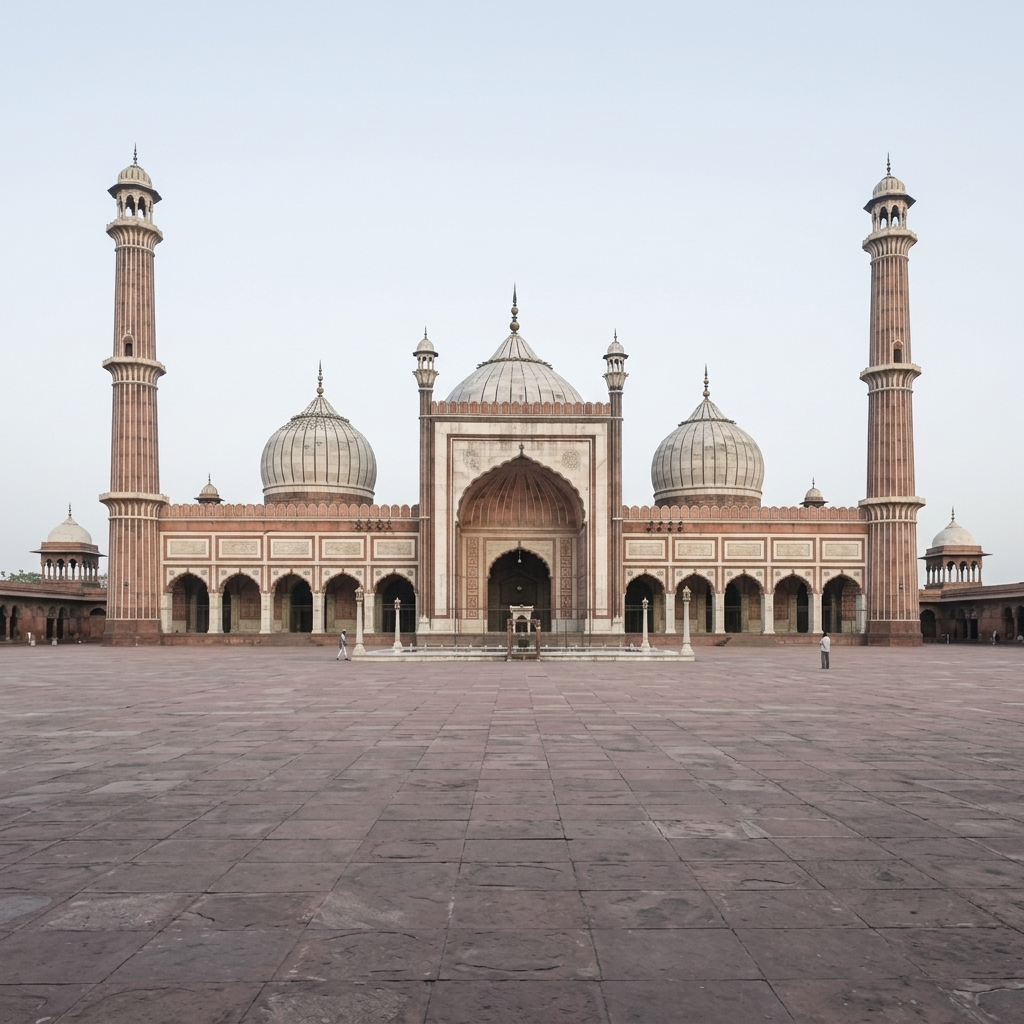
Jama Masjid
- A mosque seized for five years
- Begging Delhi's Muslims to stay
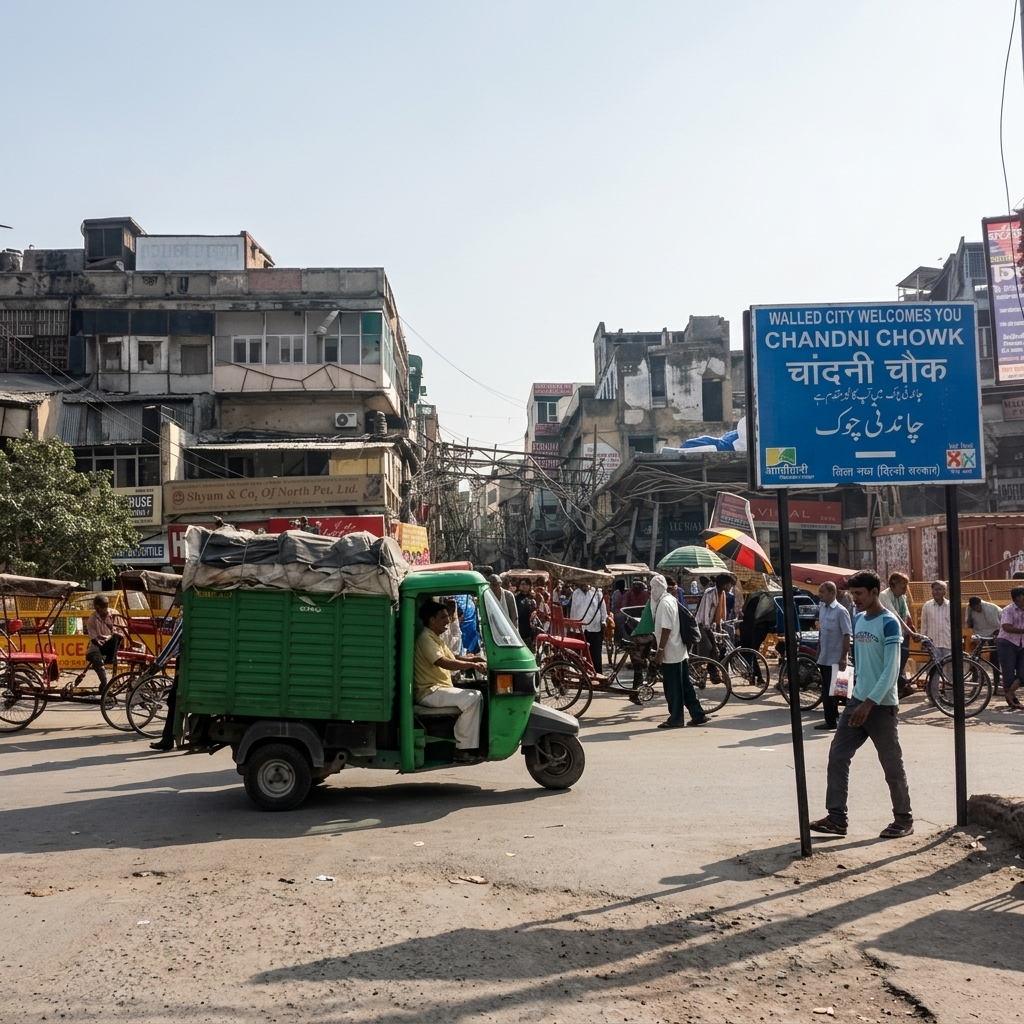
Chandni Chowk
- A princess's moonlit pool
- A Hindu merchant buys a mosque
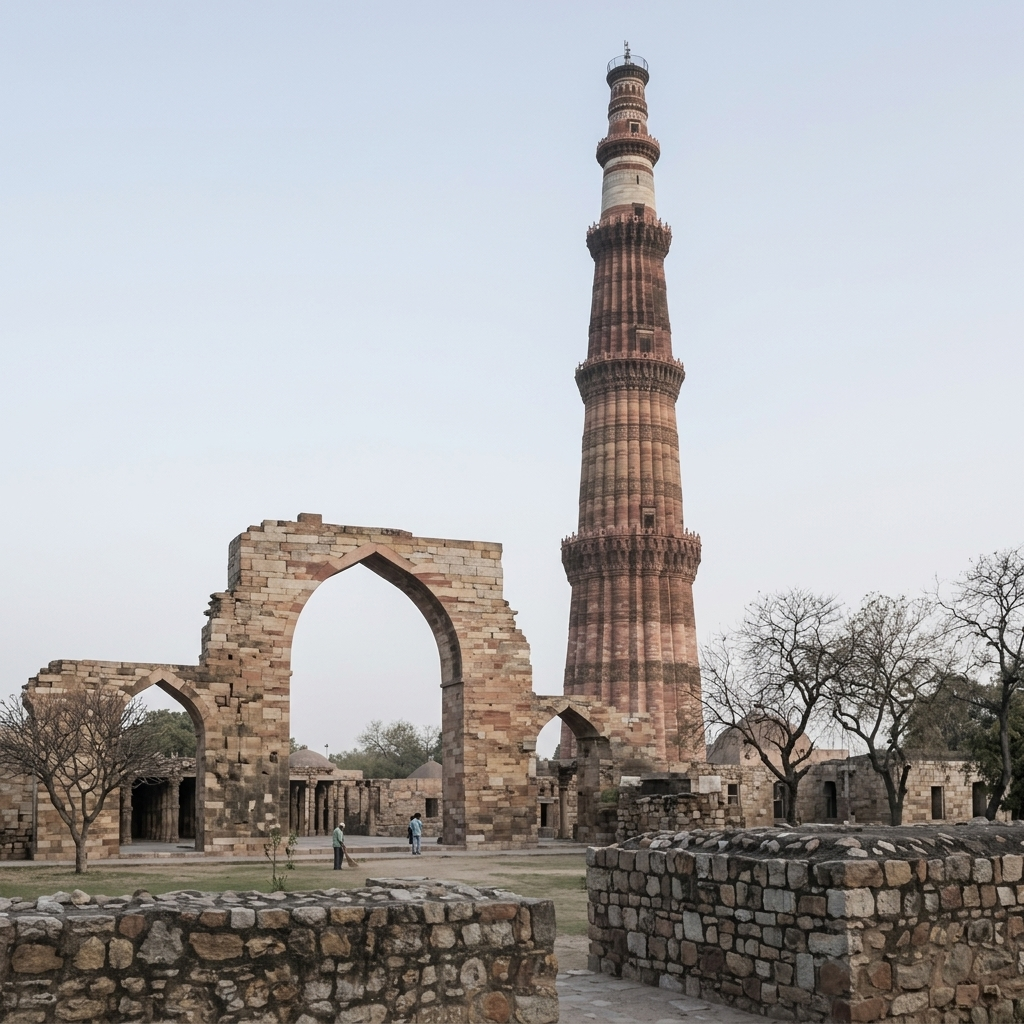
Qutub Minar
- Slaves who became sultans
- A stampede on the dark stairs
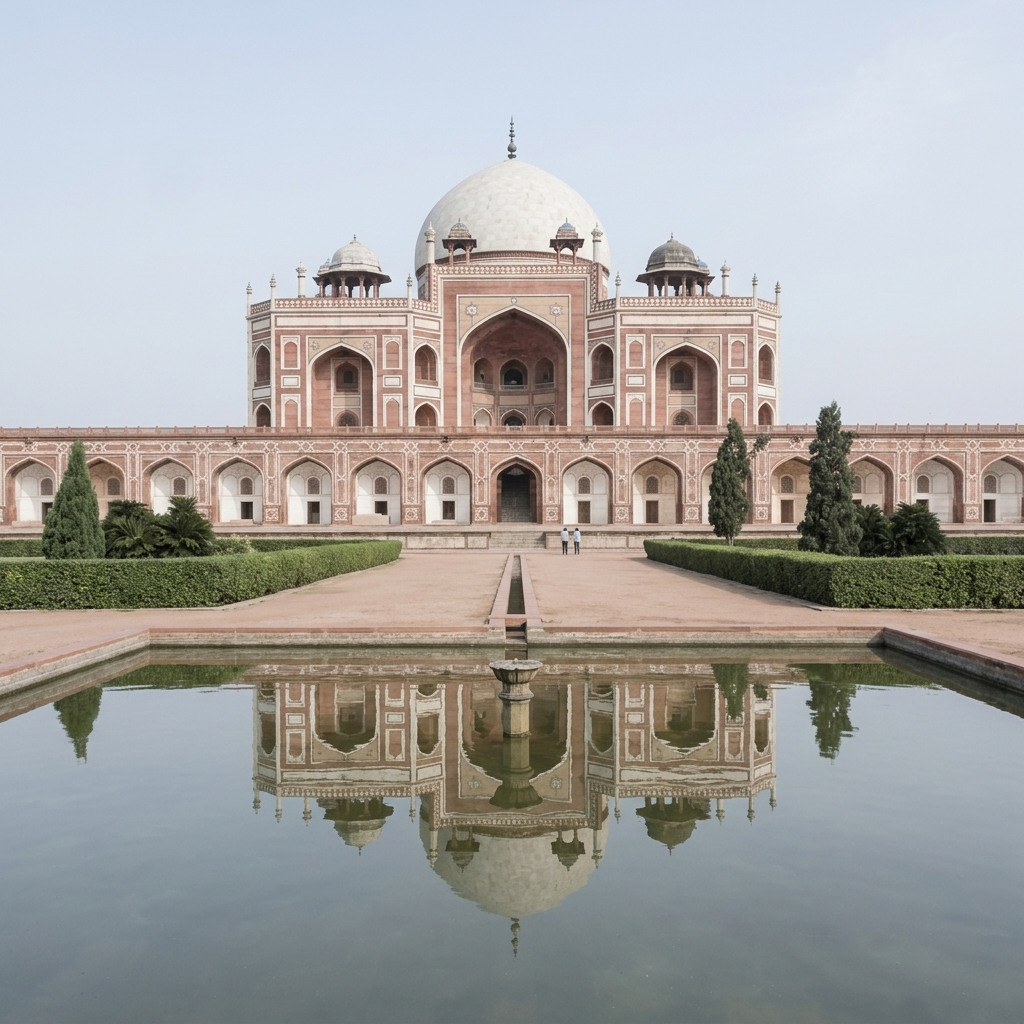
Humayun's Tomb
- The widow behind the tomb
- Last emperor hides among ancestors
19 more places in Delhi
India Gate · Lotus Temple · Gurudwara Bangla Sahib · Raj Ghat (Gandhi Memorial) · Rashtrapati Bhavan (President's House) · Akshardham Temple · Nizamuddin Dargah · Lodhi Gardens · Purana Qila · Agrasen ki Baoli · Mehrauli Archaeological Park · Hauz Khas Complex · Feroz Shah Kotla (Fort Ruins) · Gandhi Smriti (Gandhi Museum) · Gurudwara Sis Ganj Sahib · Birla Mandir - Laxminarayan Temple · Jantar Mantar (Observatory) · Sunder Nursery · Indira Gandhi Memorial Museum
HOW IT WORKS
Walk near a place.
The story finds you.
Get a notification when you’re near a story place. Tap to listen.
Red Fort
nowJust steps away.
Tap to hear the drama.

INSIDE EACH PLACE
From drama,
to idea,
to insight.
For example: the Red Fort.
1. Hear the drama behind the place.
Red Fort
- An emperor pressed into revolt
- Accused officers become heroes
In this story, you’ll discover
Chapter 1
The Emperor's Morning Window
The Mughals were a Muslim dynasty with roots in Central Asia, and from the early 1500s they ruled much of India. In their palace, being seen was part of the job of ruling. Every morning, shortly after sunrise, the emperor stepped up to a window in the tower on the river side of the fort, a window called a jharokha. In those days the Yamuna River ran close below that wall; it has since shifted away. Crowds gathered on the riverbank to see his face, and some people would not eat until they had seen him. It wasn't just a show of splendour. The emperor's face at that window was proof, every single day, that the man at the top was alive and in charge. That's why it mattered so much when he didn't appear. In 1657, Shah Jahan fell seriously ill and missed his morning appearance. Shops in the bazaars closed, and rumours spread that the emperor was already dead and his death was being kept secret. Within months, his sons were at war over the throne. The son who won, Aurangzeb, kept his father locked up in another fort, at Agra, until the old man died.
A reflection for you
The last Mughal emperor told the rebels he couldn't feed or pay them. They insisted they couldn't win without him, and he agreed to lead. When someone says, 'We need you,' what draws you in: the thing they're asking you to do, or the feeling of being someone they can't do without?
1×2. Learn the ideas inside the story.
Red Fort
- An emperor pressed into revolt
- Accused officers become heroes
In this story, you’ll discover
Chapter 1
The Emperor's Morning Window
The Mughals were a Muslim dynasty with roots in Central Asia, and from the early 1500s they ruled much of India. In their palace, being seen was part of the job of ruling. Every morning, shortly after sunrise, the emperor stepped up to a window in the tower on the river side of the fort, a window called a jharokha. In those days the Yamuna River ran close below that wall; it has since shifted away. Crowds gathered on the riverbank to see his face, and some people would not eat until they had seen him. It wasn't just a show of splendour. The emperor's face at that window was proof, every single day, that the man at the top was alive and in charge. That's why it mattered so much when he didn't appear. In 1657, Shah Jahan fell seriously ill and missed his morning appearance. Shops in the bazaars closed, and rumours spread that the emperor was already dead and his death was being kept secret. Within months, his sons were at war over the throne. The son who won, Aurangzeb, kept his father locked up in another fort, at Agra, until the old man died.
A reflection for you
The last Mughal emperor told the rebels he couldn't feed or pay them. They insisted they couldn't win without him, and he agreed to lead. When someone says, 'We need you,' what draws you in: the thing they're asking you to do, or the feeling of being someone they can't do without?
1×3. Keep an insight that’s only yours.
Red Fort
- An emperor pressed into revolt
- Accused officers become heroes
In this story, you’ll discover
Chapter 1
The Emperor's Morning Window
The Mughals were a Muslim dynasty with roots in Central Asia, and from the early 1500s they ruled much of India. In their palace, being seen was part of the job of ruling. Every morning, shortly after sunrise, the emperor stepped up to a window in the tower on the river side of the fort, a window called a jharokha. In those days the Yamuna River ran close below that wall; it has since shifted away. Crowds gathered on the riverbank to see his face, and some people would not eat until they had seen him. It wasn't just a show of splendour. The emperor's face at that window was proof, every single day, that the man at the top was alive and in charge. That's why it mattered so much when he didn't appear. In 1657, Shah Jahan fell seriously ill and missed his morning appearance. Shops in the bazaars closed, and rumours spread that the emperor was already dead and his death was being kept secret. Within months, his sons were at war over the throne. The son who won, Aurangzeb, kept his father locked up in another fort, at Agra, until the old man died.
A reflection for you
The last Mughal emperor told the rebels he couldn't feed or pay them. They insisted they couldn't win without him, and he agreed to lead. When someone says, 'We need you,' what draws you in: the thing they're asking you to do, or the feeling of being someone they can't do without?
1×BEFORE YOU GO
FAQ
An audio guide gives you the facts: dates, names, what it was built for. Odys‑say tells you the drama: the people behind the place, what they wanted, and what it cost them. The ideas behind the city come with the story, and it ends with an insight that’s only yours.
The story first: who was here, what they were up against, and what they chose. Then, inside that story, one or two ideas that help you understand the city more deeply, from history and politics to art, religion, and philosophy.
Explore the city as you normally would. When you’re near one of Odys‑say’s story places, your phone can let you know. Tap the notification, and the story is ready to hear right where you are.
The drama stays the same. What changes is what comes at the end. Based on what you chose to reflect on, Odys‑say connects something from the story to a question or insight that feels relevant to you.
Your first story is included. If you want to keep exploring, you can unlock the whole city for $9.99. It’s a one-time purchase, not a subscription.
A deeper way
to travel
Delhi
Human stories at every place,
and what they leave with you.
No subscription.
One-time city purchase.