
YOUR TRAVEL DOCENT
Travel deeper into Granada, through its human stories.
At each place,
- Drama and backstory
- History & ideas behind them
- Insight that’s only yours
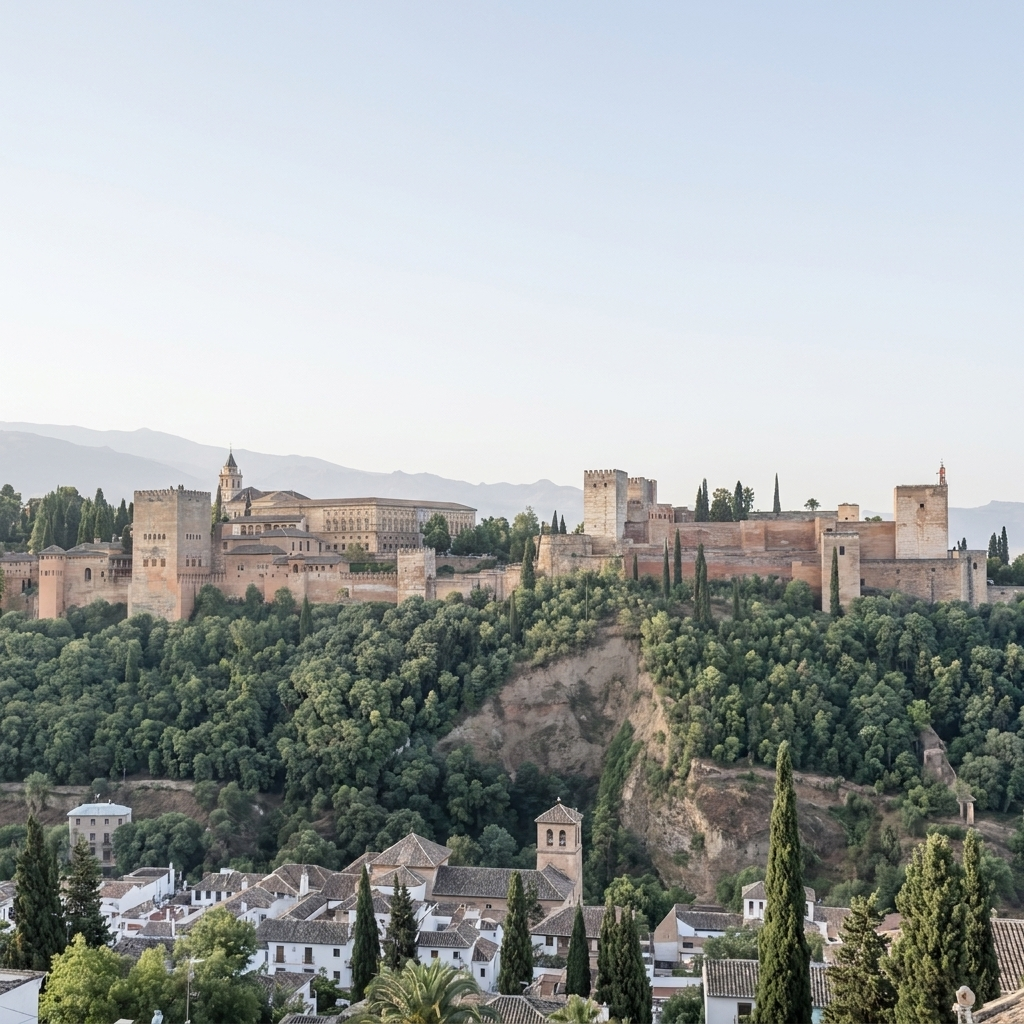
Alhambra
- Writing in the empty palace
- Legend of the fuse-cutting corporal
In this story, you’ll discover
Chapter 1
A Kingdom on a Dry Hill
The story begins with Muhammad ibn al-Ahmar, a frontier leader from a small town north of Granada. In the early thirteenth century, Muslim Spain was breaking apart, and the Christian kingdoms of the north were taking one great city after another. In 1238 he made Granada the capital of his own small kingdom, and the family he founded, the Nasrids, ruled it for two and a half centuries. He first lived in the old fortress on the Albaicín hill across the valley. Then he chose this ridge instead and began a new citadel at its western tip. The hill had no water of its own, so right away his builders brought water up in a channel from the river. The walls were built of rammed earth, and the iron in the local clay turned them reddish. People called it al-Hamra, Arabic for "the red one," and that name became Alhambra. The Nasrids survived as the last Muslim kingdom in Spain by fighting when they could and bargaining when they had to. The founder himself became a vassal of the king of Castile. He paid the Castilian king tribute, and even sent soldiers to help Castile take Seville. Over the next two centuries his descendants added the palaces, and a whole town for the court grew up around them, with its own houses and workshops, its baths and its mosques. It all ended in 1492, when the last sultan handed the Alhambra to Ferdinand and Isabella, the Catholic Monarchs.

A reflection for you
The king who founded the Alhambra became a vassal of Castile and helped it conquer Seville. His kingdom survived, and his descendants kept building here. In one city, he was a protector; in another, he helped the invaders. Knowing the same facts may never lead to the same judgment when one community remembers what it kept and another what it lost.

 1×1×
BEHIND EVERY PLACE
The people the plaques leave out.
A plaque gives you a date and a name. Here, you get the person, and the ideas that shaped Granada come with the story.
Alhambra
- Writing in the empty palace
- Legend of the fuse-cutting corporal
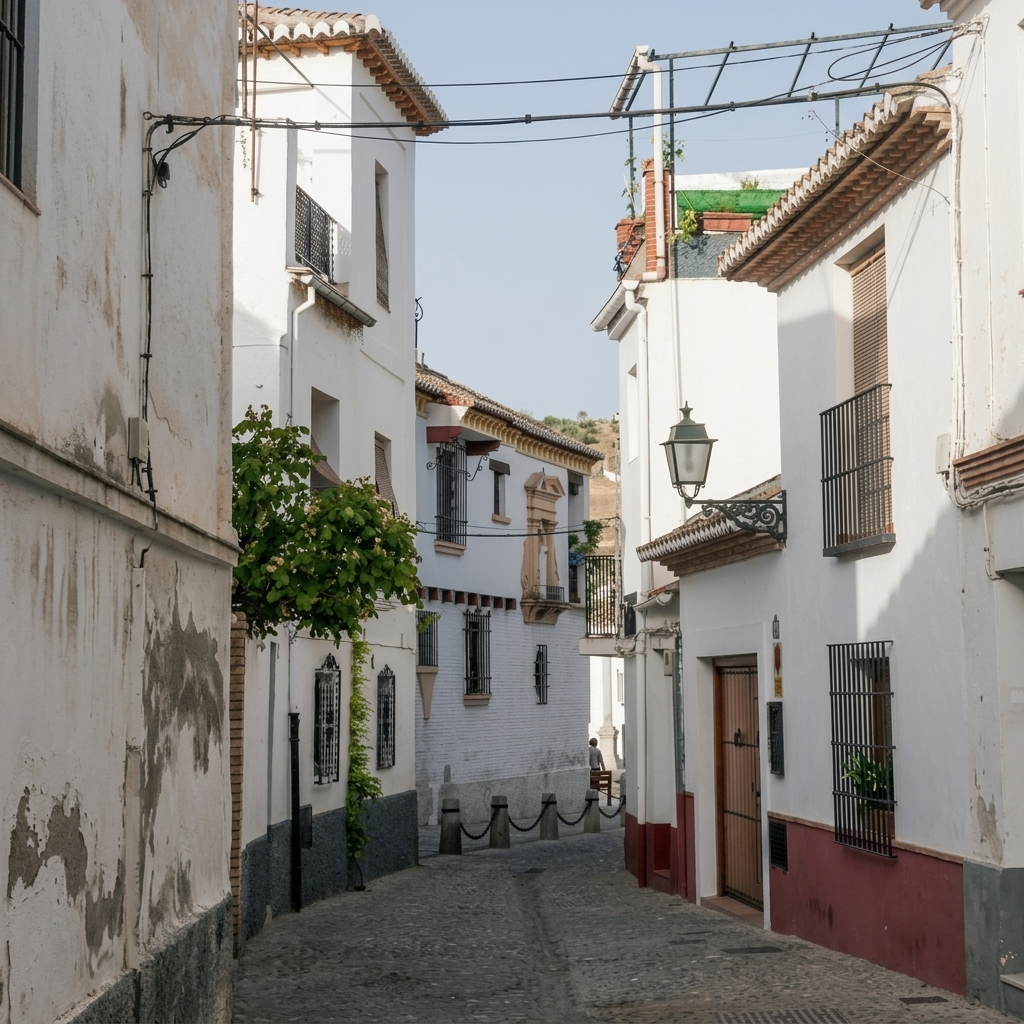
Albaicín
- Baptism, the price of pardon
- Stayed out, expelled anyway
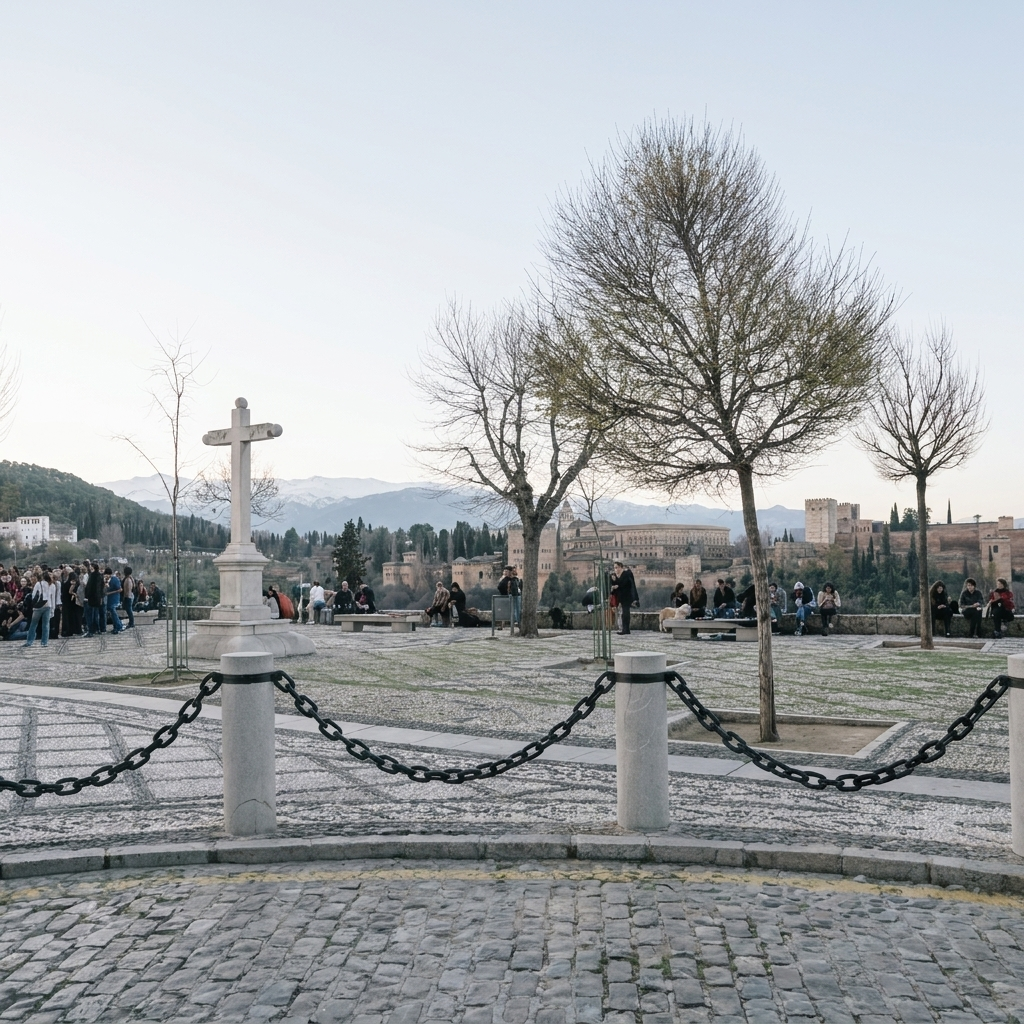
Mirador de San Nicolás
- Converts fight for a mosque
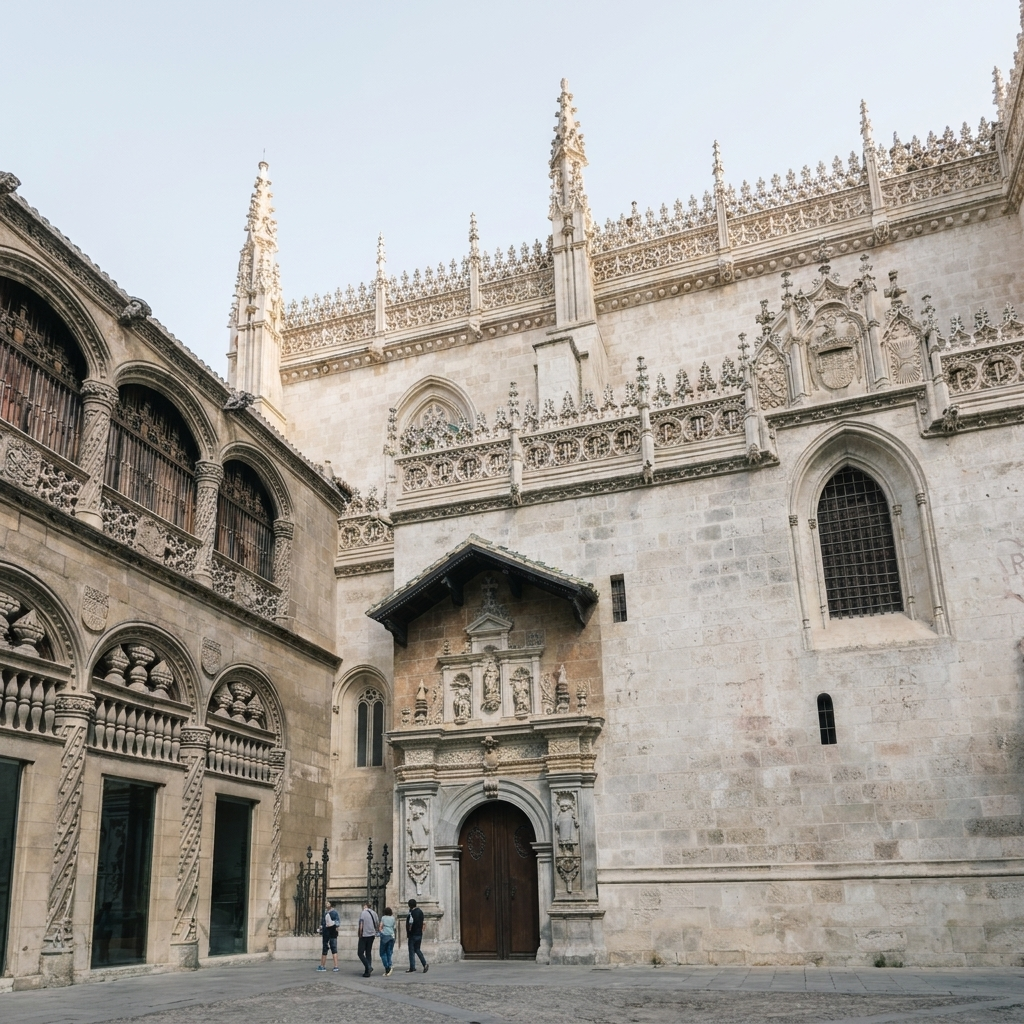
Royal Chapel of Granada
- A queen denied a plain grave
- Guarding her husband's coffin
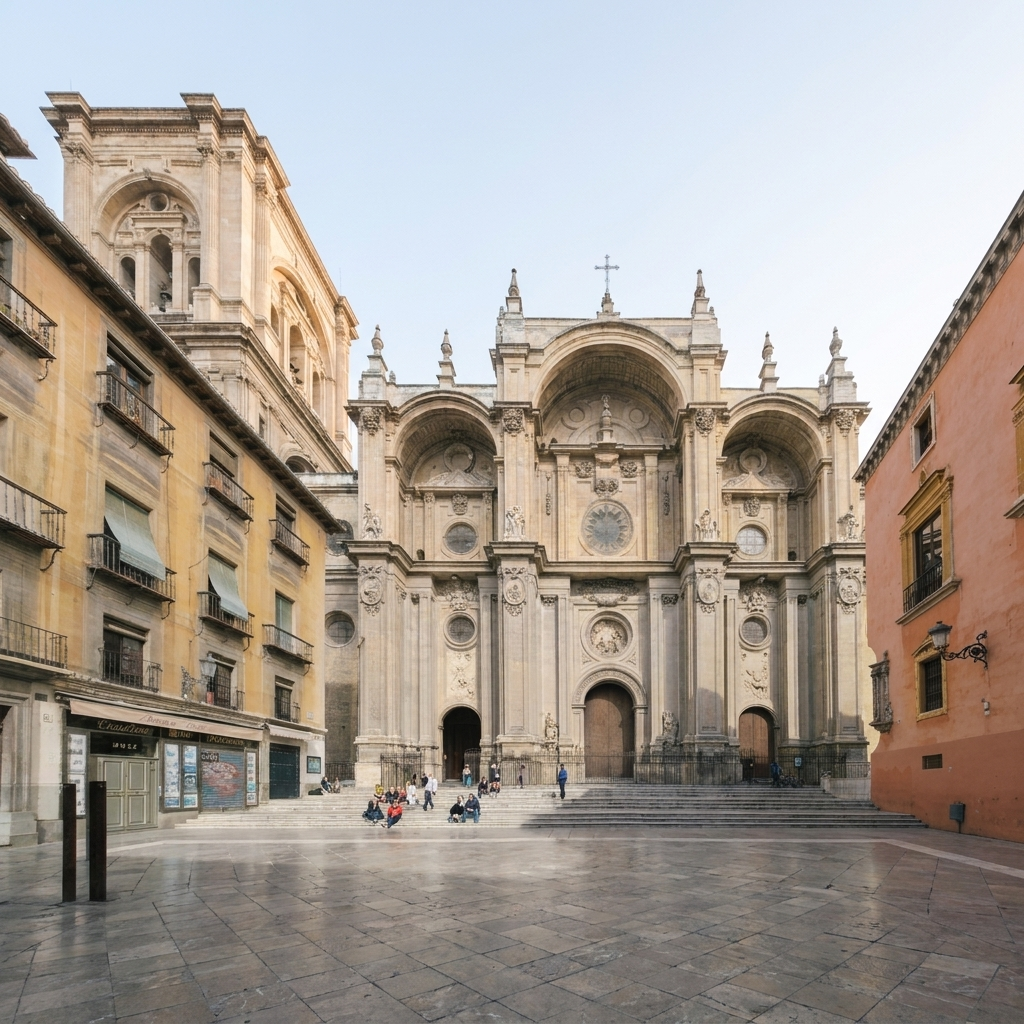
Granada Cathedral
- The murder suspect's facade
14 more places in Granada
Sacromonte · Basílica de San Juan de Dios · Alhambra · Nasrid Palaces · Alhambra · Generalife · Alhambra · Alcazaba · Alhambra · Palace of Charles V · Carrera del Darro · Monasterio de San Jerónimo · Monasterio de la Cartuja · Plaza Nueva · Plaza de Bib-Rambla · Corral del Carbón · El Bañuelo · Huerta de San Vicente
HOW IT WORKS
Walk near a place.
The story finds you.
Get a notification when you’re near a story place. Tap to listen.
Alhambra
nowJust steps away.
Tap to hear the drama.

INSIDE EACH PLACE
From drama,
to idea,
to insight.
For example: the Alhambra.
1. Hear the drama behind the place.
Alhambra
- Writing in the empty palace
- Legend of the fuse-cutting corporal
In this story, you’ll discover
Chapter 1
A Kingdom on a Dry Hill
The story begins with Muhammad ibn al-Ahmar, a frontier leader from a small town north of Granada. In the early thirteenth century, Muslim Spain was breaking apart, and the Christian kingdoms of the north were taking one great city after another. In 1238 he made Granada the capital of his own small kingdom, and the family he founded, the Nasrids, ruled it for two and a half centuries. He first lived in the old fortress on the Albaicín hill across the valley. Then he chose this ridge instead and began a new citadel at its western tip. The hill had no water of its own, so right away his builders brought water up in a channel from the river. The walls were built of rammed earth, and the iron in the local clay turned them reddish. People called it al-Hamra, Arabic for "the red one," and that name became Alhambra. The Nasrids survived as the last Muslim kingdom in Spain by fighting when they could and bargaining when they had to. The founder himself became a vassal of the king of Castile. He paid the Castilian king tribute, and even sent soldiers to help Castile take Seville. Over the next two centuries his descendants added the palaces, and a whole town for the court grew up around them, with its own houses and workshops, its baths and its mosques. It all ended in 1492, when the last sultan handed the Alhambra to Ferdinand and Isabella, the Catholic Monarchs.
A reflection for you
The king who founded the Alhambra became a vassal of Castile and helped it conquer Seville. His kingdom survived, and his descendants kept building here. In one city, he was a protector; in another, he helped the invaders. Knowing the same facts may never lead to the same judgment when one community remembers what it kept and another what it lost.
1×2. Learn the ideas inside the story.
Alhambra
- Writing in the empty palace
- Legend of the fuse-cutting corporal
In this story, you’ll discover
Chapter 1
A Kingdom on a Dry Hill
The story begins with Muhammad ibn al-Ahmar, a frontier leader from a small town north of Granada. In the early thirteenth century, Muslim Spain was breaking apart, and the Christian kingdoms of the north were taking one great city after another. In 1238 he made Granada the capital of his own small kingdom, and the family he founded, the Nasrids, ruled it for two and a half centuries. He first lived in the old fortress on the Albaicín hill across the valley. Then he chose this ridge instead and began a new citadel at its western tip. The hill had no water of its own, so right away his builders brought water up in a channel from the river. The walls were built of rammed earth, and the iron in the local clay turned them reddish. People called it al-Hamra, Arabic for "the red one," and that name became Alhambra. The Nasrids survived as the last Muslim kingdom in Spain by fighting when they could and bargaining when they had to. The founder himself became a vassal of the king of Castile. He paid the Castilian king tribute, and even sent soldiers to help Castile take Seville. Over the next two centuries his descendants added the palaces, and a whole town for the court grew up around them, with its own houses and workshops, its baths and its mosques. It all ended in 1492, when the last sultan handed the Alhambra to Ferdinand and Isabella, the Catholic Monarchs.
A reflection for you
The king who founded the Alhambra became a vassal of Castile and helped it conquer Seville. His kingdom survived, and his descendants kept building here. In one city, he was a protector; in another, he helped the invaders. Knowing the same facts may never lead to the same judgment when one community remembers what it kept and another what it lost.
1×3. Keep an insight that’s only yours.
Alhambra
- Writing in the empty palace
- Legend of the fuse-cutting corporal
In this story, you’ll discover
Chapter 1
A Kingdom on a Dry Hill
The story begins with Muhammad ibn al-Ahmar, a frontier leader from a small town north of Granada. In the early thirteenth century, Muslim Spain was breaking apart, and the Christian kingdoms of the north were taking one great city after another. In 1238 he made Granada the capital of his own small kingdom, and the family he founded, the Nasrids, ruled it for two and a half centuries. He first lived in the old fortress on the Albaicín hill across the valley. Then he chose this ridge instead and began a new citadel at its western tip. The hill had no water of its own, so right away his builders brought water up in a channel from the river. The walls were built of rammed earth, and the iron in the local clay turned them reddish. People called it al-Hamra, Arabic for "the red one," and that name became Alhambra. The Nasrids survived as the last Muslim kingdom in Spain by fighting when they could and bargaining when they had to. The founder himself became a vassal of the king of Castile. He paid the Castilian king tribute, and even sent soldiers to help Castile take Seville. Over the next two centuries his descendants added the palaces, and a whole town for the court grew up around them, with its own houses and workshops, its baths and its mosques. It all ended in 1492, when the last sultan handed the Alhambra to Ferdinand and Isabella, the Catholic Monarchs.
A reflection for you
The king who founded the Alhambra became a vassal of Castile and helped it conquer Seville. His kingdom survived, and his descendants kept building here. In one city, he was a protector; in another, he helped the invaders. Knowing the same facts may never lead to the same judgment when one community remembers what it kept and another what it lost.
1×BEFORE YOU GO
FAQ
An audio guide gives you the facts: dates, names, what it was built for. Odys‑say tells you the drama: the people behind the place, what they wanted, and what it cost them. The ideas behind the city come with the story, and it ends with an insight that’s only yours.
The story first: who was here, what they were up against, and what they chose. Then, inside that story, one or two ideas that help you understand the city more deeply, from history and politics to art, religion, and philosophy.
Explore the city as you normally would. When you’re near one of Odys‑say’s story places, your phone can let you know. Tap the notification, and the story is ready to hear right where you are.
The drama stays the same. What changes is what comes at the end. Based on what you chose to reflect on, Odys‑say connects something from the story to a question or insight that feels relevant to you.
Your first story is included. If you want to keep exploring, you can unlock the whole city for $9.99. It’s a one-time purchase, not a subscription.
A deeper way
to travel
Granada
Human stories at every place,
and what they leave with you.
No subscription.
One-time city purchase.