
YOUR TRAVEL DOCENT
Travel deeper into Jaisalmer, through its human stories.
At each place,
- Drama and backstory
- History & ideas behind them
- Insight that’s only yours
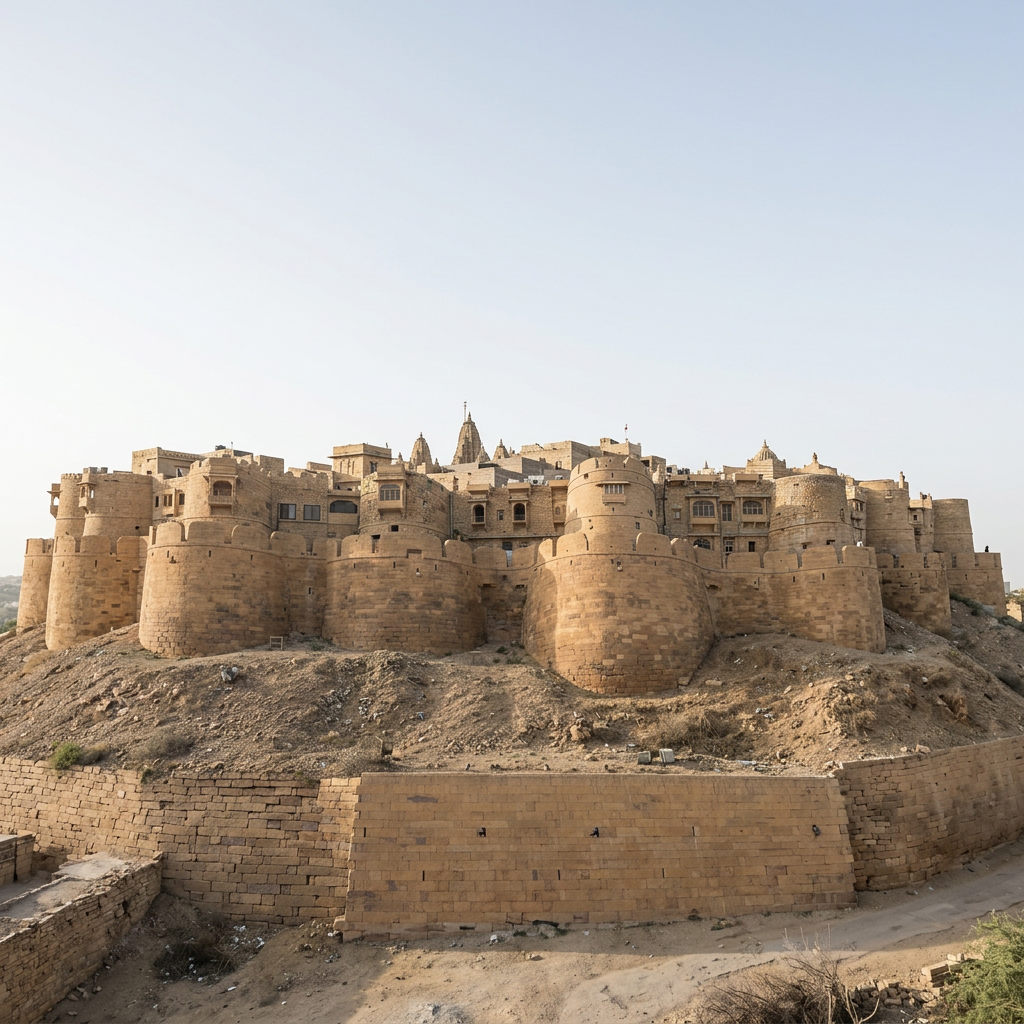
Jaisalmer Fort (Golden Fort)
- Sons raised by their father's enemy
- Residents stay as walls collapse
In this story, you’ll discover
Chapter 1
A Hermit's Warning on the Ridge
The founder was a Bhati prince named Jaisal, and the city carries his name: Jaisalmer, the hill of Jaisal. His family's old capital, Lodurva, lay some fifteen kilometres away on open ground, easy for raiders to reach. Jaisal wanted a capital no enemy could simply ride into, and he found the place for it here, on Trikuta, a ridge of rock standing alone above the flat sand. According to the Bhatis' chronicle, a hermit lived on the ridge beside a spring. He told Jaisal that the god Krishna, whom the Bhatis counted as their ancestor, had once foretold that a descendant of his would build a castle on this hill. This hermit also gave Jaisal the warning about two and a half sackings. Jaisal began building in 1156. The ridge itself was the first defence, and later kings added three rings of walls and ninety-nine bastions. What links the six forts on the World Heritage list is that each was built to let the land do part of the defending: a river, a forest or steep hills. Jaisalmer is the desert one, and from the very start it had a town inside its walls.

A reflection for you
An old story says Ratan Singh entrusted his sons to a friend in the enemy army before his final battle. He died fighting, but his elder son survived and later returned to rebuild the fort. How would you feel watching someone you love enjoy things you gave up? If joy came with regret, what wish might still be alive in that regret, though you thought you had put it aside?

 1×1×
BEHIND EVERY PLACE
The people the plaques leave out.
A plaque gives you a date and a name. Here, you get the person, and the ideas that shaped Jaisalmer come with the story.
Jaisalmer Fort (Golden Fort)
- Sons raised by their father's enemy
- Residents stay as walls collapse
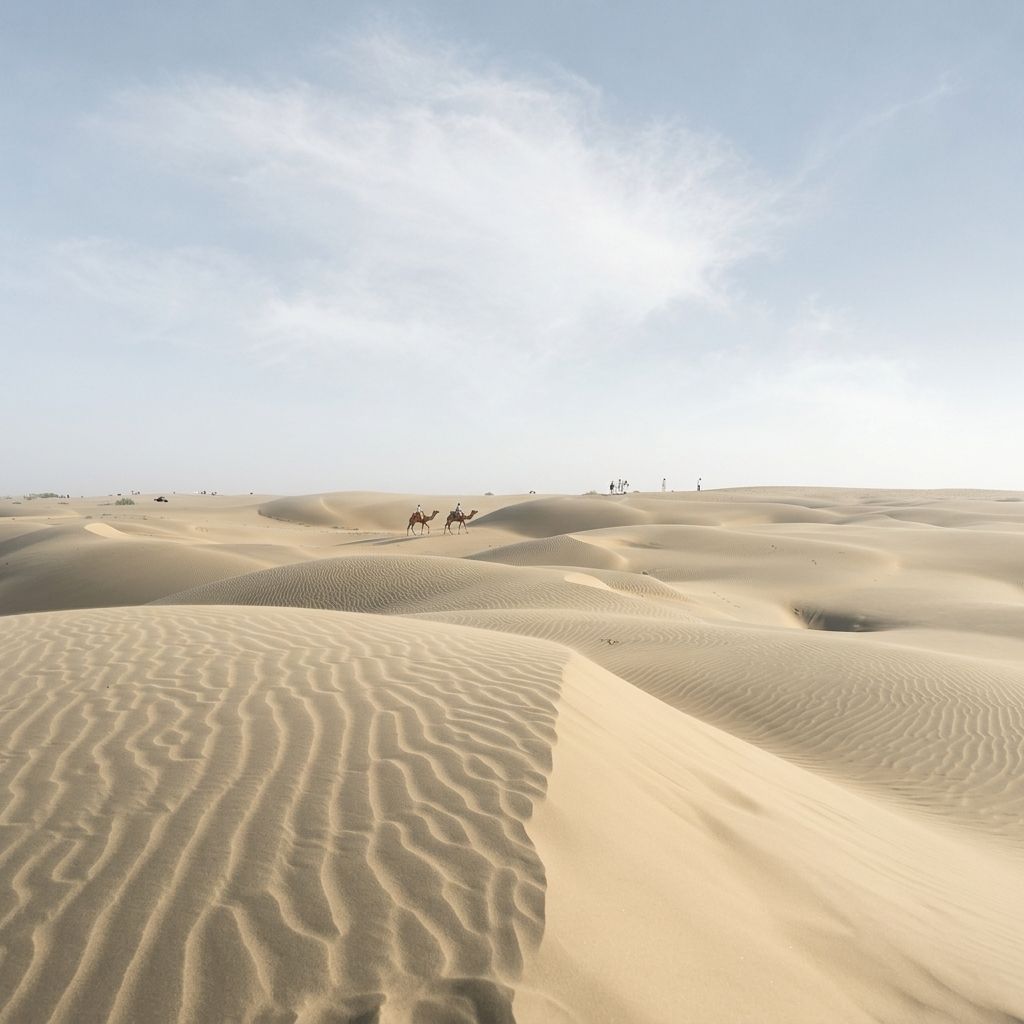
Sam Sand Dunes
- Camel protection hurts herders
- A gamble on bustard eggs
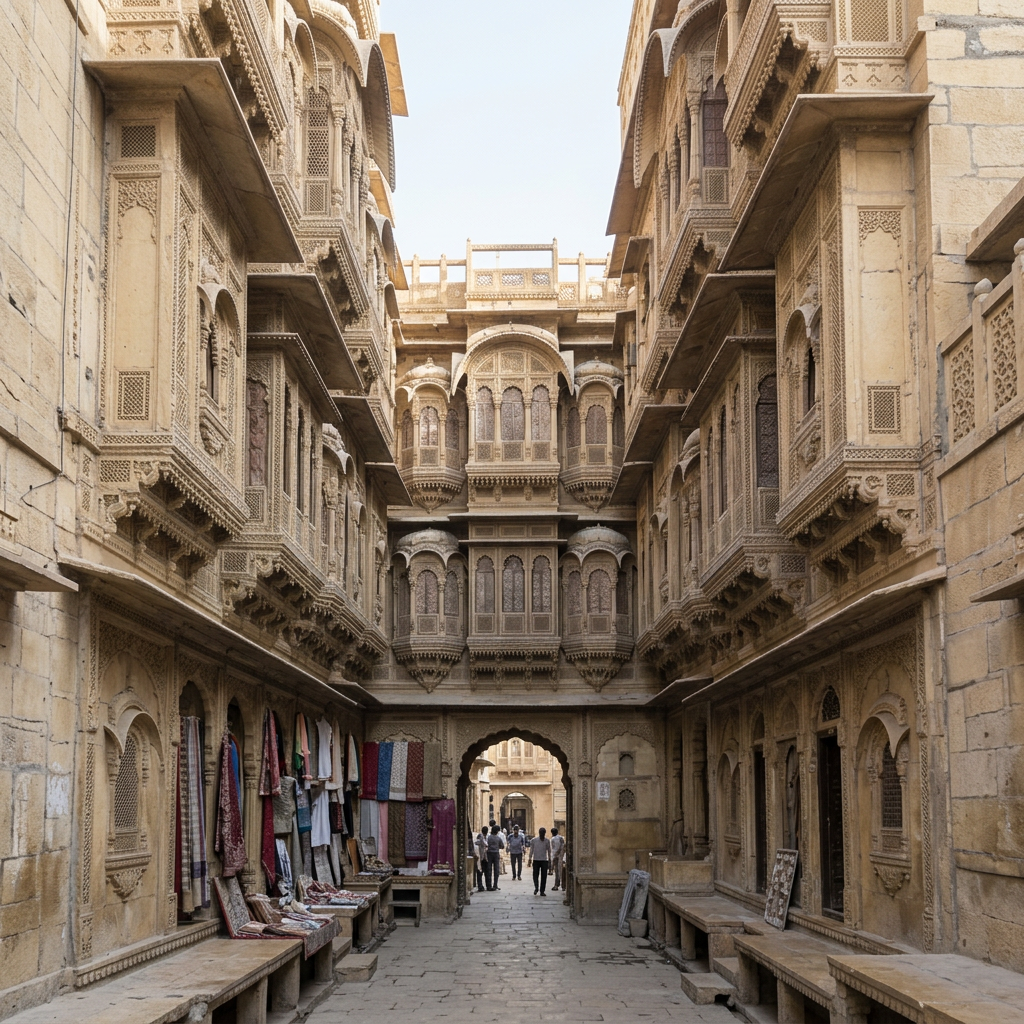
Patwon Ki Haveli
- Mansions for sons who left
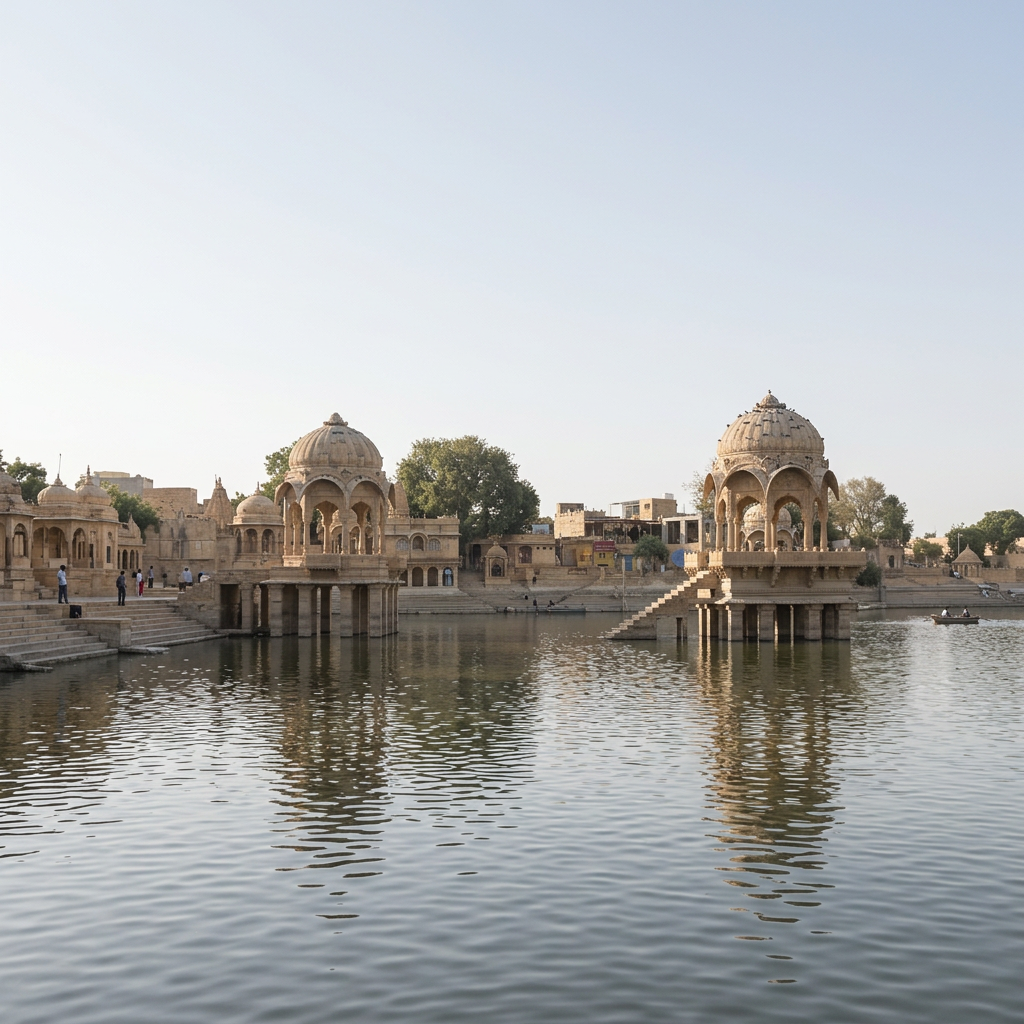
Gadisar Lake
- A widow finishes the lake
- A courtesan defies the king
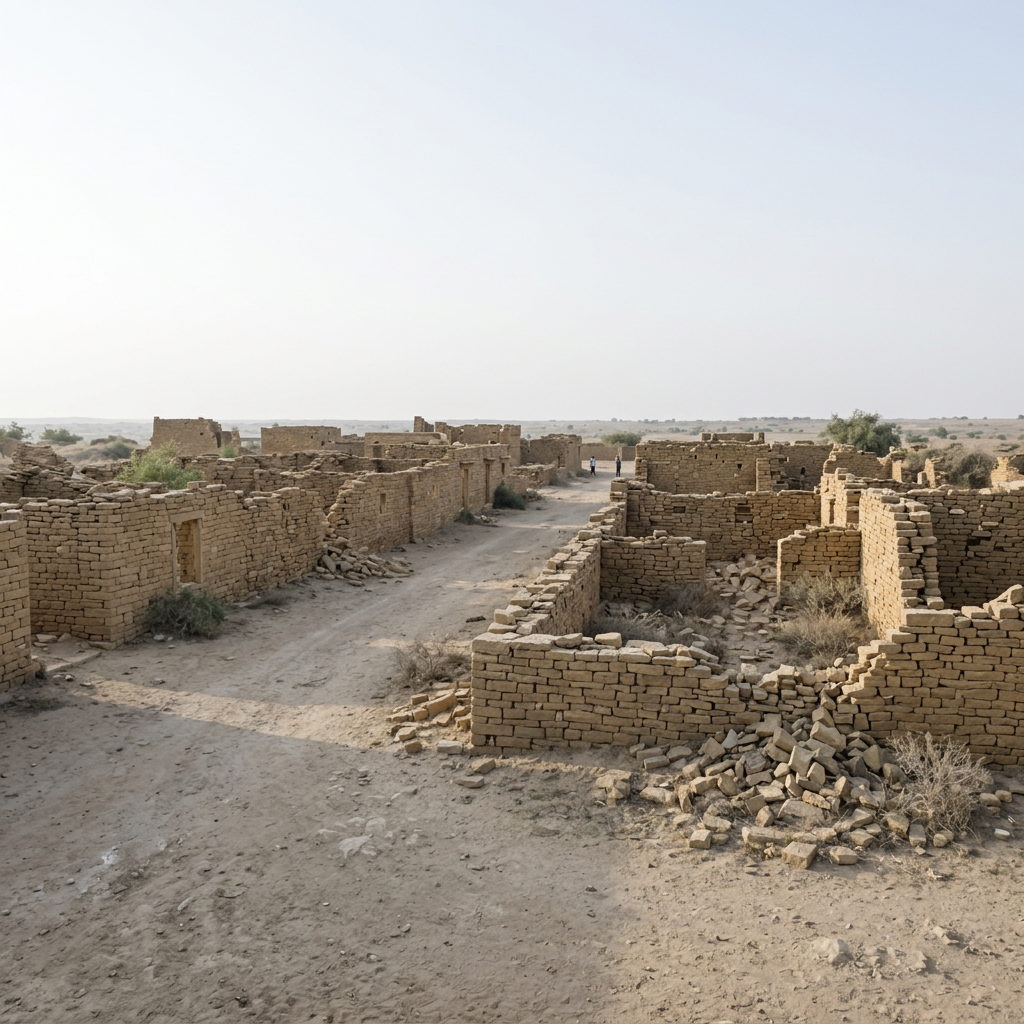
Kuldhara
- Exiles who farmed the desert
- Taxed and thirsty, villagers leave
9 more places in Jaisalmer
Salim Singh Ki Haveli · Bada Bagh (Royal Cenotaphs) · Nathmal Ki Haveli · Vyas Chhatri (Cenotaphs) · Lodurva · Jaisalmer War Museum · Tanot Mata Temple · Khaba Fort · Jaisalmer Fort · Jain Temples
HOW IT WORKS
Walk near a place.
The story finds you.
Get a notification when you’re near a story place. Tap to listen.
Jaisalmer Fort (Golden Fort)
nowJust steps away.
Tap to hear the drama.

INSIDE EACH PLACE
From drama,
to idea,
to insight.
For example: the Jaisalmer Fort (Golden Fort).
1. Hear the drama behind the place.
Jaisalmer Fort (Golden Fort)
- Sons raised by their father's enemy
- Residents stay as walls collapse
In this story, you’ll discover
Chapter 1
A Hermit's Warning on the Ridge
The founder was a Bhati prince named Jaisal, and the city carries his name: Jaisalmer, the hill of Jaisal. His family's old capital, Lodurva, lay some fifteen kilometres away on open ground, easy for raiders to reach. Jaisal wanted a capital no enemy could simply ride into, and he found the place for it here, on Trikuta, a ridge of rock standing alone above the flat sand. According to the Bhatis' chronicle, a hermit lived on the ridge beside a spring. He told Jaisal that the god Krishna, whom the Bhatis counted as their ancestor, had once foretold that a descendant of his would build a castle on this hill. This hermit also gave Jaisal the warning about two and a half sackings. Jaisal began building in 1156. The ridge itself was the first defence, and later kings added three rings of walls and ninety-nine bastions. What links the six forts on the World Heritage list is that each was built to let the land do part of the defending: a river, a forest or steep hills. Jaisalmer is the desert one, and from the very start it had a town inside its walls.
A reflection for you
An old story says Ratan Singh entrusted his sons to a friend in the enemy army before his final battle. He died fighting, but his elder son survived and later returned to rebuild the fort. How would you feel watching someone you love enjoy things you gave up? If joy came with regret, what wish might still be alive in that regret, though you thought you had put it aside?
1×2. Learn the ideas inside the story.
Jaisalmer Fort (Golden Fort)
- Sons raised by their father's enemy
- Residents stay as walls collapse
In this story, you’ll discover
Chapter 1
A Hermit's Warning on the Ridge
The founder was a Bhati prince named Jaisal, and the city carries his name: Jaisalmer, the hill of Jaisal. His family's old capital, Lodurva, lay some fifteen kilometres away on open ground, easy for raiders to reach. Jaisal wanted a capital no enemy could simply ride into, and he found the place for it here, on Trikuta, a ridge of rock standing alone above the flat sand. According to the Bhatis' chronicle, a hermit lived on the ridge beside a spring. He told Jaisal that the god Krishna, whom the Bhatis counted as their ancestor, had once foretold that a descendant of his would build a castle on this hill. This hermit also gave Jaisal the warning about two and a half sackings. Jaisal began building in 1156. The ridge itself was the first defence, and later kings added three rings of walls and ninety-nine bastions. What links the six forts on the World Heritage list is that each was built to let the land do part of the defending: a river, a forest or steep hills. Jaisalmer is the desert one, and from the very start it had a town inside its walls.
A reflection for you
An old story says Ratan Singh entrusted his sons to a friend in the enemy army before his final battle. He died fighting, but his elder son survived and later returned to rebuild the fort. How would you feel watching someone you love enjoy things you gave up? If joy came with regret, what wish might still be alive in that regret, though you thought you had put it aside?
1×3. Keep an insight that’s only yours.
Jaisalmer Fort (Golden Fort)
- Sons raised by their father's enemy
- Residents stay as walls collapse
In this story, you’ll discover
Chapter 1
A Hermit's Warning on the Ridge
The founder was a Bhati prince named Jaisal, and the city carries his name: Jaisalmer, the hill of Jaisal. His family's old capital, Lodurva, lay some fifteen kilometres away on open ground, easy for raiders to reach. Jaisal wanted a capital no enemy could simply ride into, and he found the place for it here, on Trikuta, a ridge of rock standing alone above the flat sand. According to the Bhatis' chronicle, a hermit lived on the ridge beside a spring. He told Jaisal that the god Krishna, whom the Bhatis counted as their ancestor, had once foretold that a descendant of his would build a castle on this hill. This hermit also gave Jaisal the warning about two and a half sackings. Jaisal began building in 1156. The ridge itself was the first defence, and later kings added three rings of walls and ninety-nine bastions. What links the six forts on the World Heritage list is that each was built to let the land do part of the defending: a river, a forest or steep hills. Jaisalmer is the desert one, and from the very start it had a town inside its walls.
A reflection for you
An old story says Ratan Singh entrusted his sons to a friend in the enemy army before his final battle. He died fighting, but his elder son survived and later returned to rebuild the fort. How would you feel watching someone you love enjoy things you gave up? If joy came with regret, what wish might still be alive in that regret, though you thought you had put it aside?
1×BEFORE YOU GO
FAQ
An audio guide gives you the facts: dates, names, what it was built for. Odys‑say tells you the drama: the people behind the place, what they wanted, and what it cost them. The ideas behind the city come with the story, and it ends with an insight that’s only yours.
The story first: who was here, what they were up against, and what they chose. Then, inside that story, one or two ideas that help you understand the city more deeply, from history and politics to art, religion, and philosophy.
Explore the city as you normally would. When you’re near one of Odys‑say’s story places, your phone can let you know. Tap the notification, and the story is ready to hear right where you are.
The drama stays the same. What changes is what comes at the end. Based on what you chose to reflect on, Odys‑say connects something from the story to a question or insight that feels relevant to you.
Your first story is included. If you want to keep exploring, you can unlock the whole city for $9.99. It’s a one-time purchase, not a subscription.
A deeper way
to travel
Jaisalmer
Human stories at every place,
and what they leave with you.
No subscription.
One-time city purchase.