
YOUR TRAVEL DOCENT
Travel deeper into Lisbon, through its human stories.
At each place,
- Drama and backstory
- History & ideas behind them
- Insight that’s only yours
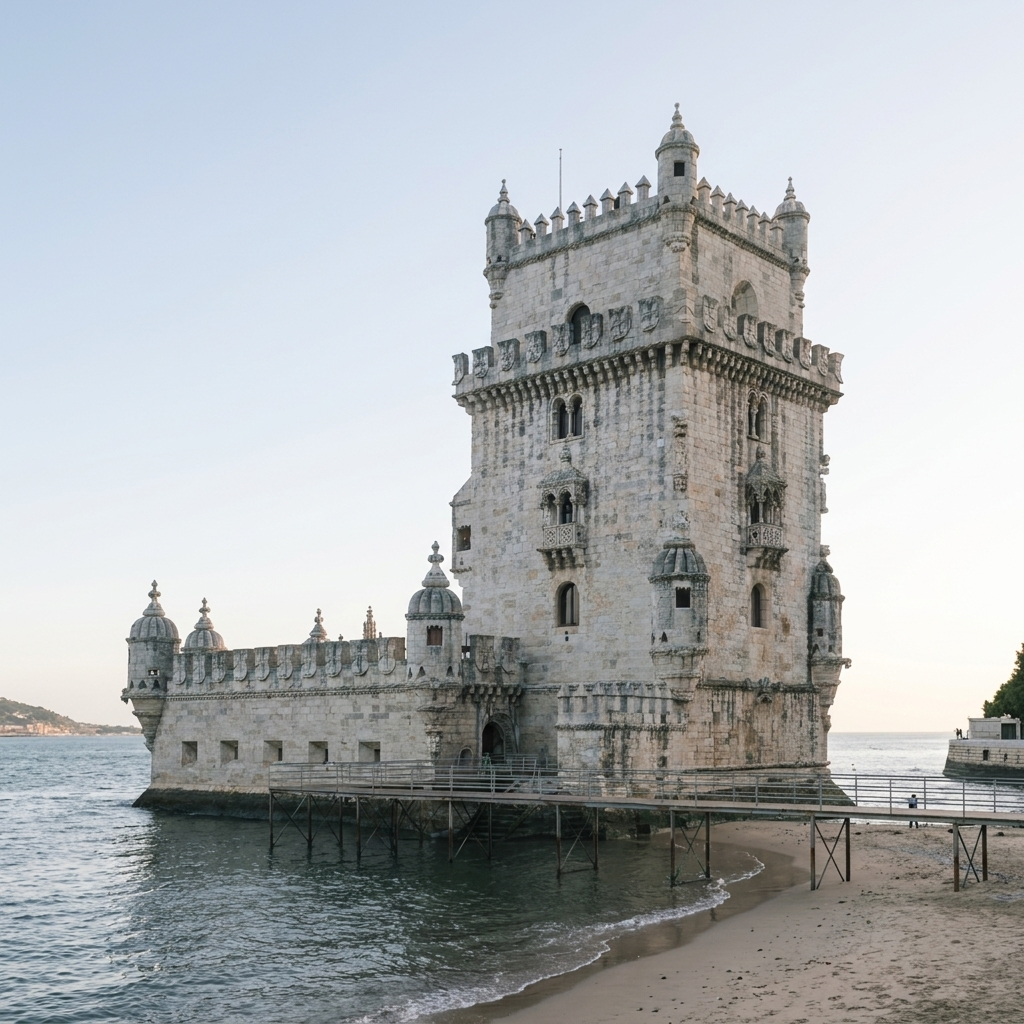
Belém Tower
- A rhinoceros for the pope
In this story, you’ll discover
Chapter 1
A Gift from the Sultan of Gujarat
The answer begins in India. For decades, with the crown's backing, Portuguese ships had been working their way down the coast of Africa. Once the first fleet reached India by sea, the kings kept sending fleets along the new route, and Lisbon became the port where those expeditions set out and where spices and news from Asia came in. To protect that trade, the Portuguese built forts along the coasts of the Indian Ocean. Historians call all this the Portuguese maritime expansion: royal fleets, sea routes and forts reaching out from Lisbon. The governor of Portugal's holdings in India, Afonso de Albuquerque, wanted one more fort, on the island of Diu off the coast of Gujarat. He sent envoys to the sultan who ruled there. The sultan said no. But the two sides exchanged gifts, and one of the sultan's gifts was a living Indian rhinoceros. Albuquerque shipped it on to his king, together with its Indian keeper, a man named Ocem. After about four months at sea, the animal came ashore in Lisbon in May 1515, close to where this tower was then being built. It was the first rhinoceros seen alive in Europe since the days of ancient Rome.

A reflection for you
The Sultan of Gujarat refused Portugal permission to build a fort, yet the two sides exchanged gifts. He could give something without agreeing to everything. If you trusted that saying no wouldn't make you less loved, what would you choose to give, and what would you keep for yourself?

 1×1×
BEHIND EVERY PLACE
The people the plaques leave out.
A plaque gives you a date and a name. Here, you get the person, and the ideas that shaped Lisbon come with the story.
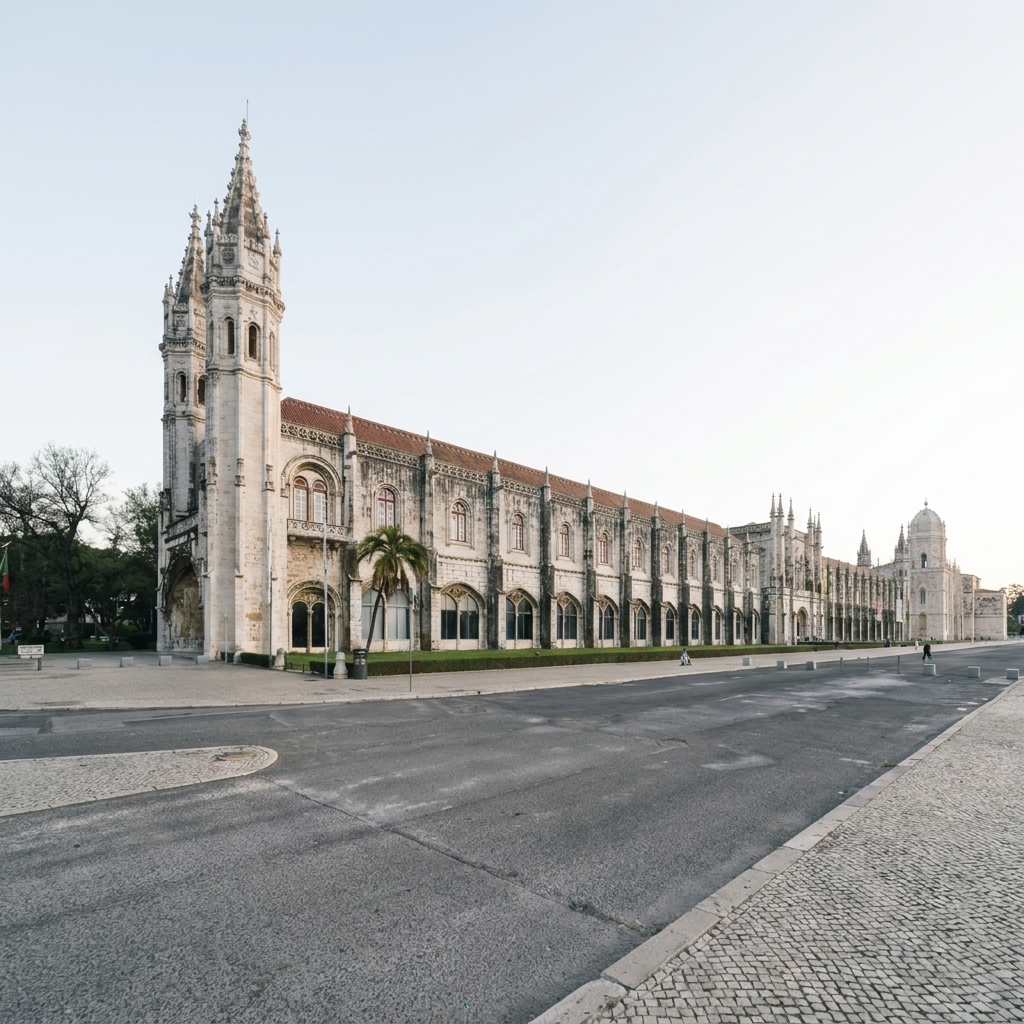
Jerónimos Monastery
- The poet's tomb facing the sailor's
Belém Tower
- A rhinoceros for the pope
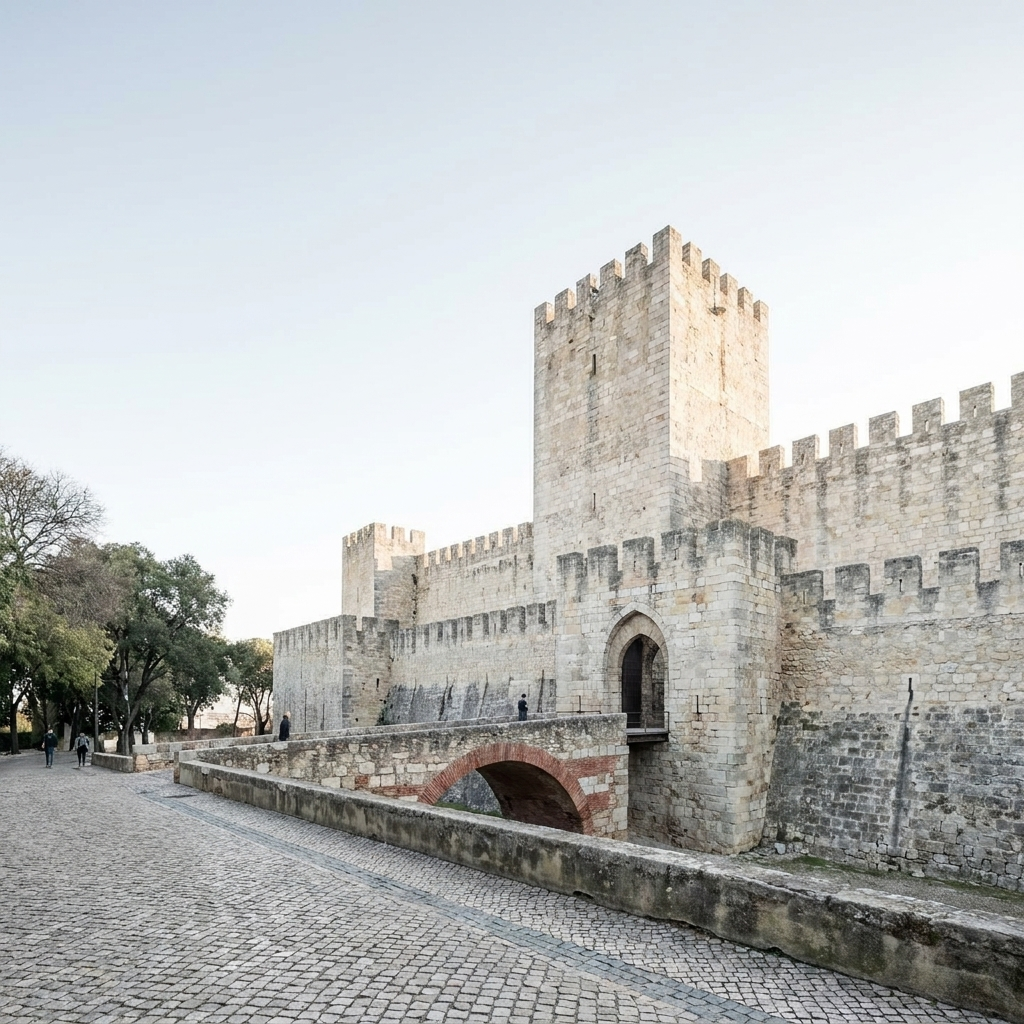
São Jorge Castle
- Muslim families who never returned
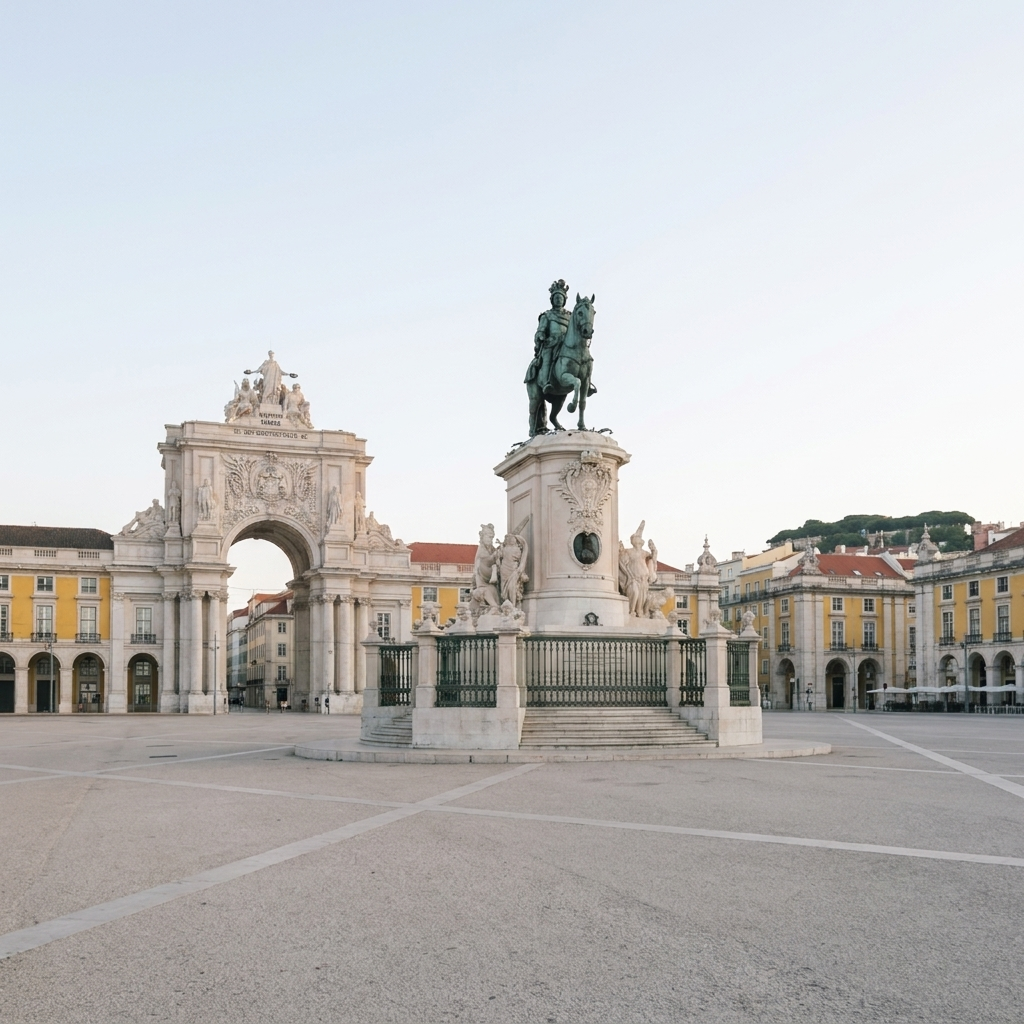
Praça do Comércio
- The palace that sold people
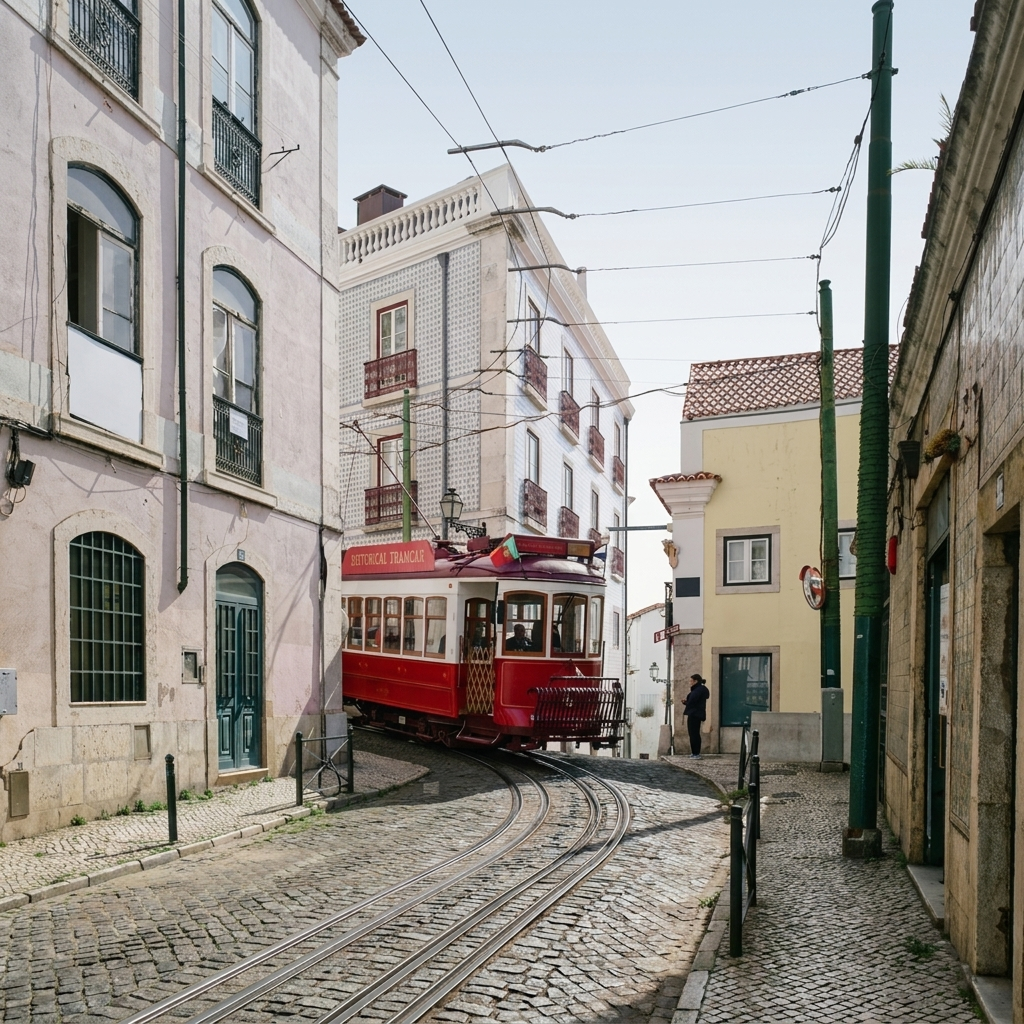
Alfama
- Fountain spouts sorted by colour
- Neighbours replaced by tourist flats
20 more places in Lisbon
Monument to the Discoveries · Lisbon Cathedral · Santa Justa Lift · Rossio Square · Carmo Convent · Rua Augusta Arch · National Tile Museum · Maritime Museum · Fado Museum · National Museum of Ancient Art · Calouste Gulbenkian Museum · National Coach Museum · National Pantheon · Bairro Alto · Feira da Ladra · Miradouro de Santa Luzia · Miradouro das Portas do Sol · Miradouro de São Pedro de Alcântara · Miradouro da Graça · Ajuda National Palace
HOW IT WORKS
Walk near a place.
The story finds you.
Get a notification when you’re near a story place. Tap to listen.
Jerónimos Monastery
nowJust steps away.
Tap to hear the drama.

INSIDE EACH PLACE
From drama,
to idea,
to insight.
For example: the Belém Tower.
1. Hear the drama behind the place.
Belém Tower
- A rhinoceros for the pope
In this story, you’ll discover
Chapter 1
A Gift from the Sultan of Gujarat
The answer begins in India. For decades, with the crown's backing, Portuguese ships had been working their way down the coast of Africa. Once the first fleet reached India by sea, the kings kept sending fleets along the new route, and Lisbon became the port where those expeditions set out and where spices and news from Asia came in. To protect that trade, the Portuguese built forts along the coasts of the Indian Ocean. Historians call all this the Portuguese maritime expansion: royal fleets, sea routes and forts reaching out from Lisbon. The governor of Portugal's holdings in India, Afonso de Albuquerque, wanted one more fort, on the island of Diu off the coast of Gujarat. He sent envoys to the sultan who ruled there. The sultan said no. But the two sides exchanged gifts, and one of the sultan's gifts was a living Indian rhinoceros. Albuquerque shipped it on to his king, together with its Indian keeper, a man named Ocem. After about four months at sea, the animal came ashore in Lisbon in May 1515, close to where this tower was then being built. It was the first rhinoceros seen alive in Europe since the days of ancient Rome.
A reflection for you
The Sultan of Gujarat refused Portugal permission to build a fort, yet the two sides exchanged gifts. He could give something without agreeing to everything. If you trusted that saying no wouldn't make you less loved, what would you choose to give, and what would you keep for yourself?
1×2. Learn the ideas inside the story.
Belém Tower
- A rhinoceros for the pope
In this story, you’ll discover
Chapter 1
A Gift from the Sultan of Gujarat
The answer begins in India. For decades, with the crown's backing, Portuguese ships had been working their way down the coast of Africa. Once the first fleet reached India by sea, the kings kept sending fleets along the new route, and Lisbon became the port where those expeditions set out and where spices and news from Asia came in. To protect that trade, the Portuguese built forts along the coasts of the Indian Ocean. Historians call all this the Portuguese maritime expansion: royal fleets, sea routes and forts reaching out from Lisbon. The governor of Portugal's holdings in India, Afonso de Albuquerque, wanted one more fort, on the island of Diu off the coast of Gujarat. He sent envoys to the sultan who ruled there. The sultan said no. But the two sides exchanged gifts, and one of the sultan's gifts was a living Indian rhinoceros. Albuquerque shipped it on to his king, together with its Indian keeper, a man named Ocem. After about four months at sea, the animal came ashore in Lisbon in May 1515, close to where this tower was then being built. It was the first rhinoceros seen alive in Europe since the days of ancient Rome.
A reflection for you
The Sultan of Gujarat refused Portugal permission to build a fort, yet the two sides exchanged gifts. He could give something without agreeing to everything. If you trusted that saying no wouldn't make you less loved, what would you choose to give, and what would you keep for yourself?
1×3. Keep an insight that’s only yours.
Belém Tower
- A rhinoceros for the pope
In this story, you’ll discover
Chapter 1
A Gift from the Sultan of Gujarat
The answer begins in India. For decades, with the crown's backing, Portuguese ships had been working their way down the coast of Africa. Once the first fleet reached India by sea, the kings kept sending fleets along the new route, and Lisbon became the port where those expeditions set out and where spices and news from Asia came in. To protect that trade, the Portuguese built forts along the coasts of the Indian Ocean. Historians call all this the Portuguese maritime expansion: royal fleets, sea routes and forts reaching out from Lisbon. The governor of Portugal's holdings in India, Afonso de Albuquerque, wanted one more fort, on the island of Diu off the coast of Gujarat. He sent envoys to the sultan who ruled there. The sultan said no. But the two sides exchanged gifts, and one of the sultan's gifts was a living Indian rhinoceros. Albuquerque shipped it on to his king, together with its Indian keeper, a man named Ocem. After about four months at sea, the animal came ashore in Lisbon in May 1515, close to where this tower was then being built. It was the first rhinoceros seen alive in Europe since the days of ancient Rome.
A reflection for you
The Sultan of Gujarat refused Portugal permission to build a fort, yet the two sides exchanged gifts. He could give something without agreeing to everything. If you trusted that saying no wouldn't make you less loved, what would you choose to give, and what would you keep for yourself?
1×BEFORE YOU GO
FAQ
An audio guide gives you the facts: dates, names, what it was built for. Odys‑say tells you the drama: the people behind the place, what they wanted, and what it cost them. The ideas behind the city come with the story, and it ends with an insight that’s only yours.
The story first: who was here, what they were up against, and what they chose. Then, inside that story, one or two ideas that help you understand the city more deeply, from history and politics to art, religion, and philosophy.
Explore the city as you normally would. When you’re near one of Odys‑say’s story places, your phone can let you know. Tap the notification, and the story is ready to hear right where you are.
The drama stays the same. What changes is what comes at the end. Based on what you chose to reflect on, Odys‑say connects something from the story to a question or insight that feels relevant to you.
Your first story is included. If you want to keep exploring, you can unlock the whole city for $9.99. It’s a one-time purchase, not a subscription.
A deeper way
to travel
Lisbon
Human stories at every place,
and what they leave with you.
No subscription.
One-time city purchase.