
YOUR TRAVEL DOCENT
Travel deeper into Osaka, through its human stories.
At each place,
- Drama and backstory
- History & ideas behind them
- Insight that’s only yours
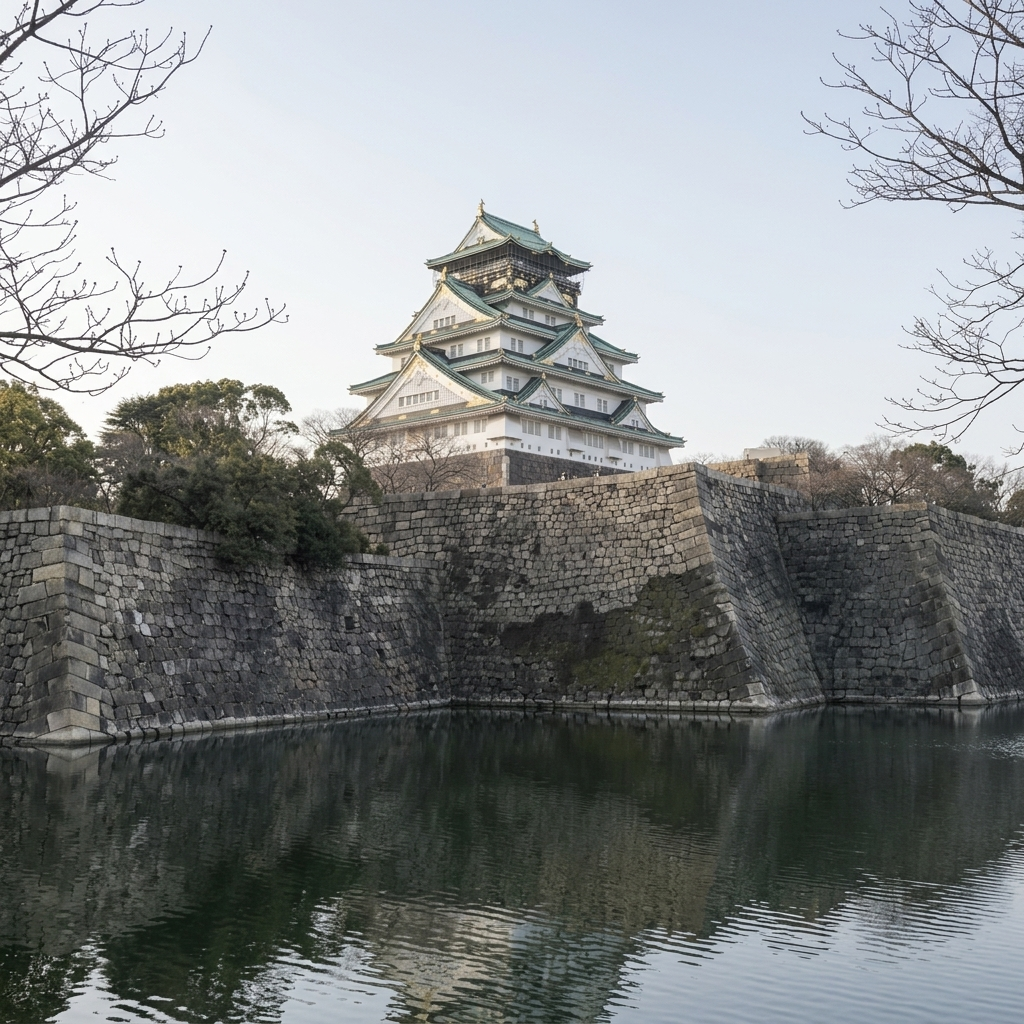
Osaka Castle
- Winners bury the loser's castle
- Castle donations build army headquarters
In this story, you’ll discover
Chapter 1
A Castle Built on Top of Another
Hideyoshi was born into a peasant family and rose through Japan's long civil wars to become the most powerful man in the country. In 1583 he began building his castle here, on a hill where a fortified Buddhist temple had stood. Within seven years, every warlord in the country answered to him. He died in 1598, fifteen years after he started the castle, and his heir was a five-year-old son. Within a few years, the strongest of the lords he left behind, Tokugawa Ieyasu, had taken power for himself. In the winter of 1614, Ieyasu laid siege to the castle, where Hideyoshi's son still lived. The two sides agreed to a truce, and as part of the deal the castle's outer moats were filled in. The next summer, in 1615, Ieyasu came back. The castle fell and burned, and Hideyoshi's son, by then a young man, died inside it with his mother. That was the end of the Toyotomi family. The Tokugawa went on to rule Japan for more than two and a half centuries. After the war, the Tokugawa rebuilt the castle. But they didn't simply reuse Hideyoshi's castle. They had the lords of western Japan bury his castle under earth, several metres deep in places, and raise a bigger one on top. According to the museum inside the keep, it was as if they wanted to wipe out the Toyotomi family's authority. The lords had to supply the labour and the stone themselves, around a million blocks of granite shipped from mountains and islands across western Japan. The walls they built are the tallest of any castle in Japan. At the Sakura Gate stands a single stone weighing more than a hundred tonnes, the largest in any Japanese castle. And many of the stones still carry the crest of the lord who sent them.

A reflection for you
The Tokugawa defeated Hideyoshi's family, then buried their castle and built a bigger one above it. Even after victory, the new castle was still being shaped by the family they wanted to erase. Have you ever tried so hard to be unlike someone that they kept deciding the shape of your life?

 1×1×
BEHIND EVERY PLACE
The people the plaques leave out.
A plaque gives you a date and a name. Here, you get the person, and the ideas that shaped Osaka come with the story.
Osaka Castle
- Winners bury the loser's castle
- Castle donations build army headquarters
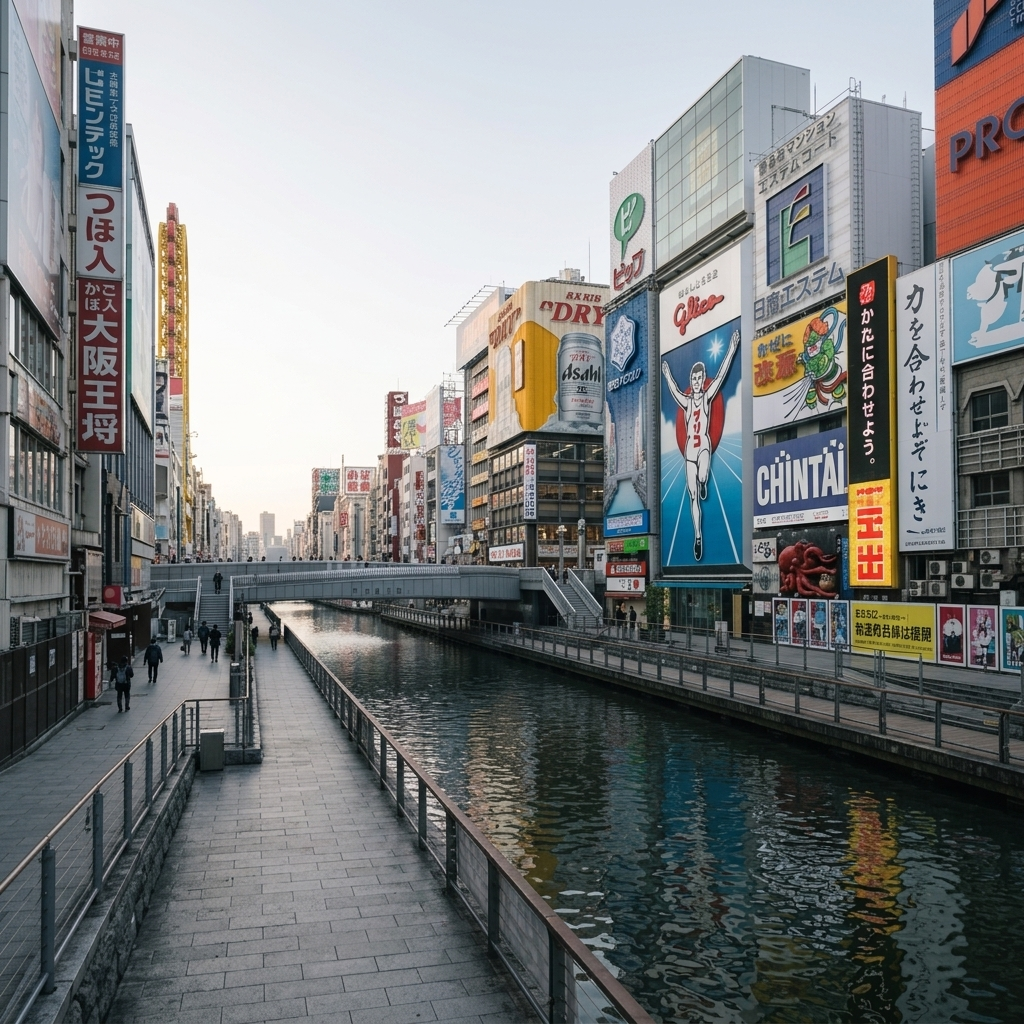
Dotonbori
- Killed before finishing his canal
- Colonel Sanders in the canal
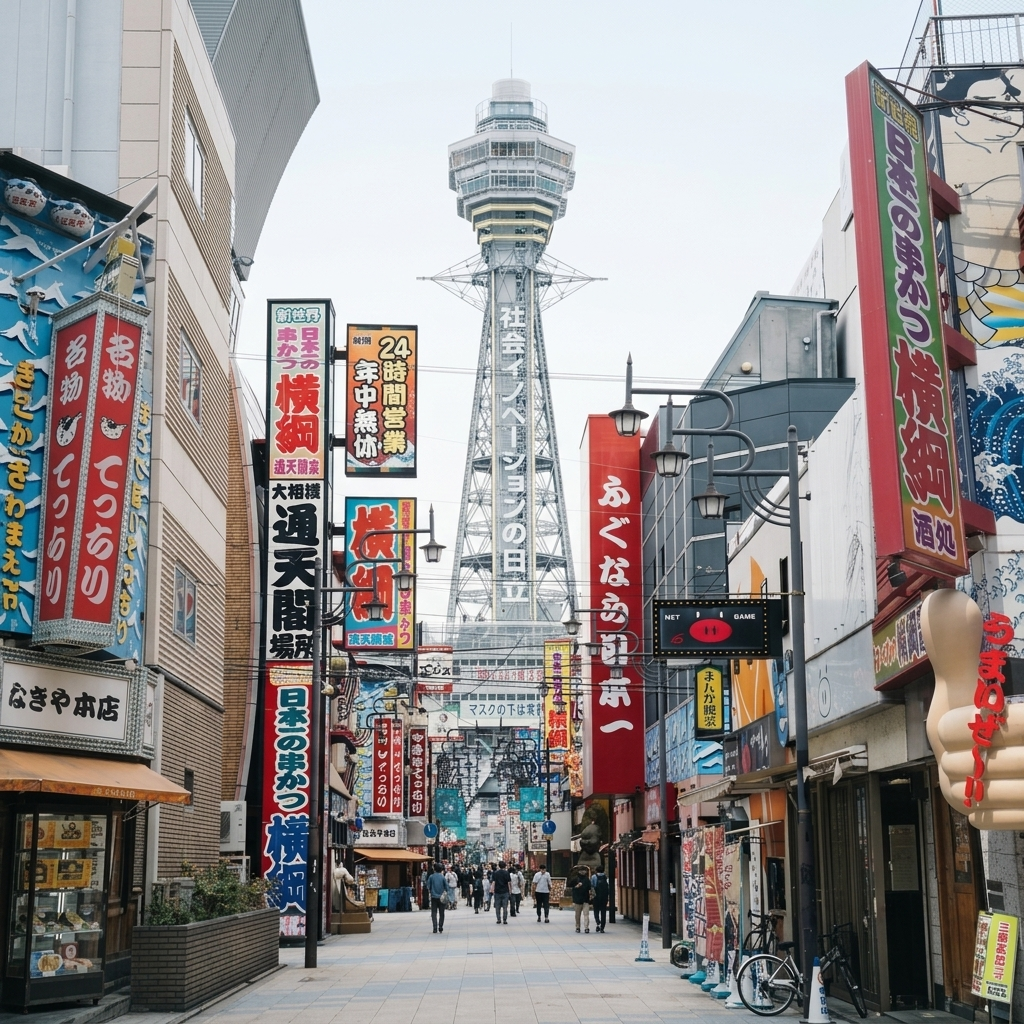
Shinsekai
- Living people as exhibits
- Office worker turned shop owner
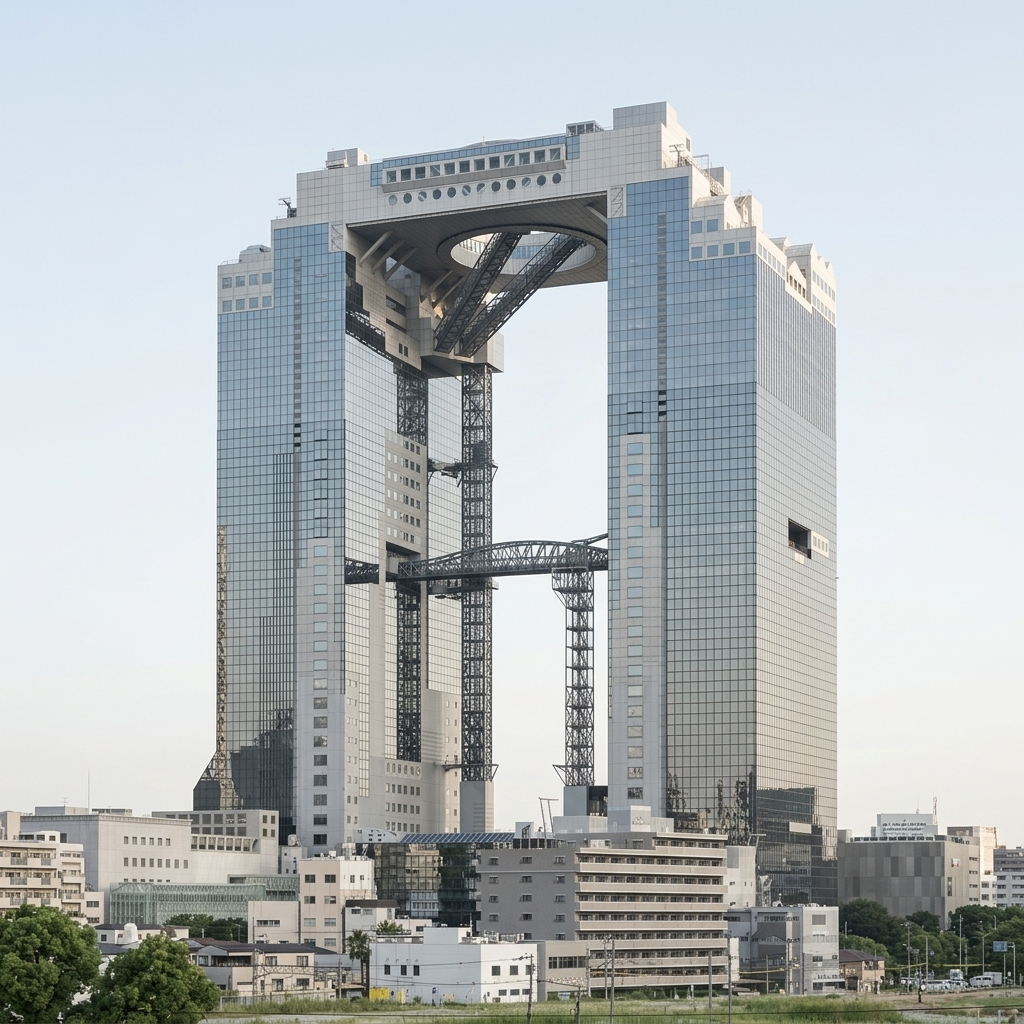
Umeda Sky Building
- An architect against dead-end towers
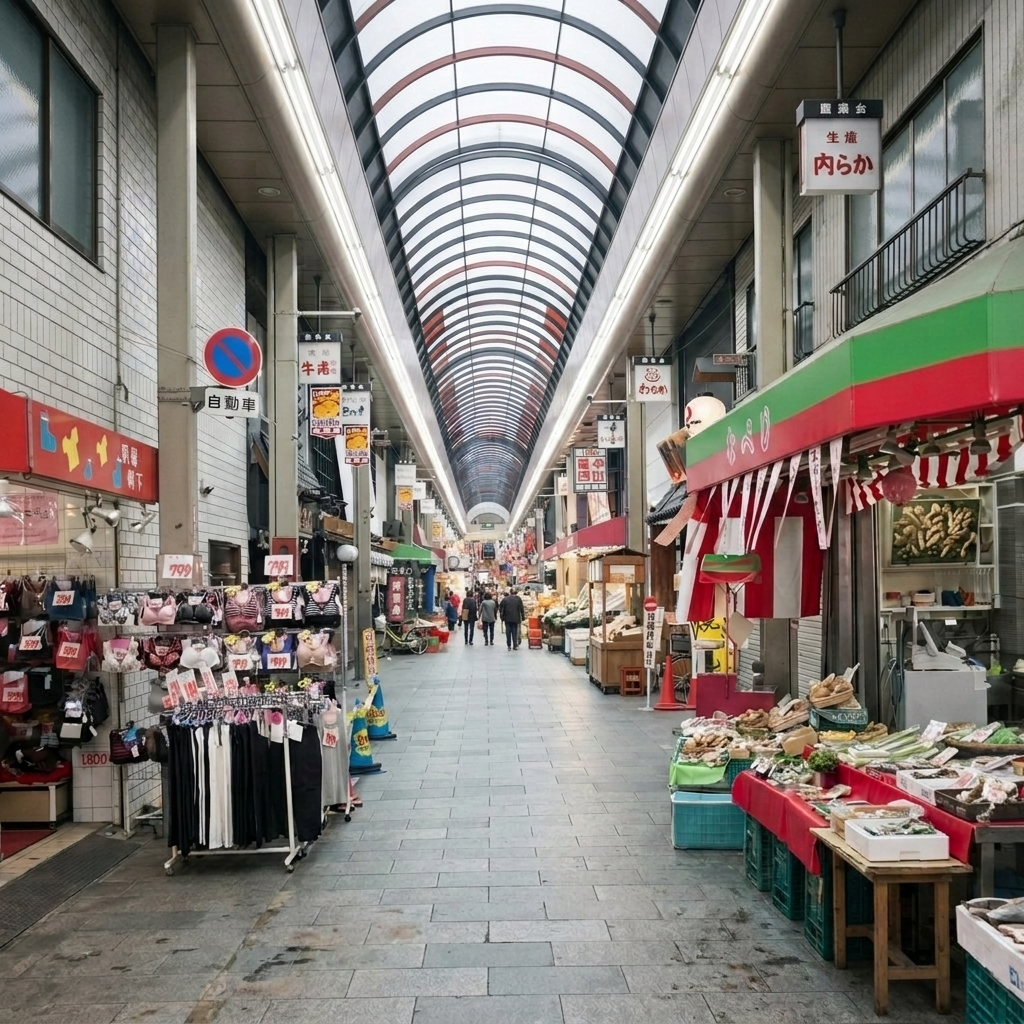
Kuromon Market
- 500-yen fugu for locals
11 more places in Osaka
Shitenno-ji · Sumiyoshi Taisha · Tsutenkaku · Hozen-ji · Shinsaibashi-suji · National Bunraku Theatre · Namba Yasaka Shrine · Osaka Tenmangu · Nakanoshima · Nakazakicho · Amerikamura
HOW IT WORKS
Walk near a place.
The story finds you.
Get a notification when you’re near a story place. Tap to listen.
Osaka Castle
nowJust steps away.
Tap to hear the drama.

INSIDE EACH PLACE
From drama,
to idea,
to insight.
For example: the Osaka Castle.
1. Hear the drama behind the place.
Osaka Castle
- Winners bury the loser's castle
- Castle donations build army headquarters
In this story, you’ll discover
Chapter 1
A Castle Built on Top of Another
Hideyoshi was born into a peasant family and rose through Japan's long civil wars to become the most powerful man in the country. In 1583 he began building his castle here, on a hill where a fortified Buddhist temple had stood. Within seven years, every warlord in the country answered to him. He died in 1598, fifteen years after he started the castle, and his heir was a five-year-old son. Within a few years, the strongest of the lords he left behind, Tokugawa Ieyasu, had taken power for himself. In the winter of 1614, Ieyasu laid siege to the castle, where Hideyoshi's son still lived. The two sides agreed to a truce, and as part of the deal the castle's outer moats were filled in. The next summer, in 1615, Ieyasu came back. The castle fell and burned, and Hideyoshi's son, by then a young man, died inside it with his mother. That was the end of the Toyotomi family. The Tokugawa went on to rule Japan for more than two and a half centuries. After the war, the Tokugawa rebuilt the castle. But they didn't simply reuse Hideyoshi's castle. They had the lords of western Japan bury his castle under earth, several metres deep in places, and raise a bigger one on top. According to the museum inside the keep, it was as if they wanted to wipe out the Toyotomi family's authority. The lords had to supply the labour and the stone themselves, around a million blocks of granite shipped from mountains and islands across western Japan. The walls they built are the tallest of any castle in Japan. At the Sakura Gate stands a single stone weighing more than a hundred tonnes, the largest in any Japanese castle. And many of the stones still carry the crest of the lord who sent them.
A reflection for you
The Tokugawa defeated Hideyoshi's family, then buried their castle and built a bigger one above it. Even after victory, the new castle was still being shaped by the family they wanted to erase. Have you ever tried so hard to be unlike someone that they kept deciding the shape of your life?
1×2. Learn the ideas inside the story.
Osaka Castle
- Winners bury the loser's castle
- Castle donations build army headquarters
In this story, you’ll discover
Chapter 1
A Castle Built on Top of Another
Hideyoshi was born into a peasant family and rose through Japan's long civil wars to become the most powerful man in the country. In 1583 he began building his castle here, on a hill where a fortified Buddhist temple had stood. Within seven years, every warlord in the country answered to him. He died in 1598, fifteen years after he started the castle, and his heir was a five-year-old son. Within a few years, the strongest of the lords he left behind, Tokugawa Ieyasu, had taken power for himself. In the winter of 1614, Ieyasu laid siege to the castle, where Hideyoshi's son still lived. The two sides agreed to a truce, and as part of the deal the castle's outer moats were filled in. The next summer, in 1615, Ieyasu came back. The castle fell and burned, and Hideyoshi's son, by then a young man, died inside it with his mother. That was the end of the Toyotomi family. The Tokugawa went on to rule Japan for more than two and a half centuries. After the war, the Tokugawa rebuilt the castle. But they didn't simply reuse Hideyoshi's castle. They had the lords of western Japan bury his castle under earth, several metres deep in places, and raise a bigger one on top. According to the museum inside the keep, it was as if they wanted to wipe out the Toyotomi family's authority. The lords had to supply the labour and the stone themselves, around a million blocks of granite shipped from mountains and islands across western Japan. The walls they built are the tallest of any castle in Japan. At the Sakura Gate stands a single stone weighing more than a hundred tonnes, the largest in any Japanese castle. And many of the stones still carry the crest of the lord who sent them.
A reflection for you
The Tokugawa defeated Hideyoshi's family, then buried their castle and built a bigger one above it. Even after victory, the new castle was still being shaped by the family they wanted to erase. Have you ever tried so hard to be unlike someone that they kept deciding the shape of your life?
1×3. Keep an insight that’s only yours.
Osaka Castle
- Winners bury the loser's castle
- Castle donations build army headquarters
In this story, you’ll discover
Chapter 1
A Castle Built on Top of Another
Hideyoshi was born into a peasant family and rose through Japan's long civil wars to become the most powerful man in the country. In 1583 he began building his castle here, on a hill where a fortified Buddhist temple had stood. Within seven years, every warlord in the country answered to him. He died in 1598, fifteen years after he started the castle, and his heir was a five-year-old son. Within a few years, the strongest of the lords he left behind, Tokugawa Ieyasu, had taken power for himself. In the winter of 1614, Ieyasu laid siege to the castle, where Hideyoshi's son still lived. The two sides agreed to a truce, and as part of the deal the castle's outer moats were filled in. The next summer, in 1615, Ieyasu came back. The castle fell and burned, and Hideyoshi's son, by then a young man, died inside it with his mother. That was the end of the Toyotomi family. The Tokugawa went on to rule Japan for more than two and a half centuries. After the war, the Tokugawa rebuilt the castle. But they didn't simply reuse Hideyoshi's castle. They had the lords of western Japan bury his castle under earth, several metres deep in places, and raise a bigger one on top. According to the museum inside the keep, it was as if they wanted to wipe out the Toyotomi family's authority. The lords had to supply the labour and the stone themselves, around a million blocks of granite shipped from mountains and islands across western Japan. The walls they built are the tallest of any castle in Japan. At the Sakura Gate stands a single stone weighing more than a hundred tonnes, the largest in any Japanese castle. And many of the stones still carry the crest of the lord who sent them.
A reflection for you
The Tokugawa defeated Hideyoshi's family, then buried their castle and built a bigger one above it. Even after victory, the new castle was still being shaped by the family they wanted to erase. Have you ever tried so hard to be unlike someone that they kept deciding the shape of your life?
1×BEFORE YOU GO
FAQ
An audio guide gives you the facts: dates, names, what it was built for. Odys‑say tells you the drama: the people behind the place, what they wanted, and what it cost them. The ideas behind the city come with the story, and it ends with an insight that’s only yours.
The story first: who was here, what they were up against, and what they chose. Then, inside that story, one or two ideas that help you understand the city more deeply, from history and politics to art, religion, and philosophy.
Explore the city as you normally would. When you’re near one of Odys‑say’s story places, your phone can let you know. Tap the notification, and the story is ready to hear right where you are.
The drama stays the same. What changes is what comes at the end. Based on what you chose to reflect on, Odys‑say connects something from the story to a question or insight that feels relevant to you.
Your first story is included. If you want to keep exploring, you can unlock the whole city for $9.99. It’s a one-time purchase, not a subscription.
A deeper way
to travel
Osaka
Human stories at every place,
and what they leave with you.
No subscription.
One-time city purchase.