
YOUR TRAVEL DOCENT
Travel deeper into Palermo, through its human stories.
At each place,
- Drama and backstory
- History & ideas behind them
- Insight that’s only yours
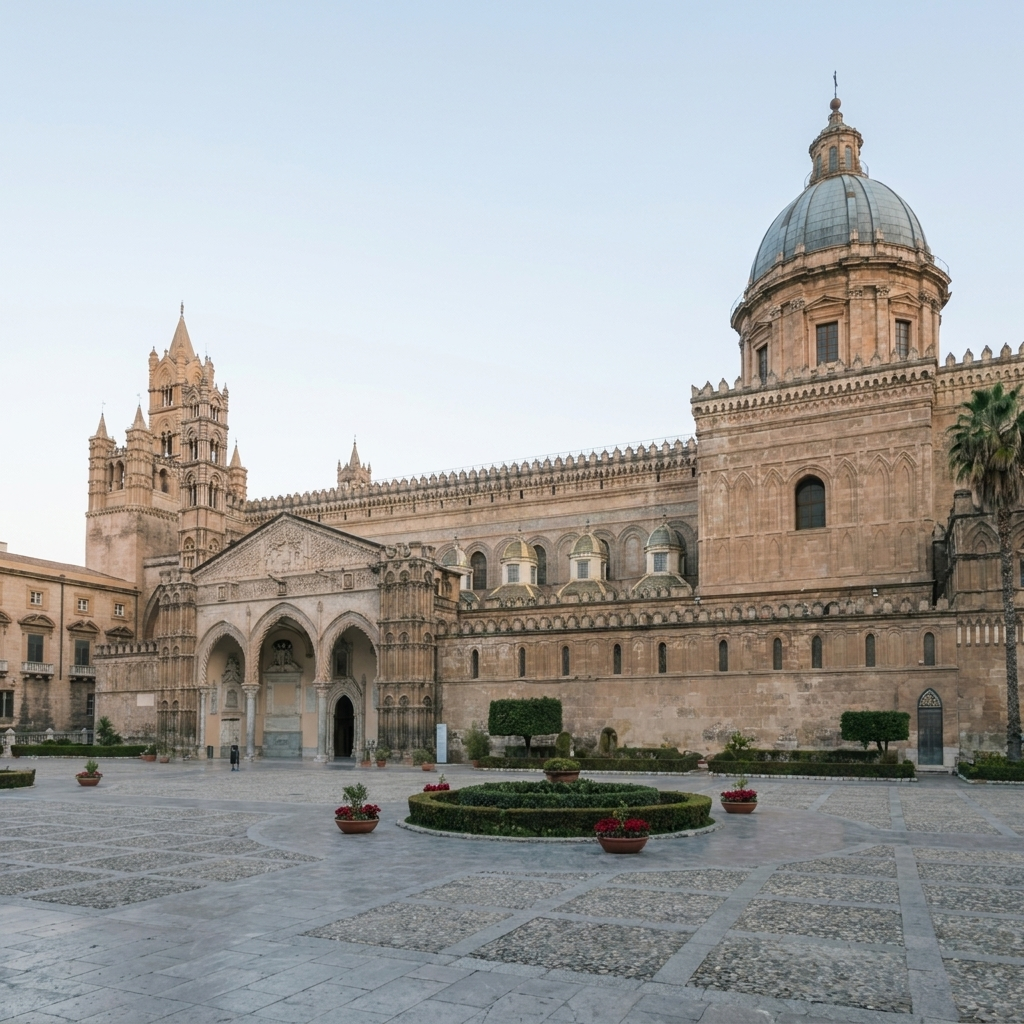
Palermo Cathedral
- A king's burial wish ignored
In this story, you’ll discover
Chapter 1
A Mosque, a Coronation and a Rival Church
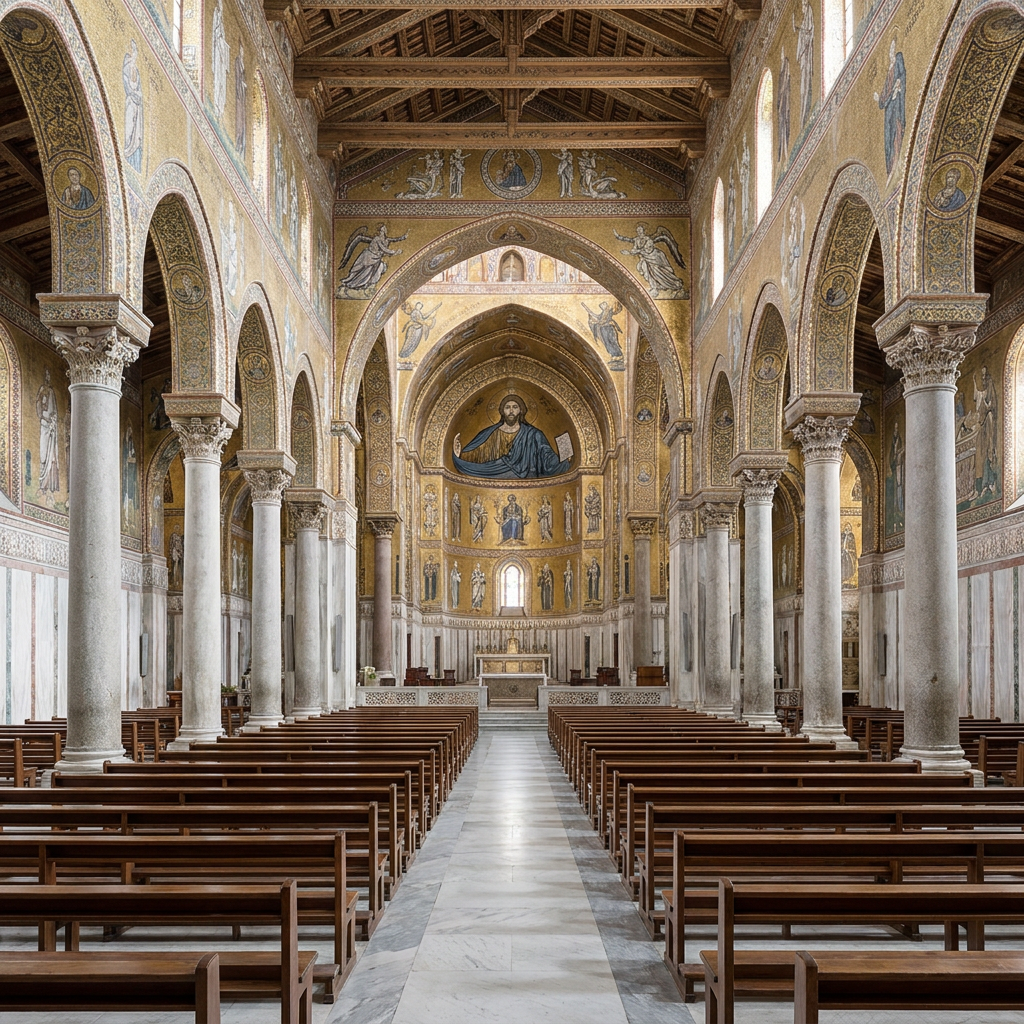
Before it was a cathedral, this was a mosque. Muslim armies from North Africa took Palermo in the ninth century, and the church that stood here became the city's Great Mosque. They made Palermo, which they called Balarm, the capital of an Islamic state, the Emirate of Sicily, and the city grew into one of the great cities of the Muslim world. Look at the first column on the left as you come in through the south porch. Carved into the marble is a verse from the Qur'an, praising God as the creator of the heavens and the earth. The column itself is older, probably Roman, and when builders reused it for the porch centuries later, nobody scraped the words off. When the Normans took the city in 1072, the mosque became a church again. A generation later, Roger, the son of one of the Norman conquerors, went further still. In 1130 he was crowned in Palermo as the first king of Sicily, and he ruled a kingdom where Muslims and Christians of both the Greek and Latin churches lived under one crown. A marble plaque in the south porch still calls Palermo the first seat, the crown of the king and the head of the kingdom. The building you see now came about fifty years later, and it grew out of a rivalry. Palermo's archbishop, Walter, was one of the most powerful men at the court of the young king William II. Then the king founded a great abbey of his own on the hill above the city, at Monreale, and persuaded the pope to make it the seat of a second archbishop. The new archbishop took land and prestige that had belonged to Palermo. Walter answered in stone. On the site of the old church he raised a far larger cathedral, big enough to rival the king's new church.

A reflection for you
The king's new church took land and prestige from Palermo's archbishop. He answered by rebuilding his cathedral on a grander scale. If you weren't comparing your life with anyone else's, which of the things you're working towards now would you still want?

 1×1×
BEHIND EVERY PLACE
The people the plaques leave out.
A plaque gives you a date and a name. Here, you get the person, and the ideas that shaped Palermo come with the story.
Palermo Cathedral
- A king's burial wish ignored
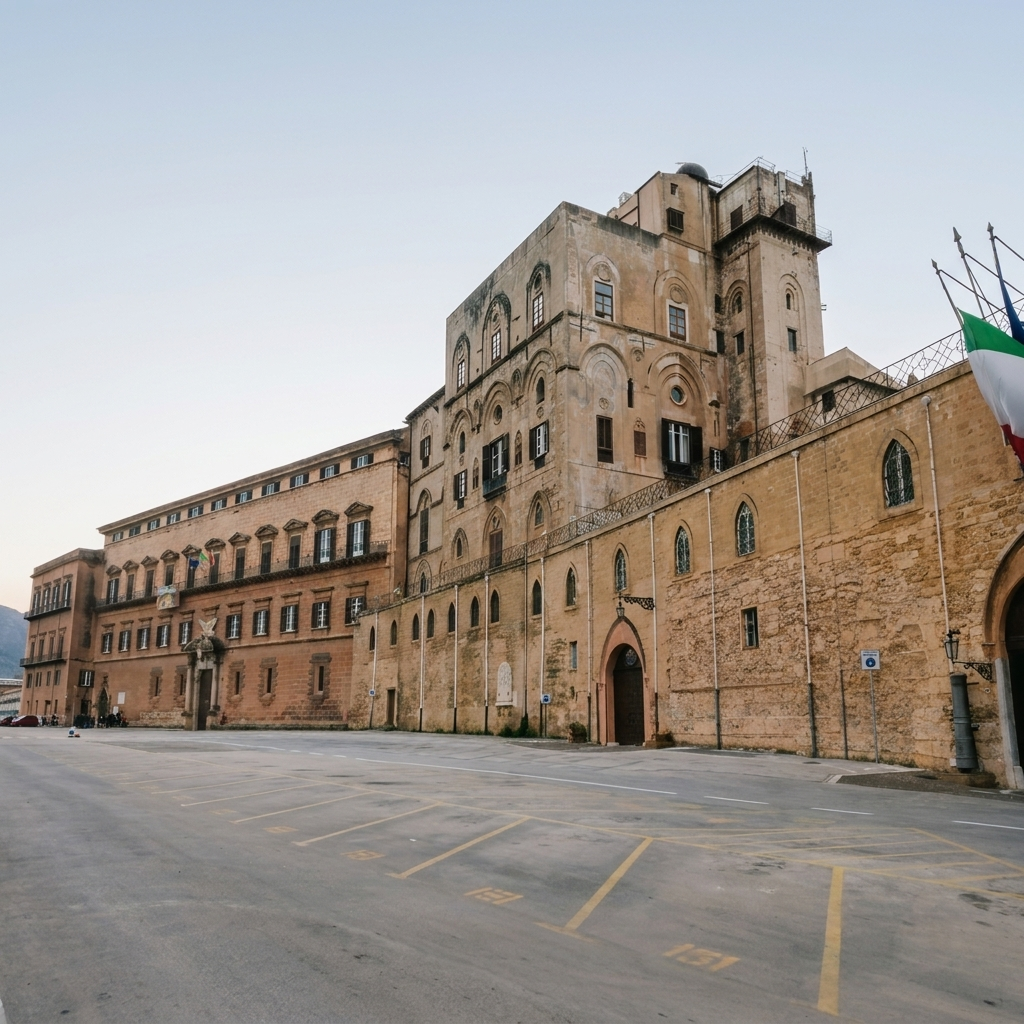
Norman Palace
- A Christian king's Muslim mapmaker
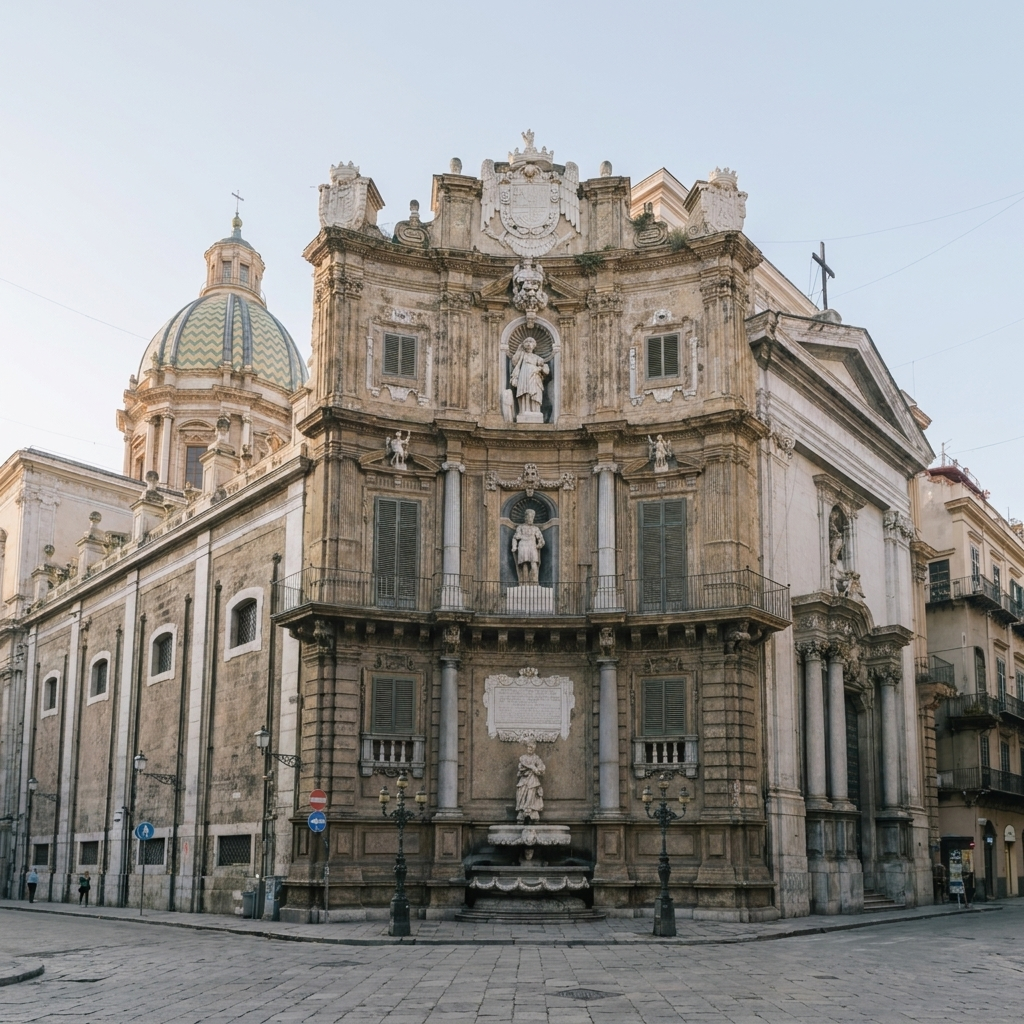
Quattro Canti
- Homeowners fight the new street
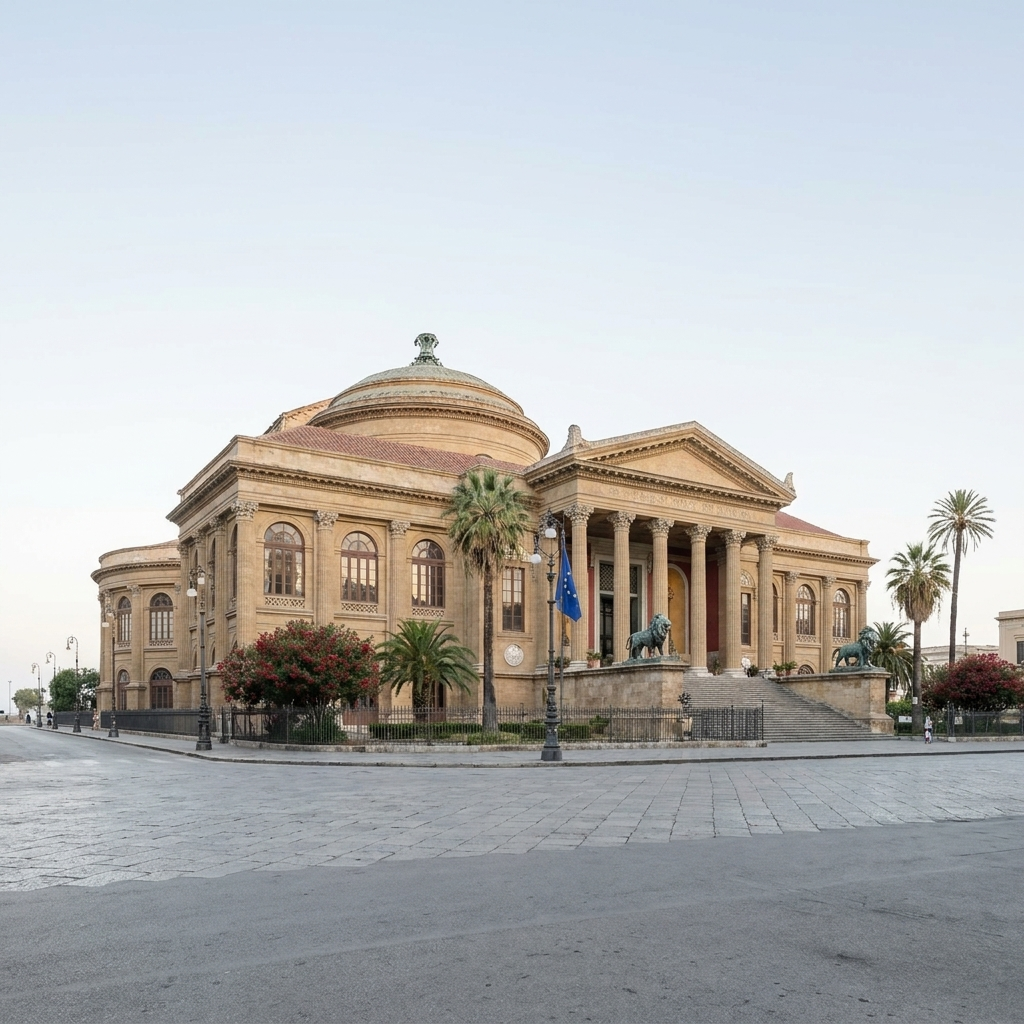
Teatro Massimo
- Schoolchildren adopt a locked theatre
- Blaming the nun's ghost
Monreale Cathedral
- Curbing the archbishop
27 more places in Palermo
San Giovanni degli Eremiti · Santa Maria dell'Ammiraglio · San Cataldo · Capuchin Catacombs · Church of the Gesù · Pretoria Fountain · Ballarò Market · Santa Caterina d'Alessandria Complex · Palazzo Abatellis · Zisa Palace · Regional Archaeological Museum Antonino Salinas · Stanze al Genio · Solunto Archaeological Site · Villa Palagonia · Palazzina Cinese · Palazzo Butera · Santa Maria dello Spasimo · Antonio Pasqualino International Puppet Museum · Oratorio di Santa Cita · Oratorio di San Lorenzo · Oratorio del Santissimo Rosario in San Domenico · Palazzo Chiaramonte-Steri · No Mafia Memorial · Palazzo Branciforte · Monreale Cathedral · Benedictine Cloister · Chiesa di San Domenico · Sanctuary of Santa Rosalia
HOW IT WORKS
Walk near a place.
The story finds you.
Get a notification when you’re near a story place. Tap to listen.
Palermo Cathedral
nowJust steps away.
Tap to hear the drama.

INSIDE EACH PLACE
From drama,
to idea,
to insight.
For example: the Palermo Cathedral.
1. Hear the drama behind the place.
Palermo Cathedral
- A king's burial wish ignored
In this story, you’ll discover
Chapter 1
A Mosque, a Coronation and a Rival Church
Before it was a cathedral, this was a mosque. Muslim armies from North Africa took Palermo in the ninth century, and the church that stood here became the city's Great Mosque. They made Palermo, which they called Balarm, the capital of an Islamic state, the Emirate of Sicily, and the city grew into one of the great cities of the Muslim world. Look at the first column on the left as you come in through the south porch. Carved into the marble is a verse from the Qur'an, praising God as the creator of the heavens and the earth. The column itself is older, probably Roman, and when builders reused it for the porch centuries later, nobody scraped the words off. When the Normans took the city in 1072, the mosque became a church again. A generation later, Roger, the son of one of the Norman conquerors, went further still. In 1130 he was crowned in Palermo as the first king of Sicily, and he ruled a kingdom where Muslims and Christians of both the Greek and Latin churches lived under one crown. A marble plaque in the south porch still calls Palermo the first seat, the crown of the king and the head of the kingdom. The building you see now came about fifty years later, and it grew out of a rivalry. Palermo's archbishop, Walter, was one of the most powerful men at the court of the young king William II. Then the king founded a great abbey of his own on the hill above the city, at Monreale, and persuaded the pope to make it the seat of a second archbishop. The new archbishop took land and prestige that had belonged to Palermo. Walter answered in stone. On the site of the old church he raised a far larger cathedral, big enough to rival the king's new church.
A reflection for you
The king's new church took land and prestige from Palermo's archbishop. He answered by rebuilding his cathedral on a grander scale. If you weren't comparing your life with anyone else's, which of the things you're working towards now would you still want?
1×2. Learn the ideas inside the story.
Palermo Cathedral
- A king's burial wish ignored
In this story, you’ll discover
Chapter 1
A Mosque, a Coronation and a Rival Church
Before it was a cathedral, this was a mosque. Muslim armies from North Africa took Palermo in the ninth century, and the church that stood here became the city's Great Mosque. They made Palermo, which they called Balarm, the capital of an Islamic state, the Emirate of Sicily, and the city grew into one of the great cities of the Muslim world. Look at the first column on the left as you come in through the south porch. Carved into the marble is a verse from the Qur'an, praising God as the creator of the heavens and the earth. The column itself is older, probably Roman, and when builders reused it for the porch centuries later, nobody scraped the words off. When the Normans took the city in 1072, the mosque became a church again. A generation later, Roger, the son of one of the Norman conquerors, went further still. In 1130 he was crowned in Palermo as the first king of Sicily, and he ruled a kingdom where Muslims and Christians of both the Greek and Latin churches lived under one crown. A marble plaque in the south porch still calls Palermo the first seat, the crown of the king and the head of the kingdom. The building you see now came about fifty years later, and it grew out of a rivalry. Palermo's archbishop, Walter, was one of the most powerful men at the court of the young king William II. Then the king founded a great abbey of his own on the hill above the city, at Monreale, and persuaded the pope to make it the seat of a second archbishop. The new archbishop took land and prestige that had belonged to Palermo. Walter answered in stone. On the site of the old church he raised a far larger cathedral, big enough to rival the king's new church.
A reflection for you
The king's new church took land and prestige from Palermo's archbishop. He answered by rebuilding his cathedral on a grander scale. If you weren't comparing your life with anyone else's, which of the things you're working towards now would you still want?
1×3. Keep an insight that’s only yours.
Palermo Cathedral
- A king's burial wish ignored
In this story, you’ll discover
Chapter 1
A Mosque, a Coronation and a Rival Church
Before it was a cathedral, this was a mosque. Muslim armies from North Africa took Palermo in the ninth century, and the church that stood here became the city's Great Mosque. They made Palermo, which they called Balarm, the capital of an Islamic state, the Emirate of Sicily, and the city grew into one of the great cities of the Muslim world. Look at the first column on the left as you come in through the south porch. Carved into the marble is a verse from the Qur'an, praising God as the creator of the heavens and the earth. The column itself is older, probably Roman, and when builders reused it for the porch centuries later, nobody scraped the words off. When the Normans took the city in 1072, the mosque became a church again. A generation later, Roger, the son of one of the Norman conquerors, went further still. In 1130 he was crowned in Palermo as the first king of Sicily, and he ruled a kingdom where Muslims and Christians of both the Greek and Latin churches lived under one crown. A marble plaque in the south porch still calls Palermo the first seat, the crown of the king and the head of the kingdom. The building you see now came about fifty years later, and it grew out of a rivalry. Palermo's archbishop, Walter, was one of the most powerful men at the court of the young king William II. Then the king founded a great abbey of his own on the hill above the city, at Monreale, and persuaded the pope to make it the seat of a second archbishop. The new archbishop took land and prestige that had belonged to Palermo. Walter answered in stone. On the site of the old church he raised a far larger cathedral, big enough to rival the king's new church.
A reflection for you
The king's new church took land and prestige from Palermo's archbishop. He answered by rebuilding his cathedral on a grander scale. If you weren't comparing your life with anyone else's, which of the things you're working towards now would you still want?
1×BEFORE YOU GO
FAQ
An audio guide gives you the facts: dates, names, what it was built for. Odys‑say tells you the drama: the people behind the place, what they wanted, and what it cost them. The ideas behind the city come with the story, and it ends with an insight that’s only yours.
The story first: who was here, what they were up against, and what they chose. Then, inside that story, one or two ideas that help you understand the city more deeply, from history and politics to art, religion, and philosophy.
Explore the city as you normally would. When you’re near one of Odys‑say’s story places, your phone can let you know. Tap the notification, and the story is ready to hear right where you are.
The drama stays the same. What changes is what comes at the end. Based on what you chose to reflect on, Odys‑say connects something from the story to a question or insight that feels relevant to you.
Your first story is included. If you want to keep exploring, you can unlock the whole city for $9.99. It’s a one-time purchase, not a subscription.
A deeper way
to travel
Palermo
Human stories at every place,
and what they leave with you.
No subscription.
One-time city purchase.