
YOUR TRAVEL DOCENT
Travel deeper into Singapore, through its human stories.
At each place,
- Drama and backstory
- History & ideas behind them
- Insight that’s only yours
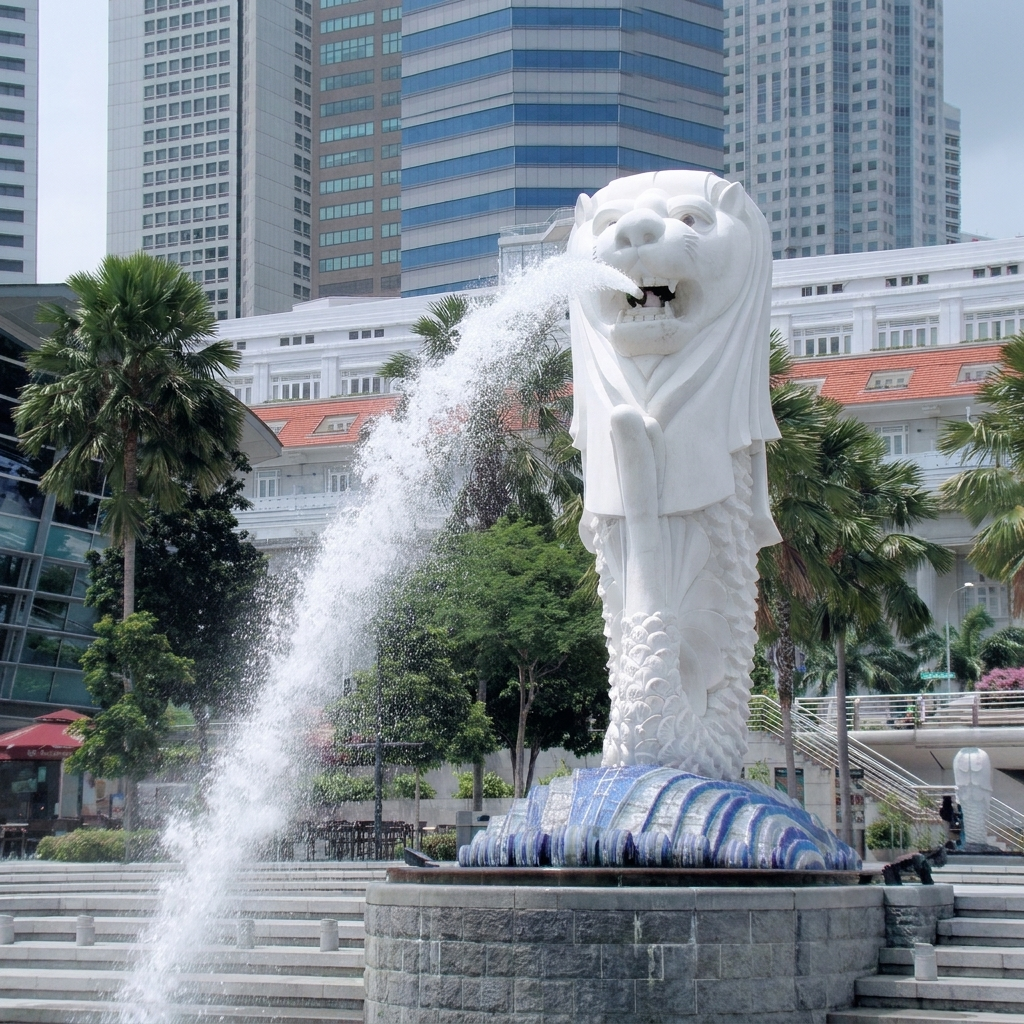
Merlion Park
- A sculptor carves with his children
In this story, you’ll discover
Chapter 1
A Logo Drawn by an Aquarium Keeper
The tourist board needed an emblem, and the design came from an unexpected person: a British zoologist who ran the Van Kleef Aquarium, the city's public aquarium at the time. He put two halves together, a lion and a fish, and each one stands for a name the island has carried. The fish body points back to Temasek, an old name for the island that is usually explained as "sea town". Long before the British arrived, this was a port that lived off the sea and off the trade passing through it. For centuries before that, the trade of these waters had been in the hands of Srivijaya, a Buddhist sea kingdom based at Palembang in Sumatra that ruled the sea lanes of the Strait of Malacca. The Malay Annals, the old chronicle of the Malay kings, make Singapore's founder a prince of Palembang, descended from Srivijaya's royal line. The lion head comes from the island's founding legend, which is also told in the Malay Annals. A prince called Sang Nila Utama landed here, and while he was hunting near the river mouth he saw a swift animal with a red body, a black head and a white breast. He was told it was a lion. He took that as a good sign. He built a city here and named it Singapura, the lion city. Lions have never lived in Singapore, though. Scholars think the prince more likely saw a tiger.

A reflection for you
Lim Nang Seng's eight children helped him carve the Merlion. Yet he hoped none would become a sculptor, because the work had paid him so little. He shared the making with them, while hoping to spare them its hardships. What part of your life would you want someone you love to share, and what would you hope they never have to repeat?

 1×1×
BEHIND EVERY PLACE
The people the plaques leave out.
A plaque gives you a date and a name. Here, you get the person, and the ideas that shaped Singapore come with the story.
Merlion Park
- A sculptor carves with his children
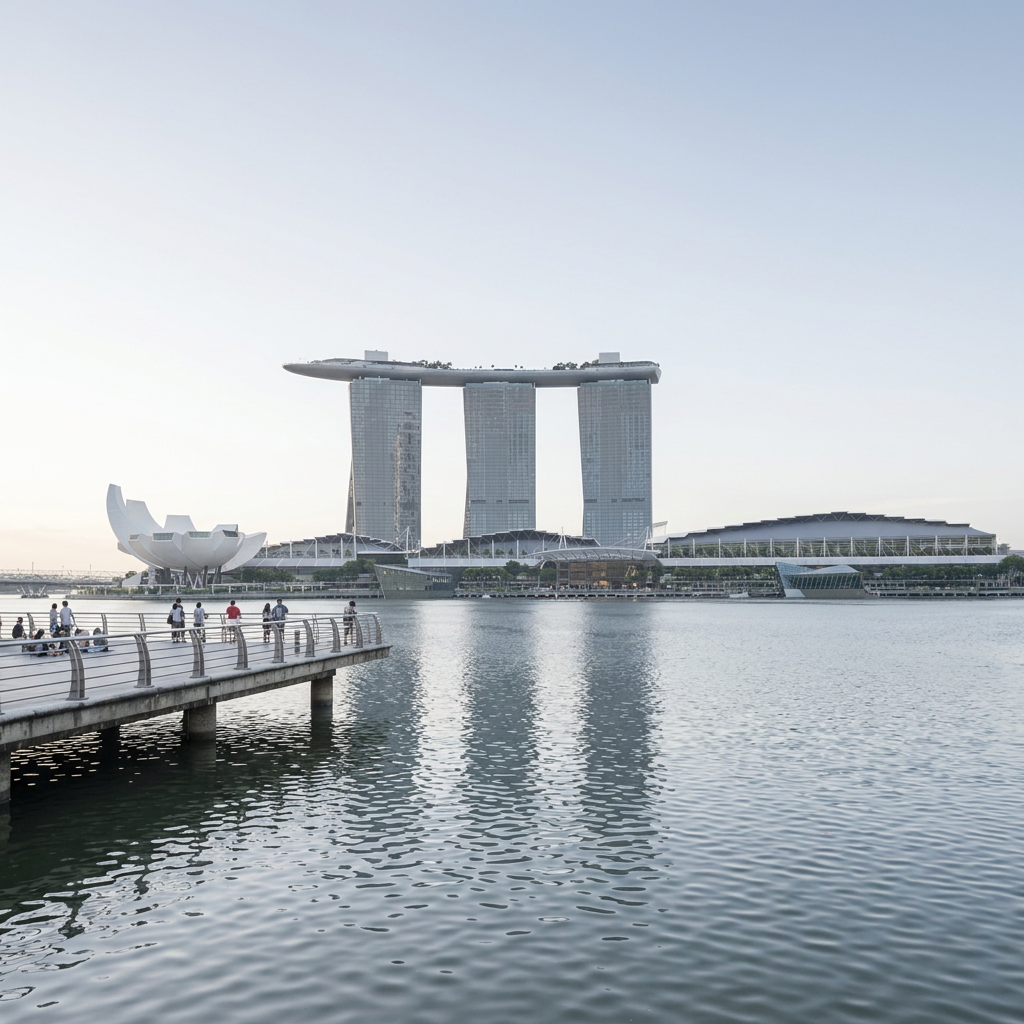
Marina Bay Sands
- A prime minister's casino U-turn
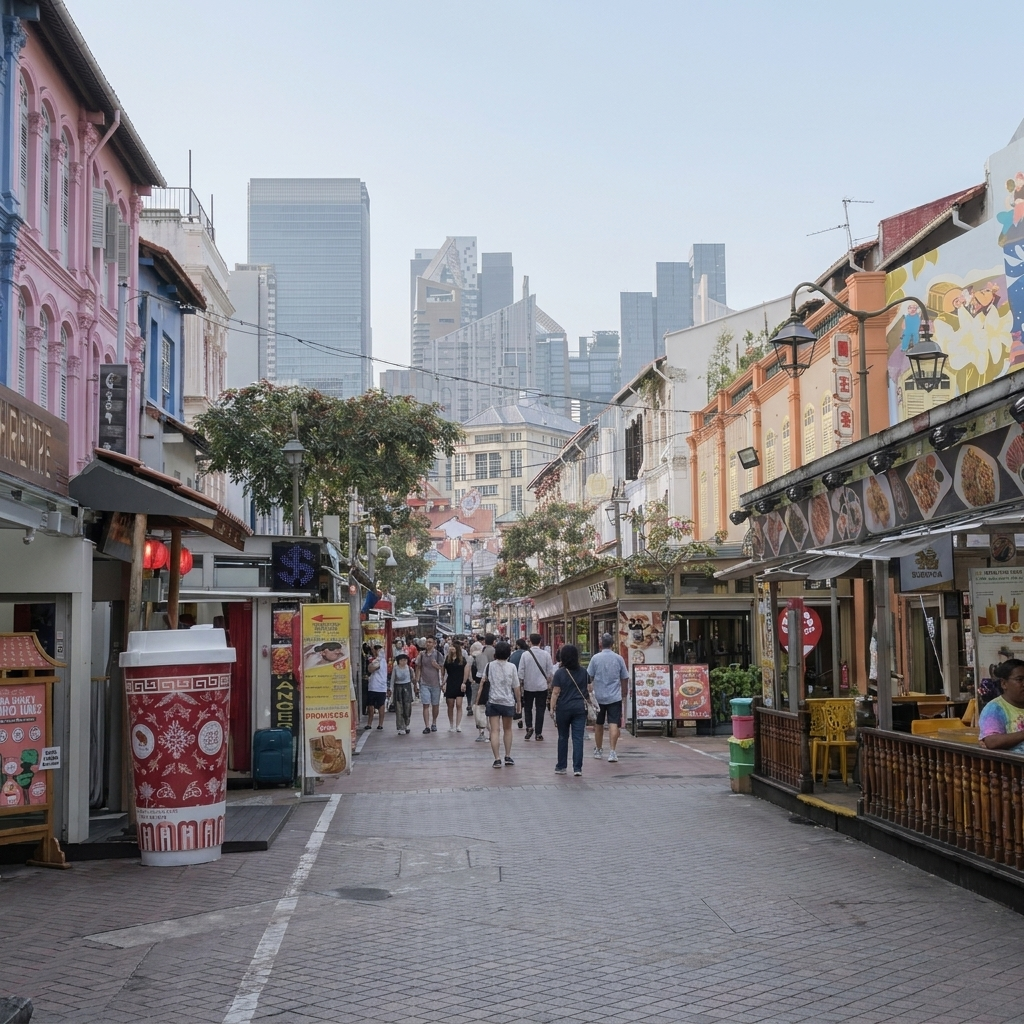
Chinatown
- Women builders in red headdresses
- Coolies bound by fare debts
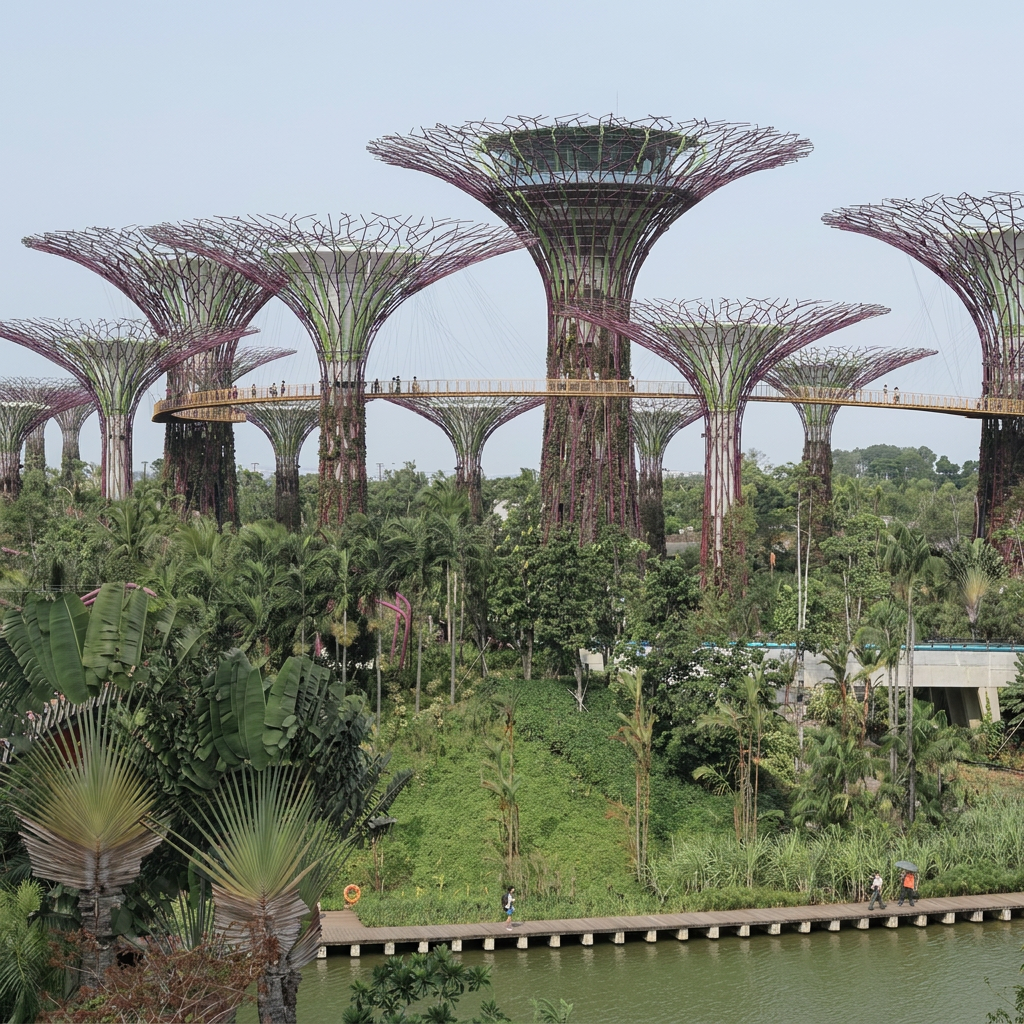
Gardens by the Bay
- Giving prime land to gardens
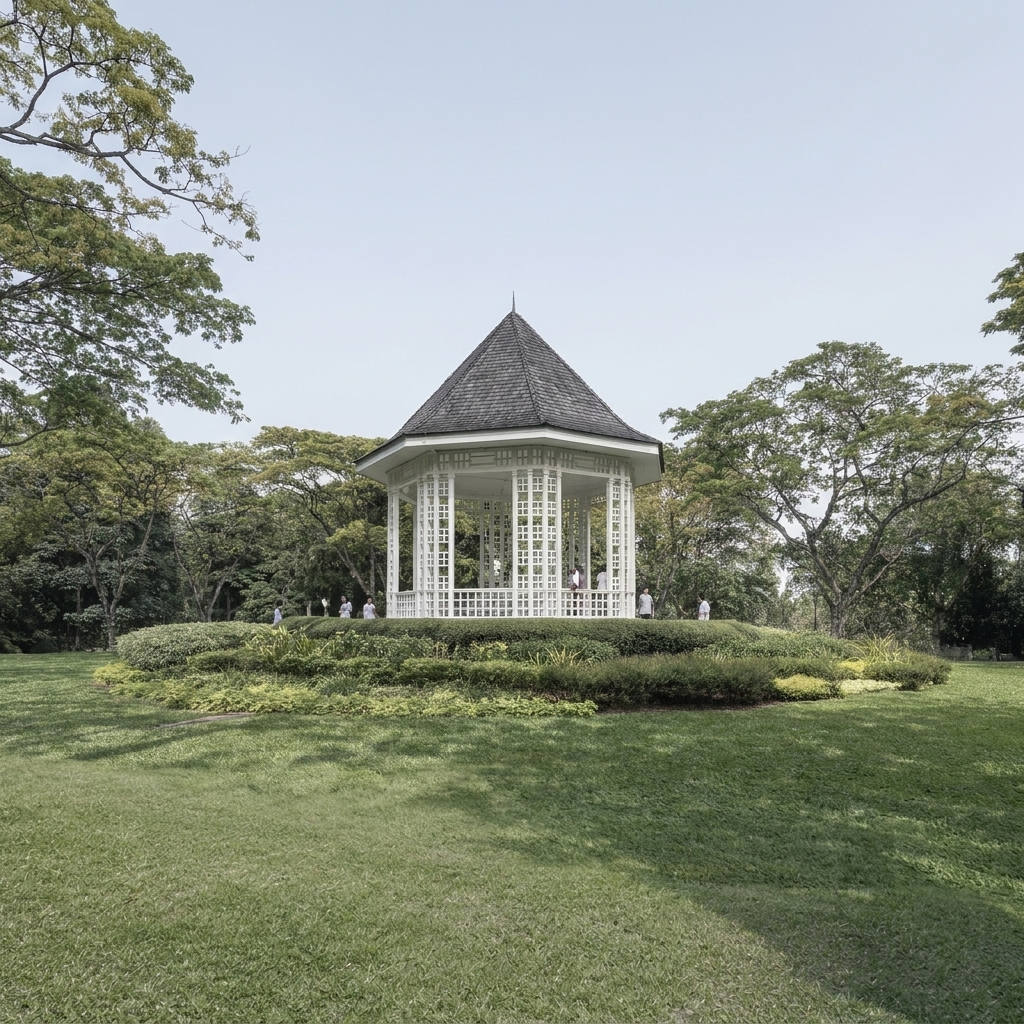
Singapore Botanic Gardens
- The botanist mad about rubber
20 more places in Singapore
Kampong Glam · Little India · National Gallery Singapore · National Museum of Singapore · Clarke Quay · Fort Canning Park · Peranakan Museum · Sultan Mosque · Buddha Tooth Relic Temple and Museum · Sri Mariamman Temple · Thian Hock Keng Temple · Raffles Hotel · Changi Chapel and Museum · Fort Siloso · Joo Chiat · Tiong Bahru · Pulau Ubin · Lau Pa Sat · Former House of Tan Teng Niah · Old Hill Street Police Station
HOW IT WORKS
Walk near a place.
The story finds you.
Get a notification when you’re near a story place. Tap to listen.
Merlion Park
nowJust steps away.
Tap to hear the drama.

INSIDE EACH PLACE
From drama,
to idea,
to insight.
For example: the Merlion Park.
1. Hear the drama behind the place.
Merlion Park
- A sculptor carves with his children
In this story, you’ll discover
Chapter 1
A Logo Drawn by an Aquarium Keeper
The tourist board needed an emblem, and the design came from an unexpected person: a British zoologist who ran the Van Kleef Aquarium, the city's public aquarium at the time. He put two halves together, a lion and a fish, and each one stands for a name the island has carried. The fish body points back to Temasek, an old name for the island that is usually explained as "sea town". Long before the British arrived, this was a port that lived off the sea and off the trade passing through it. For centuries before that, the trade of these waters had been in the hands of Srivijaya, a Buddhist sea kingdom based at Palembang in Sumatra that ruled the sea lanes of the Strait of Malacca. The Malay Annals, the old chronicle of the Malay kings, make Singapore's founder a prince of Palembang, descended from Srivijaya's royal line. The lion head comes from the island's founding legend, which is also told in the Malay Annals. A prince called Sang Nila Utama landed here, and while he was hunting near the river mouth he saw a swift animal with a red body, a black head and a white breast. He was told it was a lion. He took that as a good sign. He built a city here and named it Singapura, the lion city. Lions have never lived in Singapore, though. Scholars think the prince more likely saw a tiger.
A reflection for you
Lim Nang Seng's eight children helped him carve the Merlion. Yet he hoped none would become a sculptor, because the work had paid him so little. He shared the making with them, while hoping to spare them its hardships. What part of your life would you want someone you love to share, and what would you hope they never have to repeat?
1×2. Learn the ideas inside the story.
Merlion Park
- A sculptor carves with his children
In this story, you’ll discover
Chapter 1
A Logo Drawn by an Aquarium Keeper
The tourist board needed an emblem, and the design came from an unexpected person: a British zoologist who ran the Van Kleef Aquarium, the city's public aquarium at the time. He put two halves together, a lion and a fish, and each one stands for a name the island has carried. The fish body points back to Temasek, an old name for the island that is usually explained as "sea town". Long before the British arrived, this was a port that lived off the sea and off the trade passing through it. For centuries before that, the trade of these waters had been in the hands of Srivijaya, a Buddhist sea kingdom based at Palembang in Sumatra that ruled the sea lanes of the Strait of Malacca. The Malay Annals, the old chronicle of the Malay kings, make Singapore's founder a prince of Palembang, descended from Srivijaya's royal line. The lion head comes from the island's founding legend, which is also told in the Malay Annals. A prince called Sang Nila Utama landed here, and while he was hunting near the river mouth he saw a swift animal with a red body, a black head and a white breast. He was told it was a lion. He took that as a good sign. He built a city here and named it Singapura, the lion city. Lions have never lived in Singapore, though. Scholars think the prince more likely saw a tiger.
A reflection for you
Lim Nang Seng's eight children helped him carve the Merlion. Yet he hoped none would become a sculptor, because the work had paid him so little. He shared the making with them, while hoping to spare them its hardships. What part of your life would you want someone you love to share, and what would you hope they never have to repeat?
1×3. Keep an insight that’s only yours.
Merlion Park
- A sculptor carves with his children
In this story, you’ll discover
Chapter 1
A Logo Drawn by an Aquarium Keeper
The tourist board needed an emblem, and the design came from an unexpected person: a British zoologist who ran the Van Kleef Aquarium, the city's public aquarium at the time. He put two halves together, a lion and a fish, and each one stands for a name the island has carried. The fish body points back to Temasek, an old name for the island that is usually explained as "sea town". Long before the British arrived, this was a port that lived off the sea and off the trade passing through it. For centuries before that, the trade of these waters had been in the hands of Srivijaya, a Buddhist sea kingdom based at Palembang in Sumatra that ruled the sea lanes of the Strait of Malacca. The Malay Annals, the old chronicle of the Malay kings, make Singapore's founder a prince of Palembang, descended from Srivijaya's royal line. The lion head comes from the island's founding legend, which is also told in the Malay Annals. A prince called Sang Nila Utama landed here, and while he was hunting near the river mouth he saw a swift animal with a red body, a black head and a white breast. He was told it was a lion. He took that as a good sign. He built a city here and named it Singapura, the lion city. Lions have never lived in Singapore, though. Scholars think the prince more likely saw a tiger.
A reflection for you
Lim Nang Seng's eight children helped him carve the Merlion. Yet he hoped none would become a sculptor, because the work had paid him so little. He shared the making with them, while hoping to spare them its hardships. What part of your life would you want someone you love to share, and what would you hope they never have to repeat?
1×BEFORE YOU GO
FAQ
An audio guide gives you the facts: dates, names, what it was built for. Odys‑say tells you the drama: the people behind the place, what they wanted, and what it cost them. The ideas behind the city come with the story, and it ends with an insight that’s only yours.
The story first: who was here, what they were up against, and what they chose. Then, inside that story, one or two ideas that help you understand the city more deeply, from history and politics to art, religion, and philosophy.
Explore the city as you normally would. When you’re near one of Odys‑say’s story places, your phone can let you know. Tap the notification, and the story is ready to hear right where you are.
The drama stays the same. What changes is what comes at the end. Based on what you chose to reflect on, Odys‑say connects something from the story to a question or insight that feels relevant to you.
Your first story is included. If you want to keep exploring, you can unlock the whole city for $9.99. It’s a one-time purchase, not a subscription.
A deeper way
to travel
Singapore
Human stories at every place,
and what they leave with you.
No subscription.
One-time city purchase.