
YOUR TRAVEL DOCENT
Travel deeper into Syracuse, through its human stories.
At each place,
- Drama and backstory
- History & ideas behind them
- Insight that’s only yours
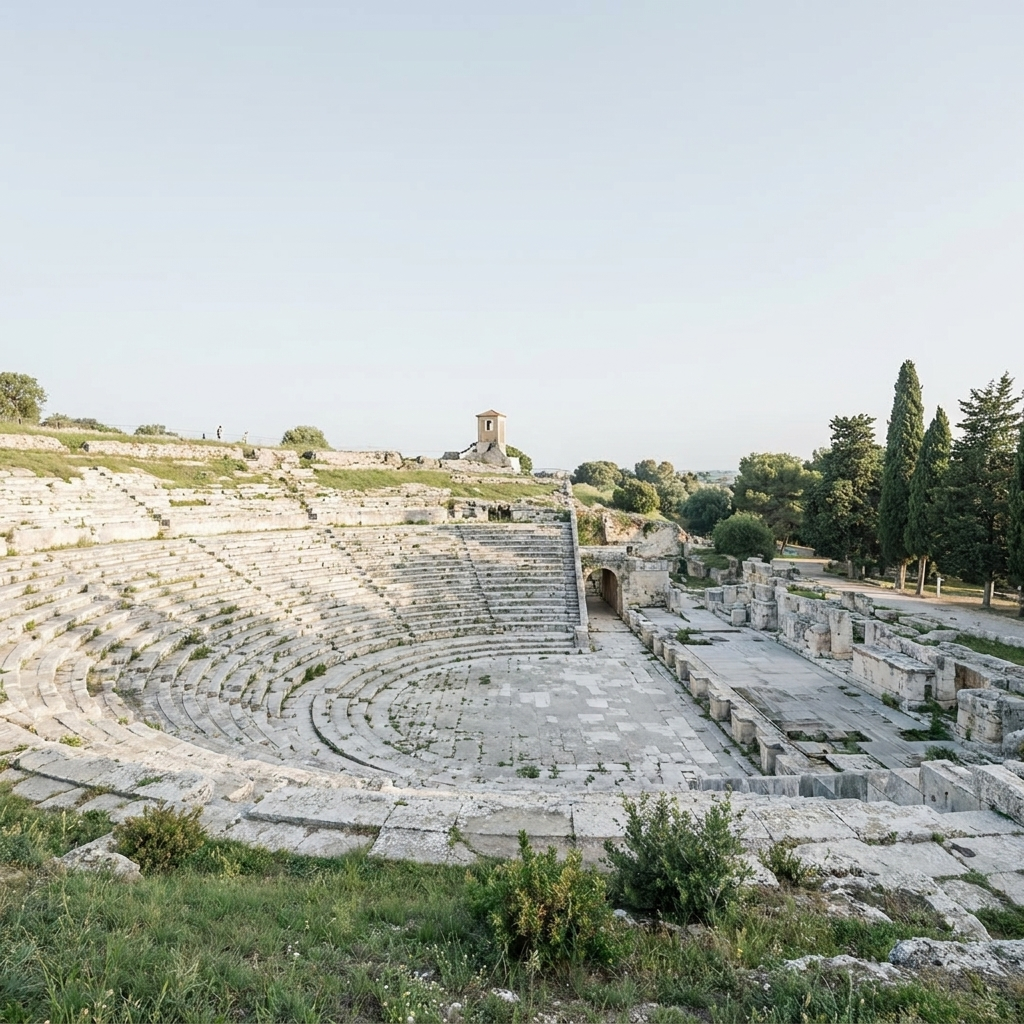
Neapolis Archaeological Park
- A blind liberator still consulted
In this story, you’ll discover
Chapter 1
Aeschylus Comes to Syracuse
Syracuse was a Greek city, and in the early fifth century BC it was ruled by a man named Hieron. Hieron was what the Greeks called a tyrant. The word did not have to mean a cruel ruler. It meant a man who had taken power for himself and ruled alone, above the city's usual assemblies and laws. Hieron also liked to have the finest poets of Greece at his court. So he invited Aeschylus, the great tragic playwright of Athens. Hieron had just founded a new city on the slopes of Mount Etna, and Aeschylus wrote a tragedy to celebrate it, The Women of Aetna. People say his earlier play The Persians was performed in Syracuse as well. It tells the story of the Greek victory over the Persian fleet, seen through the eyes of the defeated Persians. Tragedy was still a young art. Poets took their plots from the old myths and sometimes from recent history, and staged them in the open air in front of thousands of citizens at once. A chorus sang and danced on the round floor at the bottom, called the orchestra, while a few actors in masks played the heroes. The theatre Aeschylus knew was a smaller one on this same slope. Most of the rows you see now were cut later.

A reflection for you
Timoleon gave up his command. Even after he went blind, the people still brought him to the theatre to hear his advice. Is there a role you hold on to because of the influence it gives you? If you could keep that influence without the role, would you still want to stay in it?

 1×1×
BEHIND EVERY PLACE
The people the plaques leave out.
A plaque gives you a date and a name. Here, you get the person, and the ideas that shaped Syracuse come with the story.
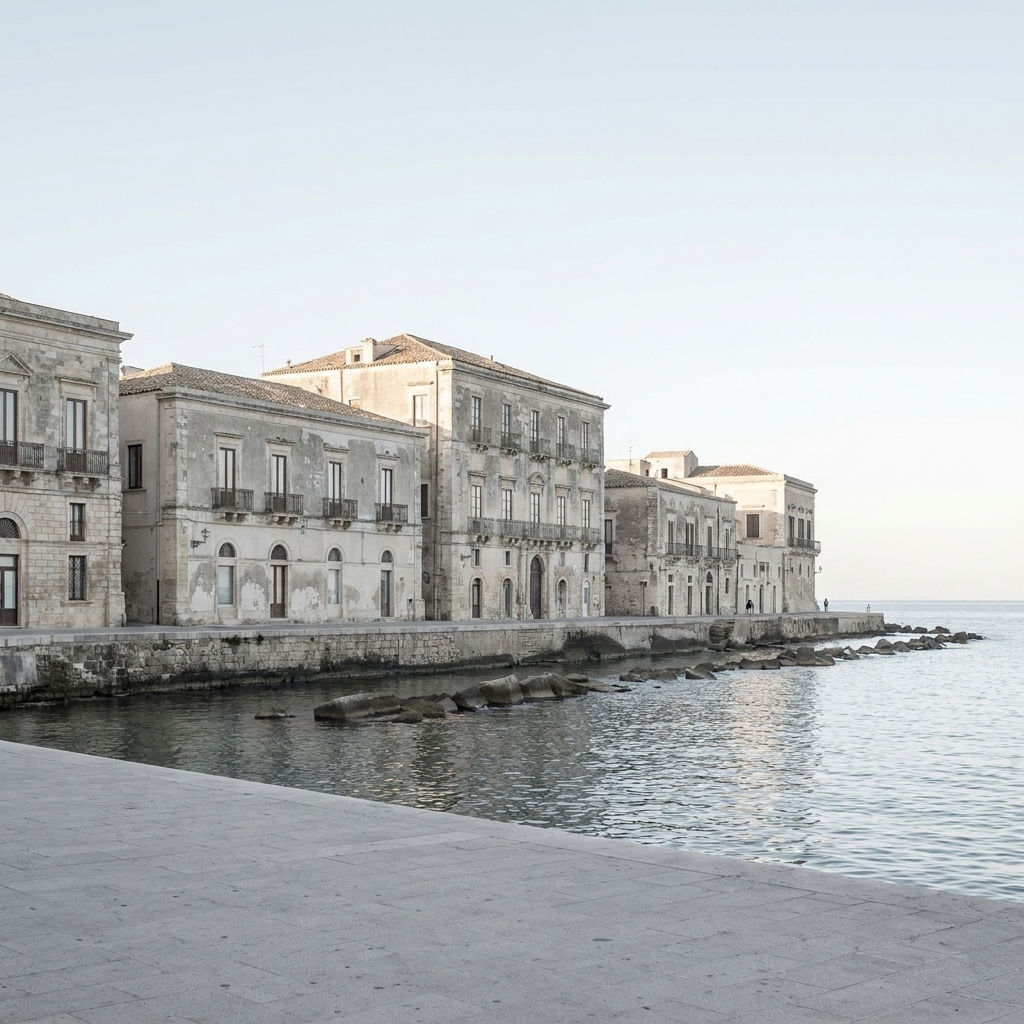
Ortigia
- Teaching philosophy to a tyrant
- Citizens tear down the fortress
Neapolis Archaeological Park
- A blind liberator still consulted
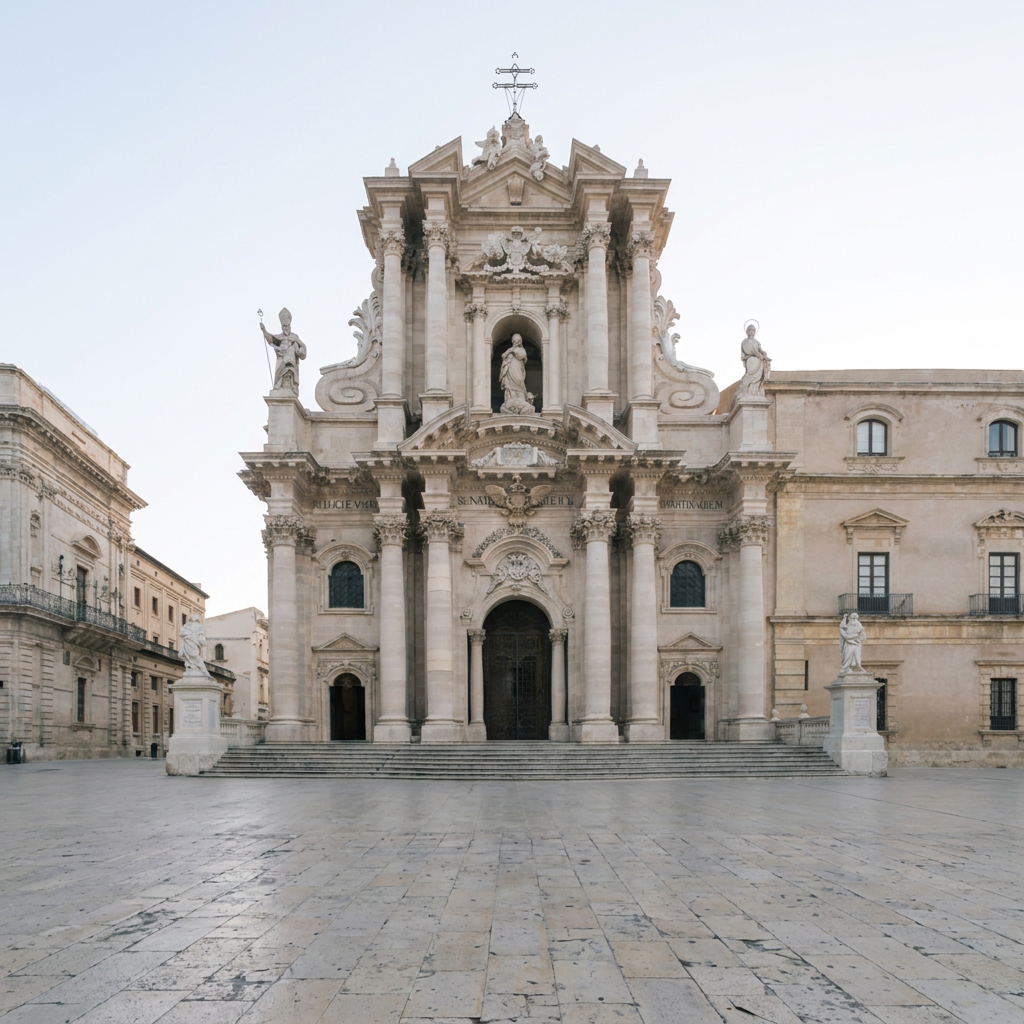
Syracuse Cathedral
- Sicilians prosecute a plundering governor
- Too hungry to grind the wheat
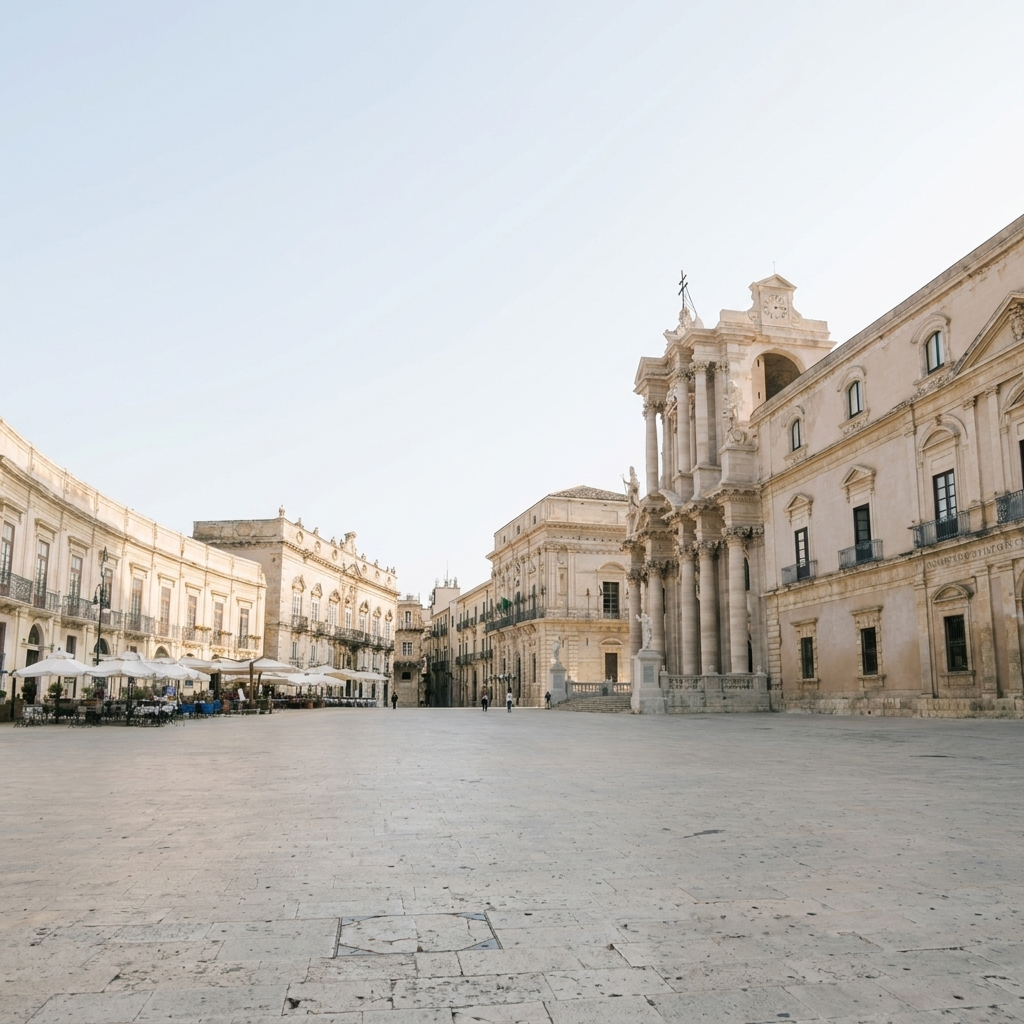
Piazza Duomo
- A balcony for enclosed nuns
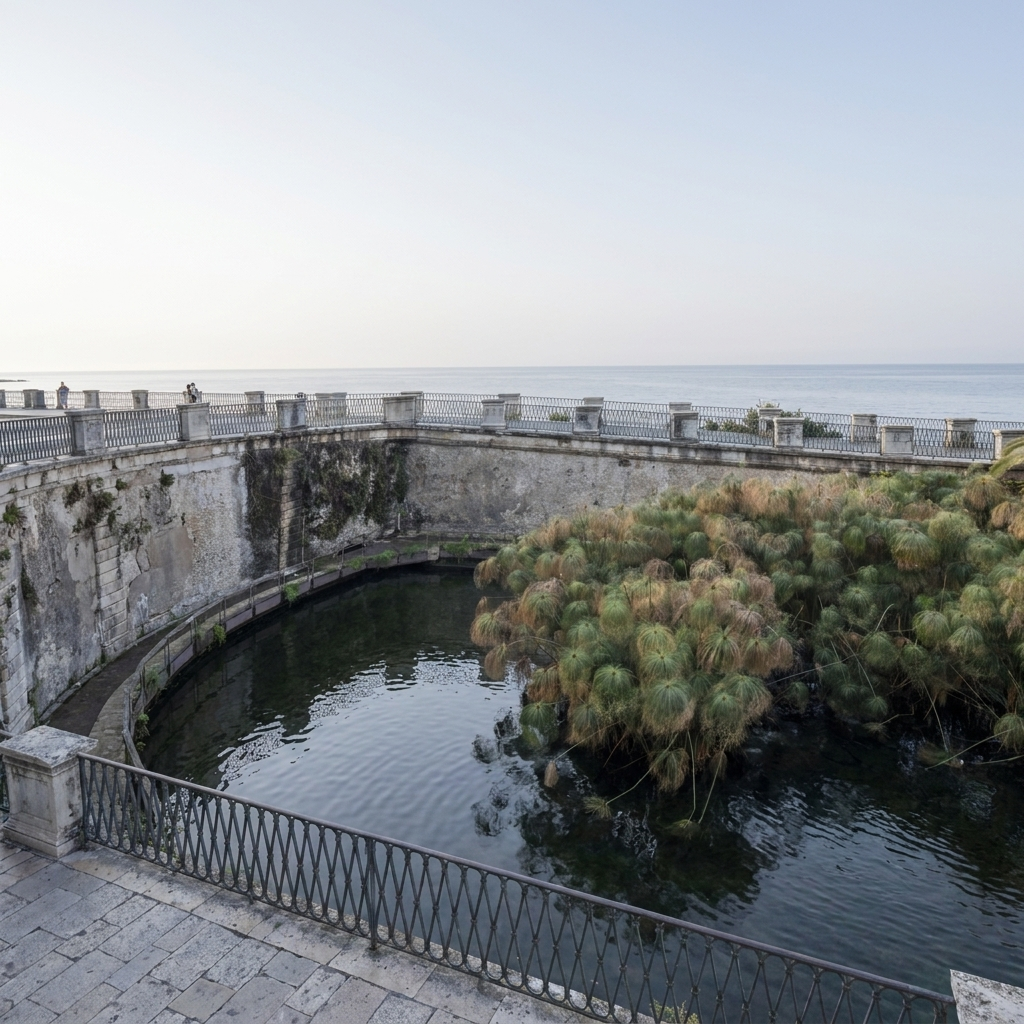
Arethusa Spring
- A nymph flees the river god
- An admiral's lucky water
20 more places in Syracuse
Temple of Apollo · Castello Maniace · Paolo Orsi Regional Archaeological Museum · San Giovanni alle Catacombe · Ortigia Market · Piazza Archimede · Neapolis Archaeological Park · Ear of Dionysius · Neapolis Archaeological Park · Grotta dei Cordari · Neapolis Archaeological Park · Roman Amphitheatre · Basilica of Santa Lucia al Sepolcro · Sanctuary of the Madonna delle Lacrime · Palazzo Bellomo Regional Gallery · Castello Eurialo · Casa Bianca Jewish Ritual Bath · Rock-cut Necropolis of Pantalica · Church of San Filippo Apostolo · Museo del Papiro Corrado Basile · Roman Villa of Tellaro · Akrai Archaeological Area · Ciane River
HOW IT WORKS
Walk near a place.
The story finds you.
Get a notification when you’re near a story place. Tap to listen.
Ortigia
nowJust steps away.
Tap to hear the drama.

INSIDE EACH PLACE
From drama,
to idea,
to insight.
For example: the Neapolis Archaeological Park.
1. Hear the drama behind the place.
Neapolis Archaeological Park
- A blind liberator still consulted
In this story, you’ll discover
Chapter 1
Aeschylus Comes to Syracuse
Syracuse was a Greek city, and in the early fifth century BC it was ruled by a man named Hieron. Hieron was what the Greeks called a tyrant. The word did not have to mean a cruel ruler. It meant a man who had taken power for himself and ruled alone, above the city's usual assemblies and laws. Hieron also liked to have the finest poets of Greece at his court. So he invited Aeschylus, the great tragic playwright of Athens. Hieron had just founded a new city on the slopes of Mount Etna, and Aeschylus wrote a tragedy to celebrate it, The Women of Aetna. People say his earlier play The Persians was performed in Syracuse as well. It tells the story of the Greek victory over the Persian fleet, seen through the eyes of the defeated Persians. Tragedy was still a young art. Poets took their plots from the old myths and sometimes from recent history, and staged them in the open air in front of thousands of citizens at once. A chorus sang and danced on the round floor at the bottom, called the orchestra, while a few actors in masks played the heroes. The theatre Aeschylus knew was a smaller one on this same slope. Most of the rows you see now were cut later.
A reflection for you
Timoleon gave up his command. Even after he went blind, the people still brought him to the theatre to hear his advice. Is there a role you hold on to because of the influence it gives you? If you could keep that influence without the role, would you still want to stay in it?
1×2. Learn the ideas inside the story.
Neapolis Archaeological Park
- A blind liberator still consulted
In this story, you’ll discover
Chapter 1
Aeschylus Comes to Syracuse
Syracuse was a Greek city, and in the early fifth century BC it was ruled by a man named Hieron. Hieron was what the Greeks called a tyrant. The word did not have to mean a cruel ruler. It meant a man who had taken power for himself and ruled alone, above the city's usual assemblies and laws. Hieron also liked to have the finest poets of Greece at his court. So he invited Aeschylus, the great tragic playwright of Athens. Hieron had just founded a new city on the slopes of Mount Etna, and Aeschylus wrote a tragedy to celebrate it, The Women of Aetna. People say his earlier play The Persians was performed in Syracuse as well. It tells the story of the Greek victory over the Persian fleet, seen through the eyes of the defeated Persians. Tragedy was still a young art. Poets took their plots from the old myths and sometimes from recent history, and staged them in the open air in front of thousands of citizens at once. A chorus sang and danced on the round floor at the bottom, called the orchestra, while a few actors in masks played the heroes. The theatre Aeschylus knew was a smaller one on this same slope. Most of the rows you see now were cut later.
A reflection for you
Timoleon gave up his command. Even after he went blind, the people still brought him to the theatre to hear his advice. Is there a role you hold on to because of the influence it gives you? If you could keep that influence without the role, would you still want to stay in it?
1×3. Keep an insight that’s only yours.
Neapolis Archaeological Park
- A blind liberator still consulted
In this story, you’ll discover
Chapter 1
Aeschylus Comes to Syracuse
Syracuse was a Greek city, and in the early fifth century BC it was ruled by a man named Hieron. Hieron was what the Greeks called a tyrant. The word did not have to mean a cruel ruler. It meant a man who had taken power for himself and ruled alone, above the city's usual assemblies and laws. Hieron also liked to have the finest poets of Greece at his court. So he invited Aeschylus, the great tragic playwright of Athens. Hieron had just founded a new city on the slopes of Mount Etna, and Aeschylus wrote a tragedy to celebrate it, The Women of Aetna. People say his earlier play The Persians was performed in Syracuse as well. It tells the story of the Greek victory over the Persian fleet, seen through the eyes of the defeated Persians. Tragedy was still a young art. Poets took their plots from the old myths and sometimes from recent history, and staged them in the open air in front of thousands of citizens at once. A chorus sang and danced on the round floor at the bottom, called the orchestra, while a few actors in masks played the heroes. The theatre Aeschylus knew was a smaller one on this same slope. Most of the rows you see now were cut later.
A reflection for you
Timoleon gave up his command. Even after he went blind, the people still brought him to the theatre to hear his advice. Is there a role you hold on to because of the influence it gives you? If you could keep that influence without the role, would you still want to stay in it?
1×BEFORE YOU GO
FAQ
An audio guide gives you the facts: dates, names, what it was built for. Odys‑say tells you the drama: the people behind the place, what they wanted, and what it cost them. The ideas behind the city come with the story, and it ends with an insight that’s only yours.
The story first: who was here, what they were up against, and what they chose. Then, inside that story, one or two ideas that help you understand the city more deeply, from history and politics to art, religion, and philosophy.
Explore the city as you normally would. When you’re near one of Odys‑say’s story places, your phone can let you know. Tap the notification, and the story is ready to hear right where you are.
The drama stays the same. What changes is what comes at the end. Based on what you chose to reflect on, Odys‑say connects something from the story to a question or insight that feels relevant to you.
Your first story is included. If you want to keep exploring, you can unlock the whole city for $9.99. It’s a one-time purchase, not a subscription.
A deeper way
to travel
Syracuse
Human stories at every place,
and what they leave with you.
No subscription.
One-time city purchase.